Clear Sky Science · en
Stress and synaptic density in psychosis and clinical high risk: evidence from [18F]SynVesT-1 PET
Why stress and brain connections matter
Stress is a normal part of life, but for people vulnerable to psychosis, it may play a special role in shaping how the brain works. This study looks inside the living human brain to see how everyday and long lasting stress relate to tiny communication points between brain cells in people with a first episode of psychosis, people at high clinical risk, and healthy volunteers. Understanding these links could reveal how stress nudges some brains toward illness while others adapt.

Looking at the brain’s conversation points
Brain cells talk to each other at junctions called synapses. Instead of examining brain tissue after death, the researchers used a type of brain scan called PET, combined with a special tracer that sticks to a protein found in most synapses. This allowed them to estimate synaptic density, or how many of these connection sites are present in key brain regions involved in emotion and motivation. They scanned 78 people, including healthy volunteers, individuals just beginning to experience psychosis, and others considered at clinical high risk because of milder but worrying symptoms.
Measuring both daily hassles and long term strain
Stress is not a single thing, so the team captured it in several ways. To gauge short term strain, participants completed a questionnaire about the minor hassles they faced around the time of the scan, such as arguments, money worries, or problems at work or school. To capture long term pressure, they filled out a separate survey about persistent stress over the previous three months. Clinicians also rated depressive symptoms using a standard interview. Together, these measures painted a picture of each person’s current mood and how much stress they felt in daily life.
When stress rises, synapses fall
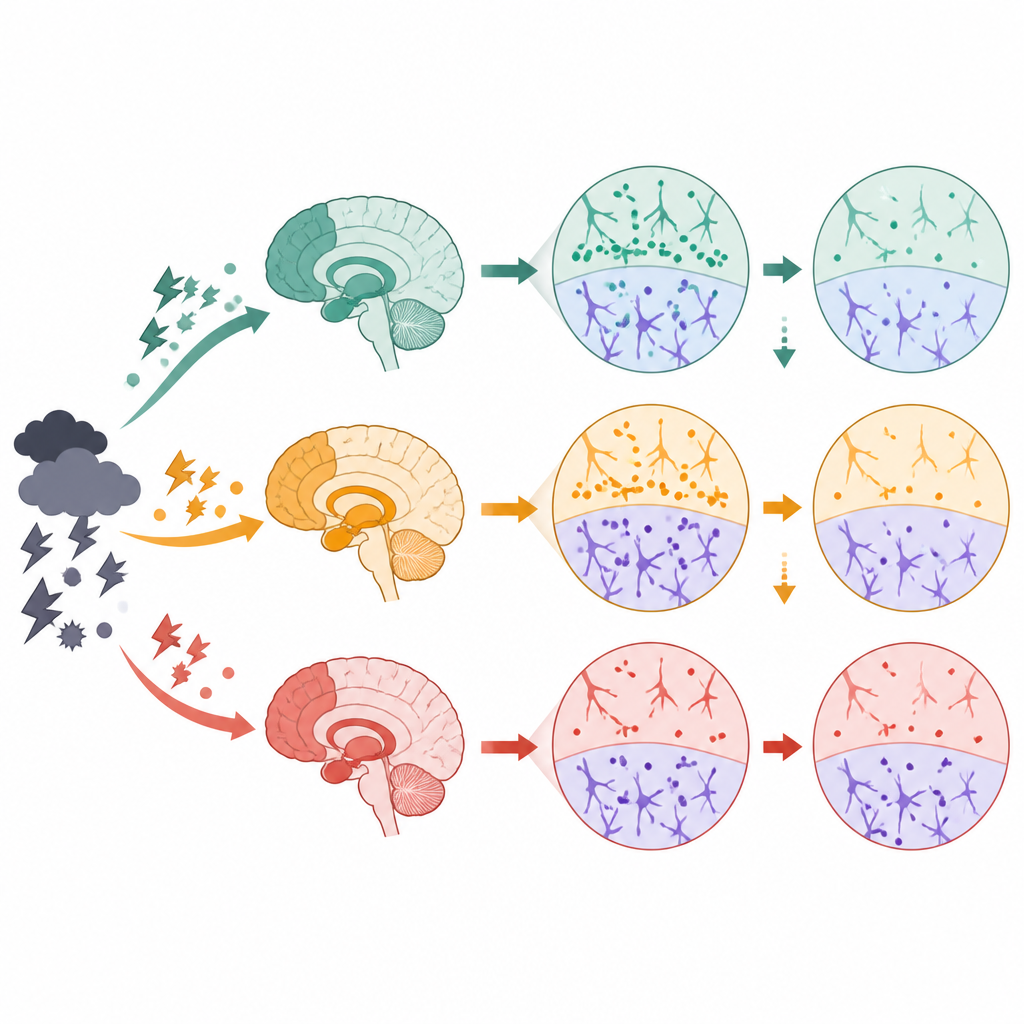
Across all participants, higher levels of recent everyday stress were linked to lower synaptic density in several brain regions. This pattern appeared in healthy volunteers, people at high risk, and those with a first psychotic episode, suggesting that acute stress may have a general dampening effect on brain connections. However, when the researchers turned to long lasting stress, the story changed. Only the healthy volunteers showed a clear link between higher chronic stress and lower synaptic density, while this relationship was absent in the clinical groups. This suggests that the way the brain’s connections respond to prolonged strain differs once psychosis related processes are present.
A surprising role for low mood
The findings for depression were also unexpected. In earlier work with stress related disorders, more severe depression tended to go hand in hand with fewer synapses. In contrast, among people with a first episode of psychosis in this study, greater depressive symptoms were associated with higher synaptic density in frontal brain regions. No such pattern appeared in the high risk or healthy groups. This echo of some postmortem studies hints that there may be subgroups of psychosis in which mood problems coexist with relatively preserved or even elevated measures of synaptic proteins, reflecting a different biological profile within the broader diagnosis.
What this means for understanding psychosis
For a lay reader, the key message is that stress and mood are indeed tied to the brain’s wiring, but those ties look different in people moving toward or living with psychosis. In healthy individuals, higher long term stress tracks with fewer synaptic markers, which may represent a normal adaptive process that helps the brain cope. In psychosis and high risk states, this flexible adjustment seems to be disrupted, and the link between stress, depression, and synapses no longer follows the same rules. The authors suggest this could reflect impaired neuroplasticity, the brain’s ability to reshape its connections in response to experience, and that this altered response to stress may be one route by which vulnerability to psychosis develops.
Citation: Blasco, M.B., Nisha Aji, K., Ramos-Jiménez, C. et al. Stress and synaptic density in psychosis and clinical high risk: evidence from [18F]SynVesT-1 PET. Transl Psychiatry 16, 277 (2026). https://doi.org/10.1038/s41398-026-03993-9
Keywords: psychosis, stress, synaptic density, PET imaging, schizophrenia risk