Clear Sky Science · en
HILL: the efficacy and safety of hepatic arterial infusion chemotherapy with the FOLFOX regimen combined with lenvatinib and the PD-L1 inhibitor durvalumab in unresectable hepatocellular carcinoma: a prospective, single-arm, phase 2 clinical trial
New Hope for Hard to Treat Liver Cancer
Many people with advanced liver cancer are told that surgery is not possible and that treatments can only hold the disease back for a time. This study tested a new three part treatment approach that aims not only to slow tumor growth but in some cases to shrink tumors enough so that surgeons can remove them. For patients and families facing limited choices, these results suggest a possible path from long term control toward potential cure.
A Three in One Treatment Plan
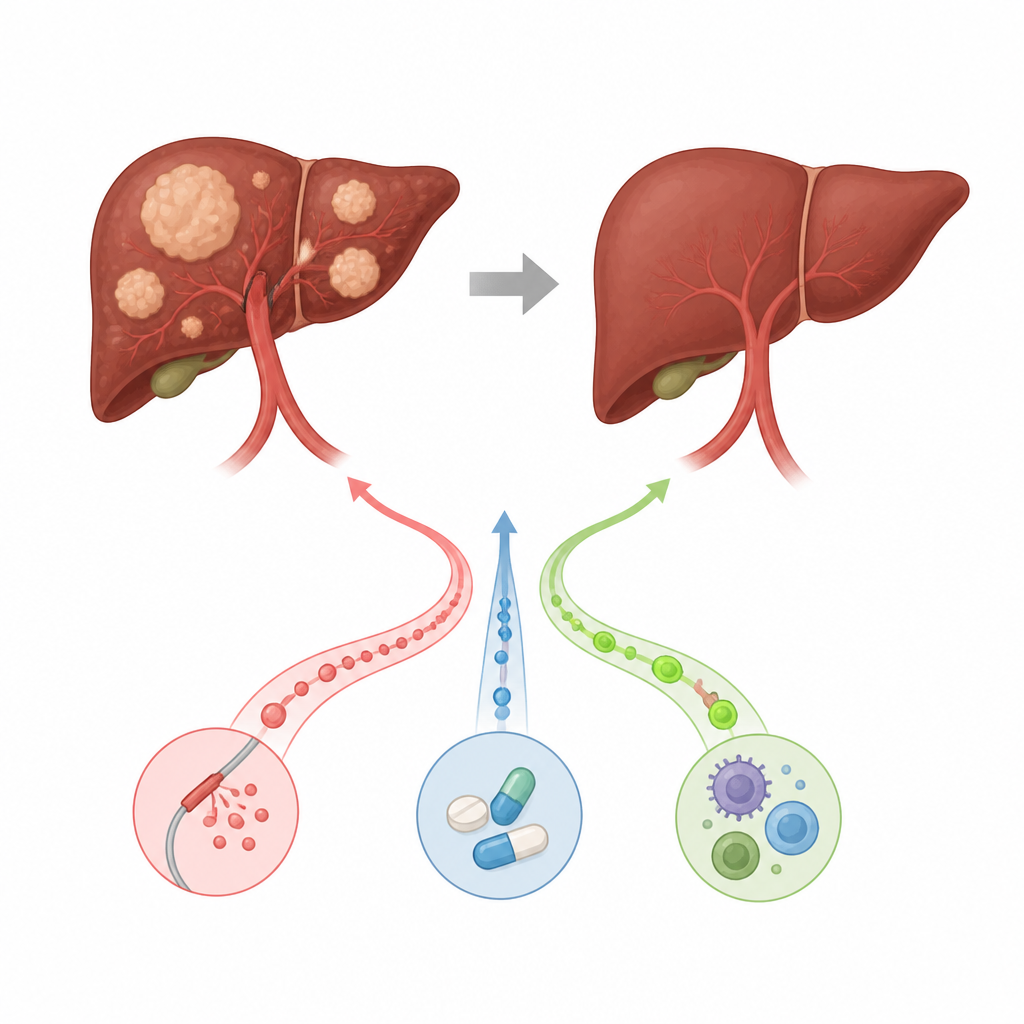
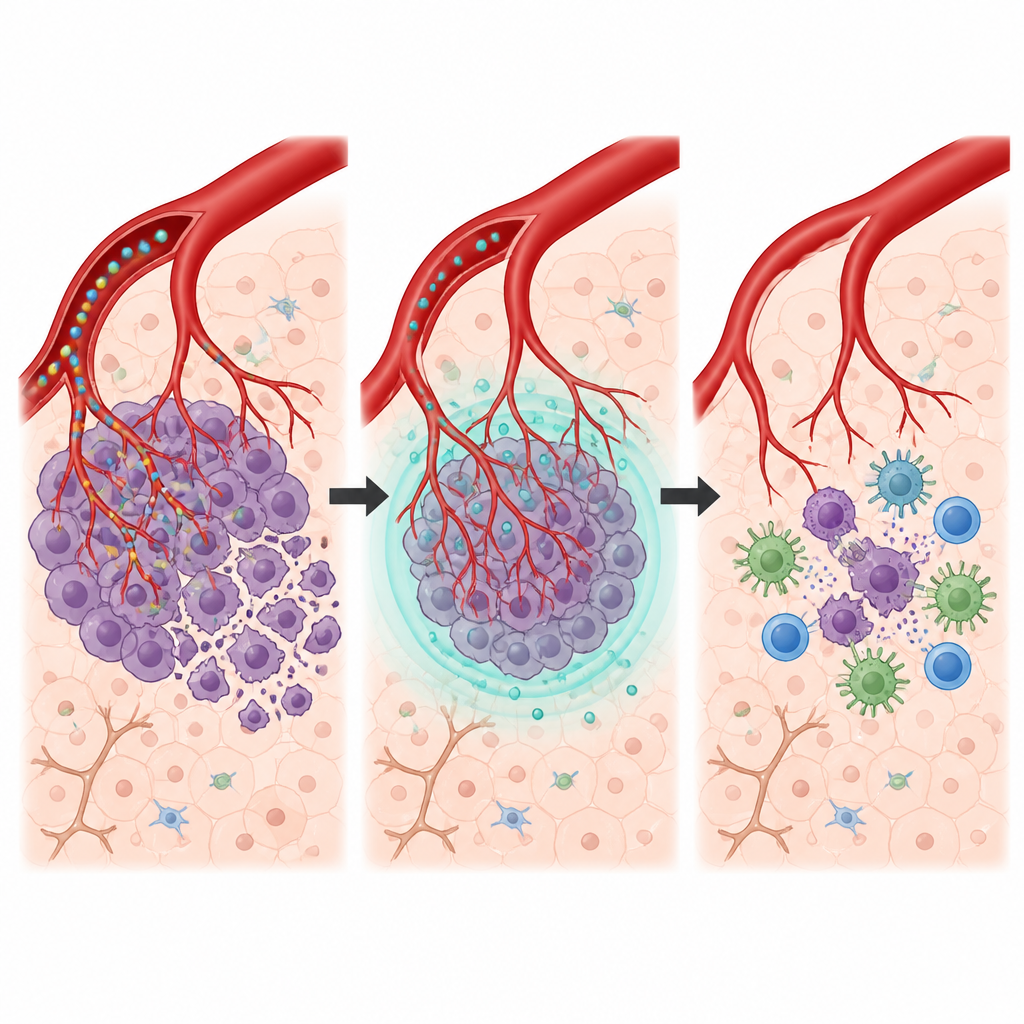
The research focused on hepatocellular carcinoma, the most common form of primary liver cancer, in patients whose tumors were too large, too widespread, or too close to major blood vessels to be removed safely. All forty participants received the same three treatments as their first therapy. First, chemotherapy drugs were fed directly into the artery that supplies the liver, bathing the tumors at high concentration while keeping the rest of the body’s exposure lower. Second, patients took lenvatinib, a targeted drug that slows the growth of blood vessels that feed tumors and can also affect the tumor’s surroundings. Third, they received durvalumab, an immune drug that helps the body’s own T cells better recognize and attack cancer cells.
Who Was Studied and How
The trial was carried out at a single cancer center in China and followed strict rules for patient selection and safety. Most patients had very advanced tumors, and many had growths in the main veins of the liver or cancer spread beyond the liver. All had good basic liver function and had not received prior cancer treatment. The triple treatment was given in cycles every three to four weeks, and doctors adjusted doses as needed. Imaging scans were performed regularly to track tumor size and spread, while blood tests and clinical exams monitored side effects and liver health.
Tumor Shrinkage and Survival Outcomes
The results were striking for such a difficult group of cases. Three quarters of patients had a clear reduction in tumor size, and only two showed clear growth as their best response. Nearly all patients saw their disease at least held in check. On average, it took just over two months for tumors to begin shrinking, and those responses lasted a median of about ten months. At the time of analysis, patients went a median of almost sixteen months before their cancer worsened, and estimated survival at one and two years was 97.5 percent and 94.0 percent, respectively. Most notably, seven patients, or 17.5 percent, saw their tumors shrink enough for surgeons to remove them completely, and nearly half of these surgical patients had no living cancer cells left in the removed tissue.
Side Effects and Safety
For a regimen that combines three active treatments, the safety profile was encouraging. Most side effects were mild, such as temporary liver enzyme changes, pain, or digestive upset. Only a small number of patients had severe drops in platelets or higher grade liver enzyme rises, and these events were manageable with standard care. No treatment related deaths occurred, and measures of liver function stayed largely stable over time, with no cases of liver failure, severe fluid buildup in the abdomen, or serious bleeding from enlarged veins in the esophagus or stomach.
What This Could Mean for Patients
Because this was a relatively small, single arm phase 2 study without a comparison group, the findings need to be confirmed in larger randomized trials. Still, the combination of direct liver artery chemotherapy, targeted therapy, and immune therapy produced high response rates, allowed some patients to move on to curative surgery, and did so with acceptable side effects in people with well preserved liver function. For patients with previously inoperable liver cancer, this approach offers a realistic new strategy to change the treatment goal from simply managing the disease to giving a chance, in selected cases, for long term remission after surgery.
Citation: Li, SH., Zuo, ZJ., Lu, LH. et al. HILL: the efficacy and safety of hepatic arterial infusion chemotherapy with the FOLFOX regimen combined with lenvatinib and the PD-L1 inhibitor durvalumab in unresectable hepatocellular carcinoma: a prospective, single-arm, phase 2 clinical trial. Sig Transduct Target Ther 11, 181 (2026). https://doi.org/10.1038/s41392-026-02718-0
Keywords: liver cancer, hepatocellular carcinoma, immunotherapy, targeted therapy, hepatic arterial infusion