Clear Sky Science · en
Pharmacogenomics of antiepileptic drug mood stabilizer treatment response in bipolar disorder: A MoStGen Consortium study
Why some medicines help and others do not
Bipolar disorder can turn life into a roller coaster of soaring highs and crushing lows. Many people take mood stabilizing medicines to smooth these swings, yet the same pill can work wonders for one person and barely help another. This study asks a simple but important question: can our genes help explain who responds best to a common group of mood stabilizers that were first developed to treat epilepsy?

What the researchers set out to learn
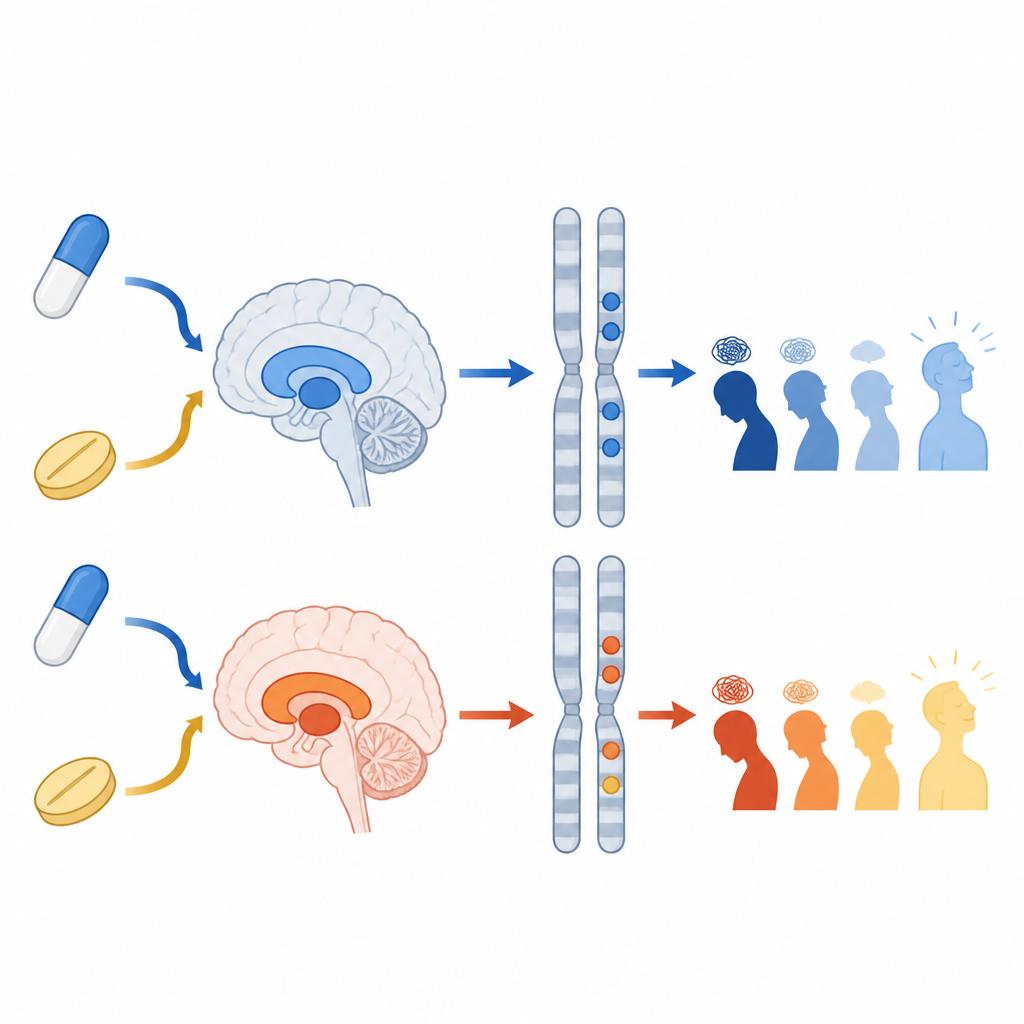
The team behind the Mood Stabilizer Genomics Consortium brought together data from 917 people diagnosed with bipolar spectrum disorders across North and South America and Europe. All had been treated with at least one antiepileptic mood stabilizer, including valproic acid, lamotrigine, carbamazepine or oxcarbazepine. Doctors rated how much each medicine reduced the frequency, length and severity of mood episodes using a structured score called the Alda scale. The scientists then scanned each person’s DNA across the whole genome, searching for tiny differences that tracked with better or worse response to these drugs.
How the study measured genes and treatment response
Because different clinics had used different genetic tests, the researchers first cleaned and harmonized the DNA data and checked for ancestry, sex mismatches and missing information. They focused on a refined measure of treatment benefit that excluded cases where other factors, such as short treatment duration or poor adherence, made the rating less reliable. Separate genetic analyses were carried out for all antiepileptic mood stabilizers together, and then specifically for valproic acid and lamotrigine, the two most commonly prescribed drugs in the group. The team also created genetic “scores” that add up the effects of many DNA variants at once, to see whether having more of certain variants nudged patients toward better outcomes.
A key gene link for lamotrigine
When all antiepileptic mood stabilizers were analyzed together, no single DNA variant stood out as clearly tied to treatment response. The same was true when the team looked only at valproic acid. However, when they focused on lamotrigine, a widely used mood stabilizer, a strong signal emerged in a gene called ROBO2 on chromosome 3, with several nearby variants reaching very high levels of statistical confidence. ROBO2 helps guide the growth and wiring of nerve cells and has been linked to learning, autism and other brain-related traits. Another gene, POLR1E, also showed a more modest but statistically solid link to lamotrigine response. These findings point to a potential biological pathway through which lamotrigine may act more effectively in some people than others.
The broader genetic pattern and epilepsy connection
The researchers next asked whether treatment response reflects not just one or two genes, but the combined influence of many. By building polygenic scores for response to valproic acid and lamotrigine and testing them in separate subgroups, they found that people whose DNA looked genetically “loaded” for good response tended, on average, to show higher benefit scores, although the effect was small. They also tested genetic scores for several psychiatric conditions and epilepsy. While scores for disorders like depression, anxiety and schizophrenia did not predict how well the mood stabilizers worked, a higher genetic tendency toward generalized epilepsy showed a modest association with better response to these antiepileptic mood stabilizers, hinting at shared biology between seizure control and mood stabilization.
What this could mean for people with bipolar disorder
This study suggests that the way people with bipolar disorder respond to antiepileptic mood stabilizers, especially lamotrigine, is partly influenced by their genes. One gene involved in brain wiring, ROBO2, and a broad pattern of many small genetic effects may help explain why some patients experience greater mood stability on these drugs. The work is still exploratory and needs to be repeated in larger and more diverse groups before it can guide everyday treatment. Nonetheless, it is a step toward a future in which doctors might use a person’s genetic profile, alongside clinical history, to select the mood stabilizer that is most likely to bring lasting balance.
Citation: Ho, A.MC., Coombes, B.J., Batzler, A. et al. Pharmacogenomics of antiepileptic drug mood stabilizer treatment response in bipolar disorder: A MoStGen Consortium study. Mol Psychiatry 31, 3587–3594 (2026). https://doi.org/10.1038/s41380-026-03478-7
Keywords: bipolar disorder, lamotrigine, valproic acid, pharmacogenomics, mood stabilizers