Clear Sky Science · en
“SHANK3 deficiency alters early progenitor dynamics and reveals shared pathways with neurodegeneration”
Why this matters for families and brains
Phelan-McDermid syndrome is a rare genetic condition that often involves autism, intellectual disability, and a troubling loss of skills in adolescence or adulthood. This study digs into how changes in a single gene called SHANK3 can ripple from individual brain cells up to whole-brain activity, revealing links between early brain development and later-life problems that resemble neurodegenerative disease.
From a single gene to a complex condition
The researchers focused on people whose Phelan-McDermid syndrome is caused only by faults in SHANK3, avoiding extra genetic changes that might confuse the picture. They took blood cells from nine affected individuals and seven controls and reprogrammed them into stem cells, then guided these cells to become nerve cells in the lab. They also recorded brain activity using EEG from a larger group of people with the syndrome and matched controls. This allowed them to compare changes in gene activity, cell behavior, and brain networks within the same condition.
Early builders in the brain go off schedule
When the team looked at gene activity in lab-grown neurons, they found nearly a thousand genes working differently in SHANK3-deficient cells. Many of these genes help control the cell cycle, DNA repair, and energy use. Using network analysis, the authors identified groups of genes tied to early brain growth, cell division, and protein production. These gene groups were strongly linked to clinical features such as seizures, speech problems, and especially developmental regression. Many of the same genes have been implicated in autism, attention deficit hyperactivity disorder, and neurodegenerative illnesses such as Alzheimer’s disease. 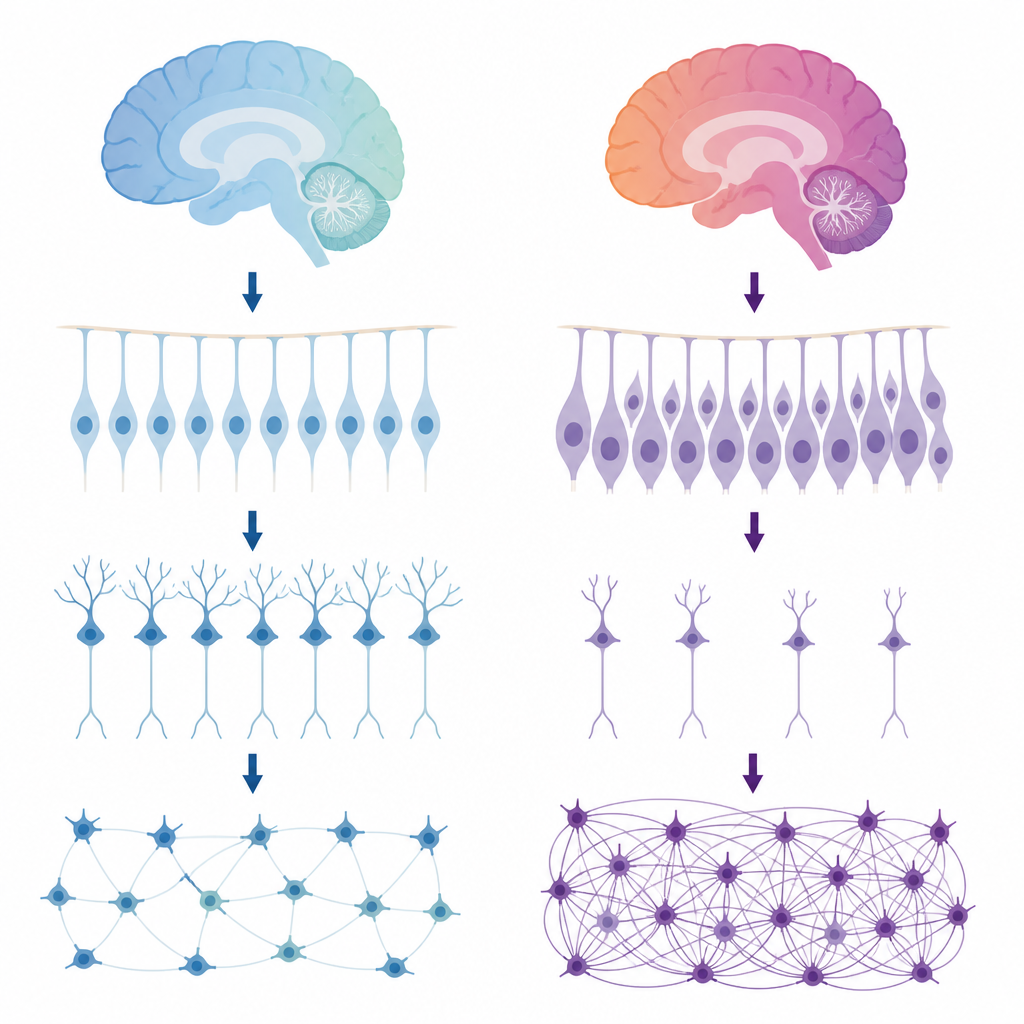
Progenitor cells linger, neurons fall behind
The study then zoomed in on early “progenitor” cells, the builders that give rise to mature neurons and supporting cells. In cultures lacking normal SHANK3, there were more actively dividing apical progenitors and intermediate progenitors compared with controls. These cells showed altered progression through the cell cycle, tending to accumulate in DNA-copying stages rather than resting. Yet, at the time points examined, the final numbers of young neurons and glial cells were similar between groups. This suggests that SHANK3 deficiency disrupts the timing and dynamics of early brain-cell production, rather than simply stopping cells from becoming neurons.
Weaker branches but more excitable networks
Neurons grown from SHANK3-deficient cells had smaller cell bodies and fewer points where nerve fibers connected to the soma, indicating simpler overall structure. At the synapse level, there were fewer postsynaptic “puncta,” but the remaining contact spots on both sides were larger. Electrical recordings from many neurons at once showed bursts with more spikes, pointing to a tendency toward hyperexcitability. In the EEG recordings from people with Phelan-McDermid syndrome, the researchers saw stronger connections between brain regions in faster rhythms (alpha, beta, and especially gamma) and weaker connections in slower theta rhythms, which are often linked to memory and attention. These patterns did not depend on the exact type or size of the SHANK3 mutation. 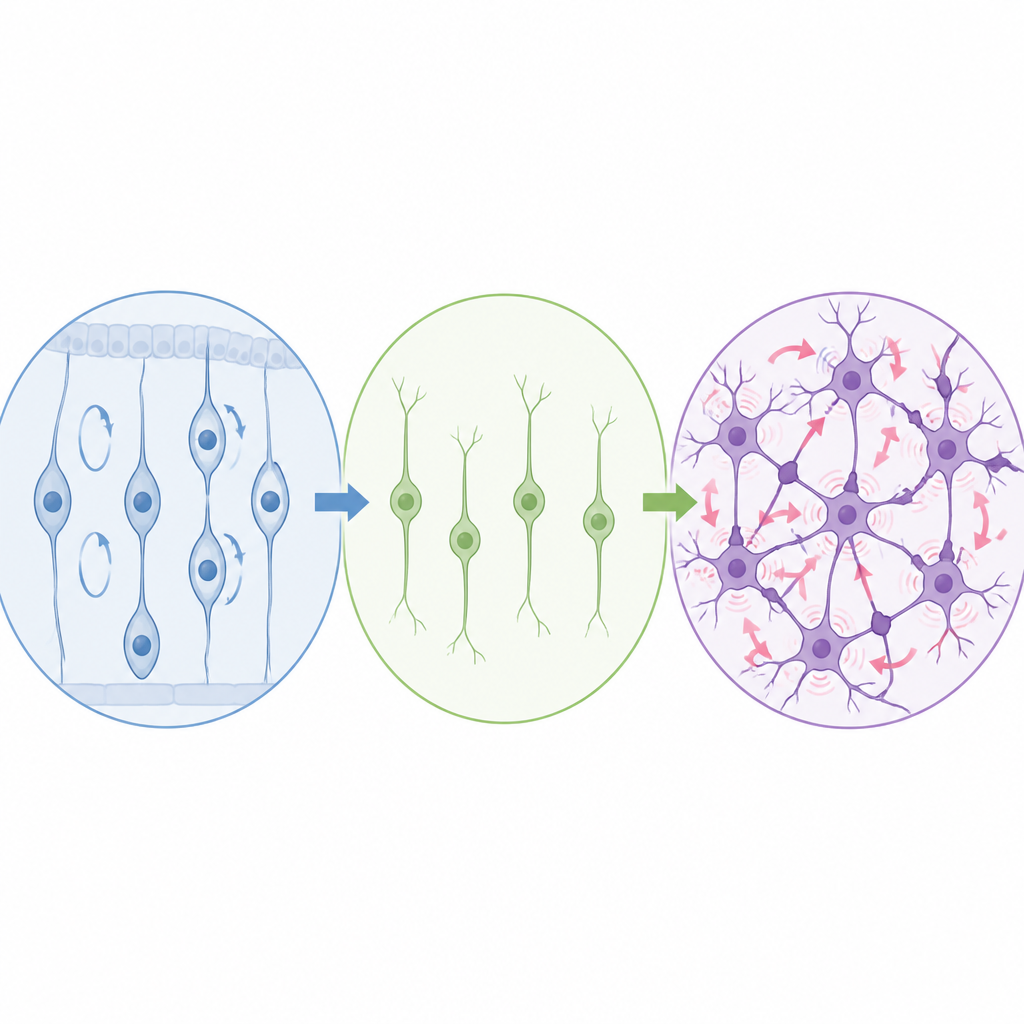
Shared paths with neurodegeneration
By comparing their gene networks with large genetic databases, the authors found that SHANK3-related modules overlap with genes involved in intellectual disability, autism, attention disorders, and several neurodegenerative diseases. Some modules rich in cell cycle and mitochondrial genes were especially associated with regression in Phelan-McDermid syndrome. This supports the idea that early-life disruptions in how brain cells are produced and maintained can set the stage for later declines that resemble early-onset dementia.
What this means going forward
For non-specialists, the main message is that SHANK3 does more than help nerve cells talk to each other at synapses. It also helps manage how early brain cells divide, mature, and wire up into balanced networks. When SHANK3 is lacking, progenitor cells multiply abnormally, neurons become structurally simpler yet overly excitable, and large-scale brain networks drift into a hyperconnected state. These combined changes may explain why people with Phelan-McDermid syndrome can lose skills over time and why their condition shares biological pathways with both autism and neurodegenerative diseases, pointing to new targets for future therapies and biomarkers.
Citation: Varella-Branco, E., Shephard, E., Toledo, V.H.C. et al. “SHANK3 deficiency alters early progenitor dynamics and reveals shared pathways with neurodegeneration”. Mol Psychiatry 31, 3033–3048 (2026). https://doi.org/10.1038/s41380-025-03433-y
Keywords: Phelan-McDermid syndrome, SHANK3, neurodevelopment, neurodegeneration, brain connectivity