Clear Sky Science · en
The neural pathways of change: an fMRI study of the effects of behavioral change suggestions on value-based dietary decision-making
Why Our Food Promises Are So Hard to Keep
Many people vow to eat better—fewer chips, more vegetables—yet find themselves reaching for the same comfort snacks again and again. This study explores what happens in the brain when we remind ourselves of reasons to change our eating habits versus reasons to stay the same. By combining a counseling technique with brain imaging, the researchers show how our own words can nudge both our choices and the neural circuits that balance cravings against long-term health.
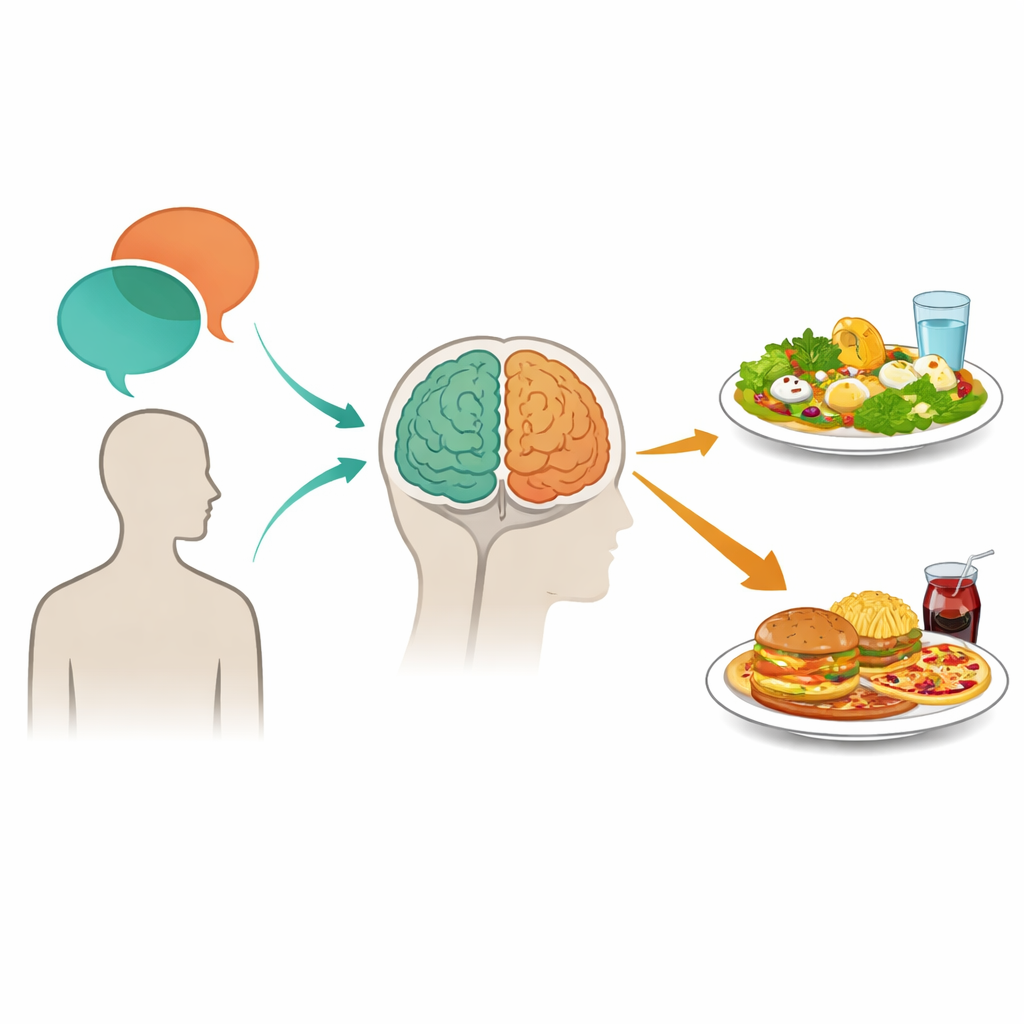
The Inner Tug-of-War Around Food
Changing how we eat is unusually difficult because we cannot simply quit food the way we might stop using a substance. Every day, we make many small decisions about what to eat, often while tired, stressed, rushed, or surrounded by tempting options. The authors focus on a kind of inner conflict: part of us wants immediate pleasure from tasty foods, while another part cares about future health, weight, and well-being. A counseling method called motivational interviewing works directly with this ambivalence. In such sessions, people articulate both their reasons for change (called “change talk”) and their reasons for keeping current habits (called “sustain talk”). This study asked: when people later hear their own recorded statements during a food-choice task, do their decisions—and their brains—respond differently?
Listening to Yourself Changes What You Choose
Eighty-five adults with a wide range of body weights and levels of food addiction–like behavior first completed a motivational interview about their eating. From these conversations, the team selected short personal sentences expressing change talk and sustain talk. A week later, in a brain scanner and after fasting, participants listened to one of their own statements, then rated how much they wanted to eat various snack foods that differed in tastiness and healthfulness. Overall, people wanted food slightly less after hearing change talk than after hearing sustain talk, and their choices shifted in subtle but important ways. After change talk, participants paid more attention to how healthy a food was, and were more willing to forgo pure tastiness in favor of health. After sustain talk, the opposite pattern emerged: tastiness played a larger role than health in what they wanted.
Weight, Craving, and the Brain’s Control Circuits
To see how these shifts played out in the brain, the researchers used functional magnetic resonance imaging (fMRI). They focused on two key areas: a midline region that tracks how valuable a food seems, and a side region involved in self-control and weighing long-term goals. As expected, wanting a food activated the valuation system. But people with higher body mass index (BMI) showed weaker activity in some reward-related regions during choices, suggesting that weight status changes how strongly the brain’s reward network responds. Crucially, when participants with BMI at or above 25 heard change talk, the connection between the valuation region and the control region became stronger. This pattern is consistent with the brain ramping up its ability to re-balance taste and health in favor of healthier options, particularly in those who might benefit most from change.
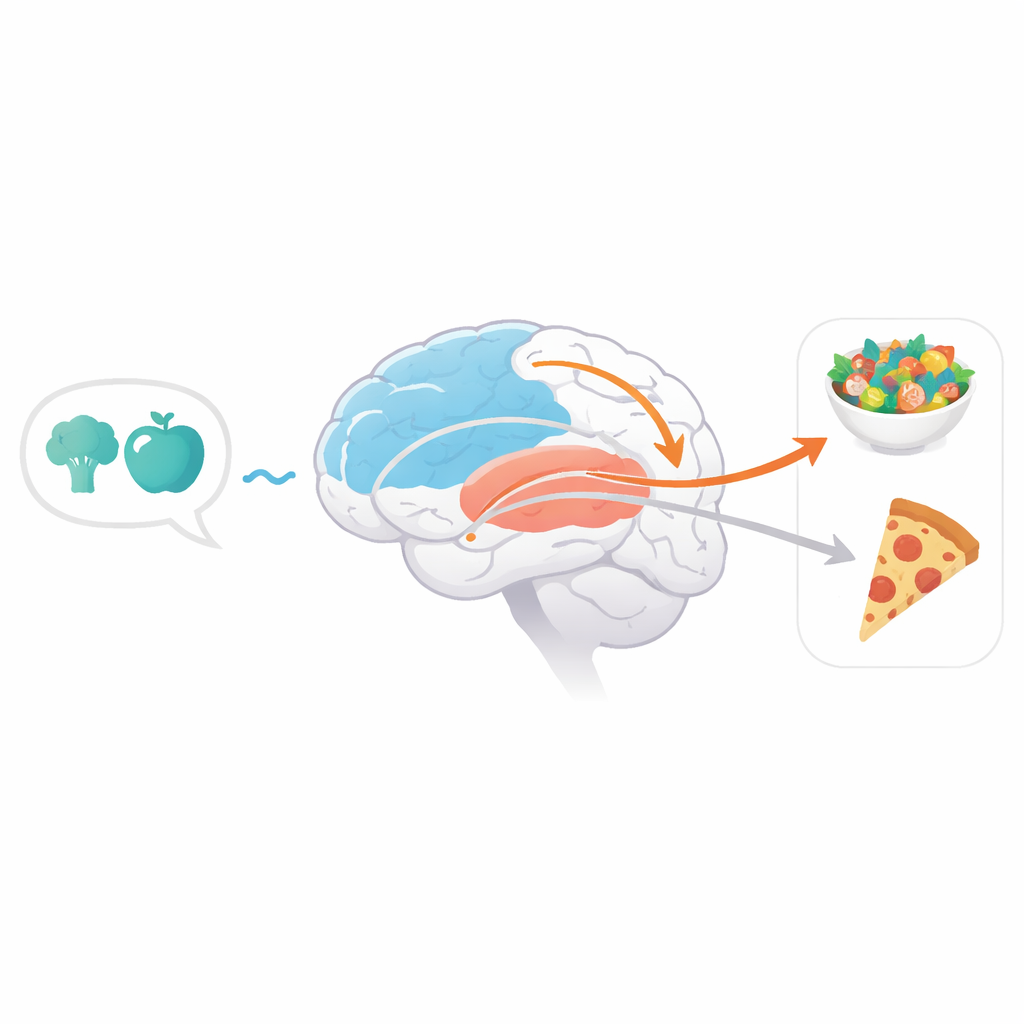
How Cravings Shift With Different Self-Messages
The team also applied a previously validated brain “signature” associated with craving for food and drugs. They asked whether this pattern lit up differently for healthy versus tasty foods after change or sustain talk, and whether weight mattered. Among people with BMI below 30, sustain talk amplified craving-related responses to especially tasty foods more than to healthy ones. In contrast, after change talk in this same weight range, higher BMI was linked to stronger craving-like responses for healthy foods and weaker responses for especially tasty foods. This suggests that, for many individuals who are not yet in the highest BMI range, hearing their own reasons to change may help the brain re-tag healthier foods as more desirable and downshift the pull of indulgent snacks. However, in participants with obesity (BMI 30 or higher), this craving signature did not show the same clear pattern, hinting that their brains may rely on different regulation strategies.
What This Means for Everyday Eating
Put simply, the study shows that the way we talk to ourselves about food can measurably tilt both our choices and the brain pathways that support self-control. Hearing one’s own reasons for change made people’s decisions a bit more health-focused and strengthened communication between brain regions that balance reward and control, especially in those with higher weight and more addiction-like eating habits. While the effects were modest and short term, they support the idea that carefully crafted, personalized messages—like those used in motivational interviewing—can help bridge the gap between good intentions and daily eating decisions. Over time, repeated use of such strategies could contribute to more sustainable, tailored approaches to healthier diets.
Citation: Rodrigues, B., Flament, B., Khalid, I. et al. The neural pathways of change: an fMRI study of the effects of behavioral change suggestions on value-based dietary decision-making. Int J Obes 50, 873–886 (2026). https://doi.org/10.1038/s41366-026-02018-1
Keywords: dietary decision-making, motivational interviewing, food craving, self-control, functional MRI