Clear Sky Science · en
The wounded healer paradox: perceived triggers of return to substance use and subsequent recovery among formal peer supporters
Why this story matters
People who have overcome addiction often go on to help others do the same. This paper looks closely at what happens when these "wounded healers" themselves slip back into substance use and then find their way back to recovery. Understanding their experiences sheds light on how recovery really works in everyday life and how to better support those on the front lines of helping others.
Helpers with a shared past
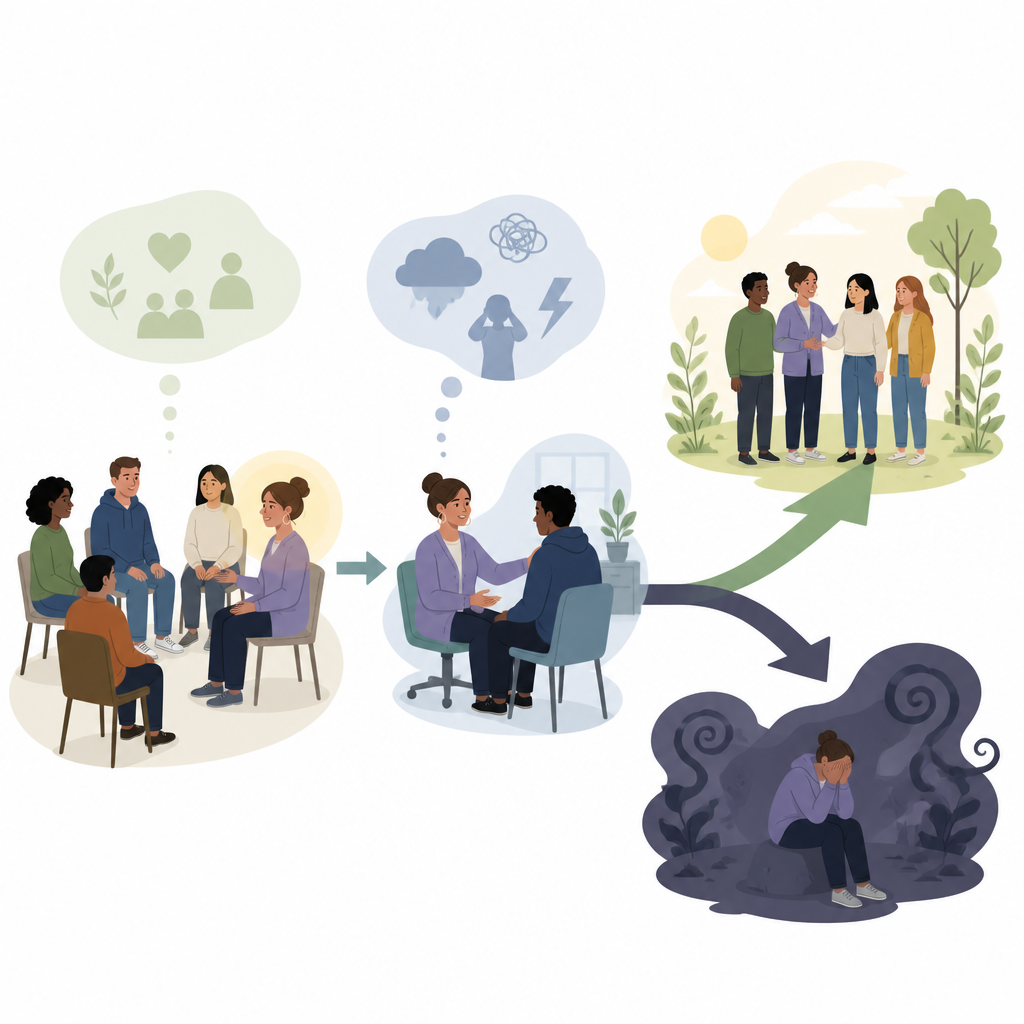
The study focuses on men and women in Israel who had histories of substance use and criminal justice involvement and later worked as paid peer supporters in treatment programs. These workers drew on their own pasts to guide others, while also staying active in 12-step groups like Narcotics Anonymous. The researchers wanted to know what they believed had triggered their own relapses while they held these formal helping roles, and how they made sense of returning to a life without drugs afterward.
How slipping away begins
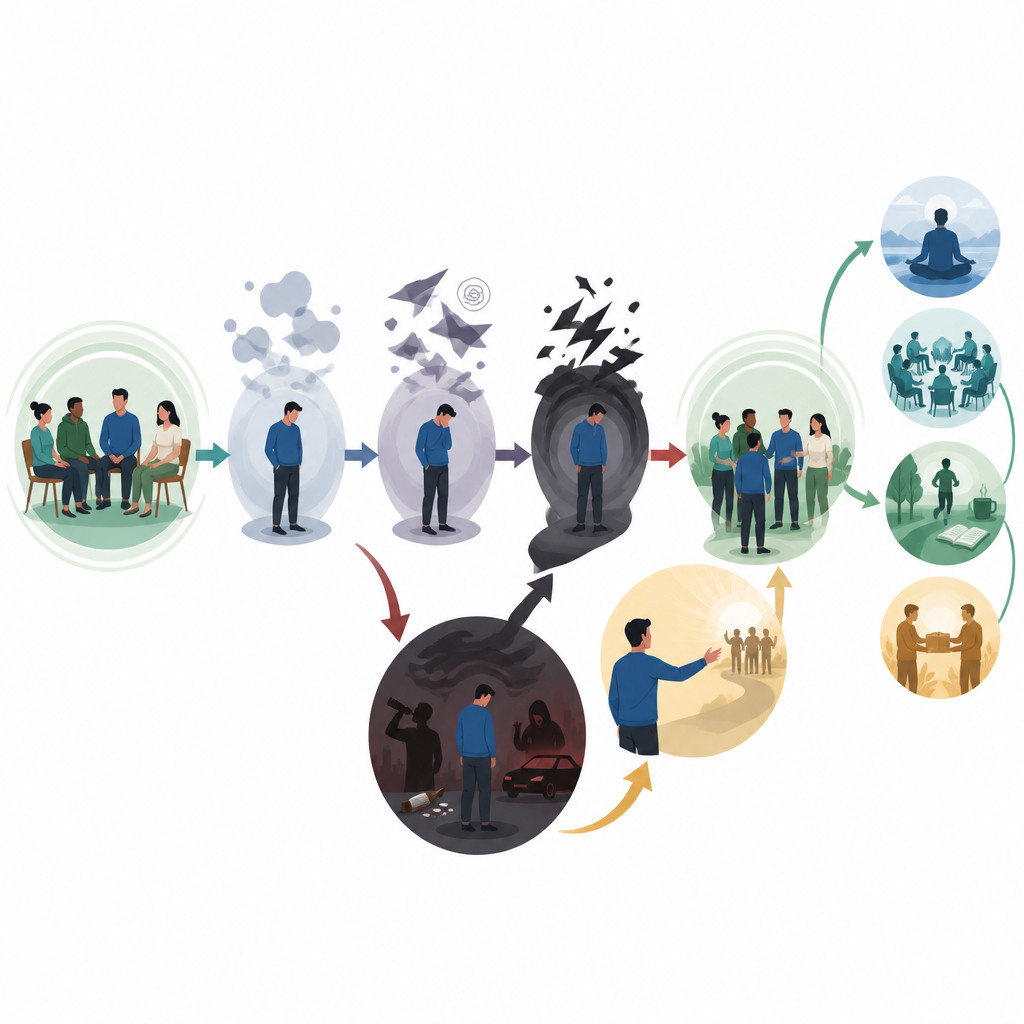
Interviews with 13 peer supporters revealed that relapse rarely arrived out of nowhere. A key early step was drifting away from 12-step meetings and other people in recovery. Many described how success in work and family life made them feel they could manage alone. As they skipped meetings, stopped talking honestly, and reconnected with old using environments, a slow slide began. Old habits and thinking patterns crept back in, eventually leading to renewed substance use and, for some, a return to crime.
Pressure of being the "savior"
Another powerful theme was role confusion. As former offenders and users who now worked in respected positions, some began to see themselves as rescuers with special power to fix others. This flattering image hid unresolved personal hurts and character weaknesses like arrogance, dishonesty, or the need to feel superior. The more they clung to the helper identity, the harder it became to ask for help themselves. For some, early romantic relationships added more strain, especially when emotional wounds and insecurity about intimacy had not yet healed.
Learning from falling down
Despite the pain, most participants did not see relapse as the end of the story. Instead, they treated it as a hard lesson that deepened their understanding of what is needed to stay well. Many spoke of "warning signs" they now recognize, such as isolation, self-pity, or impatience with group members. They emphasized returning to four daily anchors linked with Narcotics Anonymous: working the steps, going to meetings, giving and receiving peer support, and doing service for the community. At the same time, several stressed that recovery never becomes automatic. Like watching one’s diet, they said, it must be chosen "just for today" over and over again.
Balancing strength and vulnerability
Overall, the study portrays wounded healers as walking a narrow path. Their lived experience gives them unique credibility and can be a powerful source of hope for others, yet it also exposes hidden weaknesses that can fuel shame and self-blame when relapse happens. The authors argue that relapse should not be seen simply as a moral failure, but as a risk built into the demanding role of peer support. They call for better safeguards for these workers, including ongoing supervision, safe places to talk about struggles, and regular checks on their well-being. For a lay reader, the message is that recovery is not a straight line, even for those who help others every day, and that honest connection and steady routines are crucial to staying on track.
Citation: Elisha, E., Shachaf-Friedman, E. The wounded healer paradox: perceived triggers of return to substance use and subsequent recovery among formal peer supporters. Humanit Soc Sci Commun 13, 745 (2026). https://doi.org/10.1057/s41599-026-07089-z
Keywords: addiction recovery, peer support, relapse, 12-step groups, wounded healer