Clear Sky Science · en
Recommender systems, representativeness, and online music: a psychosocial analysis of Italian listeners
Why music apps matter to everyday listening
When we press play on a music app, it can feel as if songs simply appear, almost by magic. Yet behind the scenes, hidden systems quietly shape what we hear and which artists reach our ears. This article looks at how Italian music fans talk about these systems, what they understand about them, and how they see questions of fairness and visibility in the music offered by streaming and social media platforms.
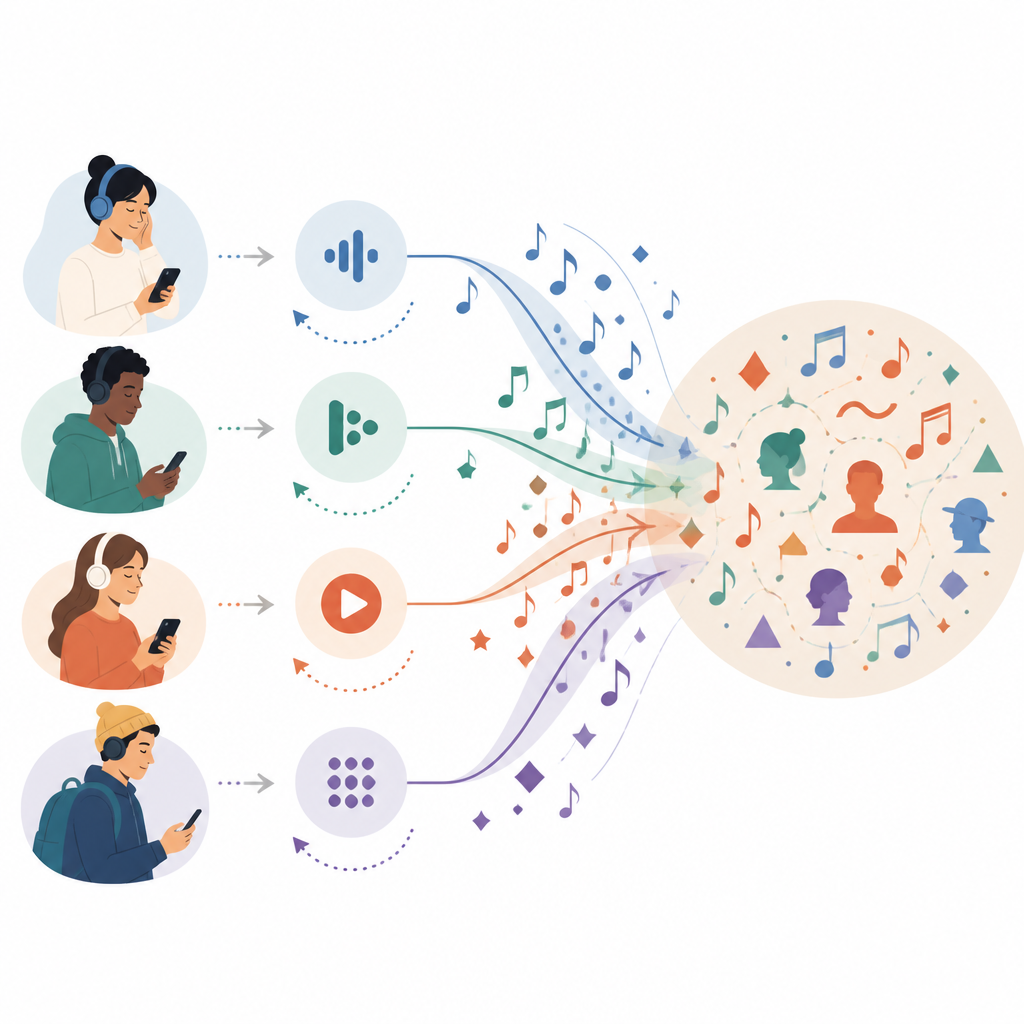
How hidden helpers guide our playlists
Today, music listening is tightly linked to online platforms such as streaming services and social networks. These services rely on recommender systems that pick the next track, assemble personalized playlists, and surface new artists. The authors argue that understanding the impact of these tools requires more than technical testing. It also calls for a closer look at the feelings, habits, and cultural references listeners bring to their everyday use of music apps.
Listening to listeners in their own words
To explore this, the researchers interviewed twenty‑one adults in Italy about their experiences with online music and with the Italian music scene. Instead of counting clicks or play times, they carefully analyzed the interview texts using a psychosocial method called Emotional Textual Analysis. This approach examines which words people repeat, how those words cluster together, and what shared emotional meanings and cultural patterns emerge from their stories, rather than treating each listener as just an isolated set of preferences.
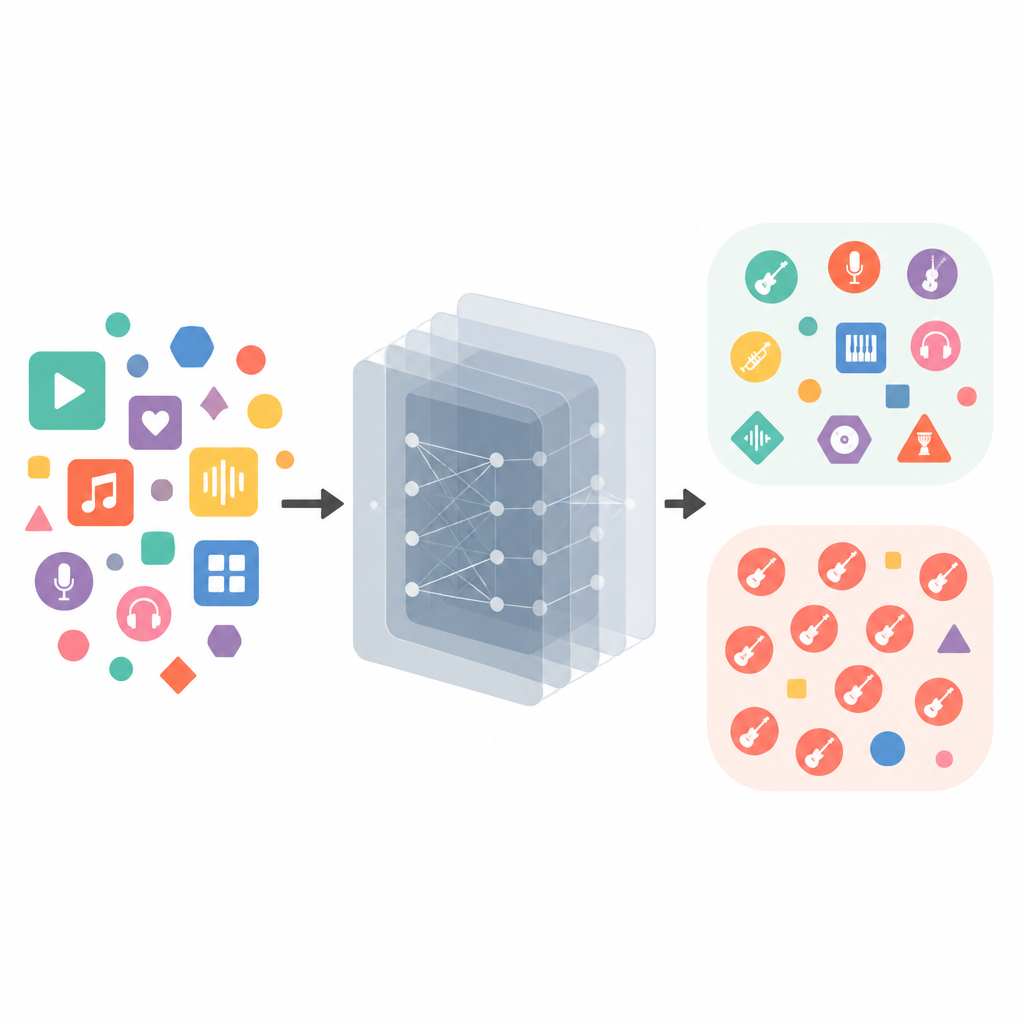
Comfort with apps, distance from algorithms
The analysis revealed two contrasting ways people relate to music technology. On one side, listeners spoke of platforms like Spotify and TikTok in warm, familiar terms. They described them as useful companions that fit smoothly into daily routines, helping them discover new bands and shape playlists that feel personal. On the other side, when talk turned to the underlying algorithms, the language became more formal and distant. Listeners knew that algorithms ranked tracks and created lists, but they often pictured these processes as opaque and almost mythical, something that acted on them rather than something they could really understand or influence.
Seeing culture, not always seeing inequality
A second tension concerned how people think about fairness and visibility in music. Interviewees were quick to notice differences between Italian and English‑language music, or between local singer‑songwriters and American‑style bands. These contrasts formed a strong theme in their stories and showed how national and linguistic identity shape what counts as “our” music versus “global” hits. However, when questions of representation and difference turned to gender, the discussion became thinner. Words like “man,” “woman,” and “representativeness” did appear, but often without deeper reflection on how platforms might underplay women artists or reinforce existing gaps in the music world.
What this means for fairer, clearer music platforms
Together, these findings suggest that many listeners are highly practiced users of music apps yet have limited “algorithmic literacy” – that is, they lack a clear sense of how their actions feed back into recommendations or how hidden choices might favor some artists over others. The authors argue that building trustworthy music platforms is not only a technical challenge. It also requires clearer explanations in interfaces, chances for listeners to influence what is recommended, and deliberate checks on how different social groups are shown, or not shown, in our everyday listening. Making these systems more understandable and more attentive to cultural and gender diversity could help align what listeners hear with a richer and fairer musical reality.
Citation: Porcaro, L., Monaldi, C. Recommender systems, representativeness, and online music: a psychosocial analysis of Italian listeners. Humanit Soc Sci Commun 13, 704 (2026). https://doi.org/10.1057/s41599-026-07044-y
Keywords: music recommender systems, streaming platforms, algorithmic literacy, cultural representation, gender in music