Clear Sky Science · en
ESG rating divergence and corporate R&D investment in China
Why this matters for everyday investors
When you hear about “green” or “responsible” investing, you might assume that experts broadly agree on how well a company treats the environment, workers, and communities. In reality, different rating firms can score the same company very differently. This study looks at what happens inside companies in China when those scores disagree, and how that confusion shapes the money they put into future innovation.
Mixed signals from ESG scorecards
Environmental, social, and governance, or ESG, ratings have become a popular shortcut for judging whether companies are behaving responsibly. Yet different rating agencies rely on distinct data, rules, and weightings. For Chinese firms listed on domestic stock markets, these differences often lead to wide gaps in scores for the same company. Such gaps can confuse investors, cloud a firm’s reputation, and raise questions about its long term prospects. Policymakers worldwide are beginning to worry that these rating mismatches may distort markets and weaken the push for more sustainable business practices.
How score disagreement shapes innovation spending
The authors examined nearly fifteen thousand firm year observations from 2018 to 2023, combining ESG scores from four major Chinese rating agencies with detailed financial data. They focused on research and development, or R&D, spending, a core ingredient for future products and competitiveness. By measuring how far apart the different ESG scores were for each firm, they built a picture of “ESG rating divergence” and then tested how this divergence relates to the share of a company’s assets devoted to R&D. Their statistical models also accounted for firm size, debt, profitability, ownership structure, and other features that usually affect innovation budgets.
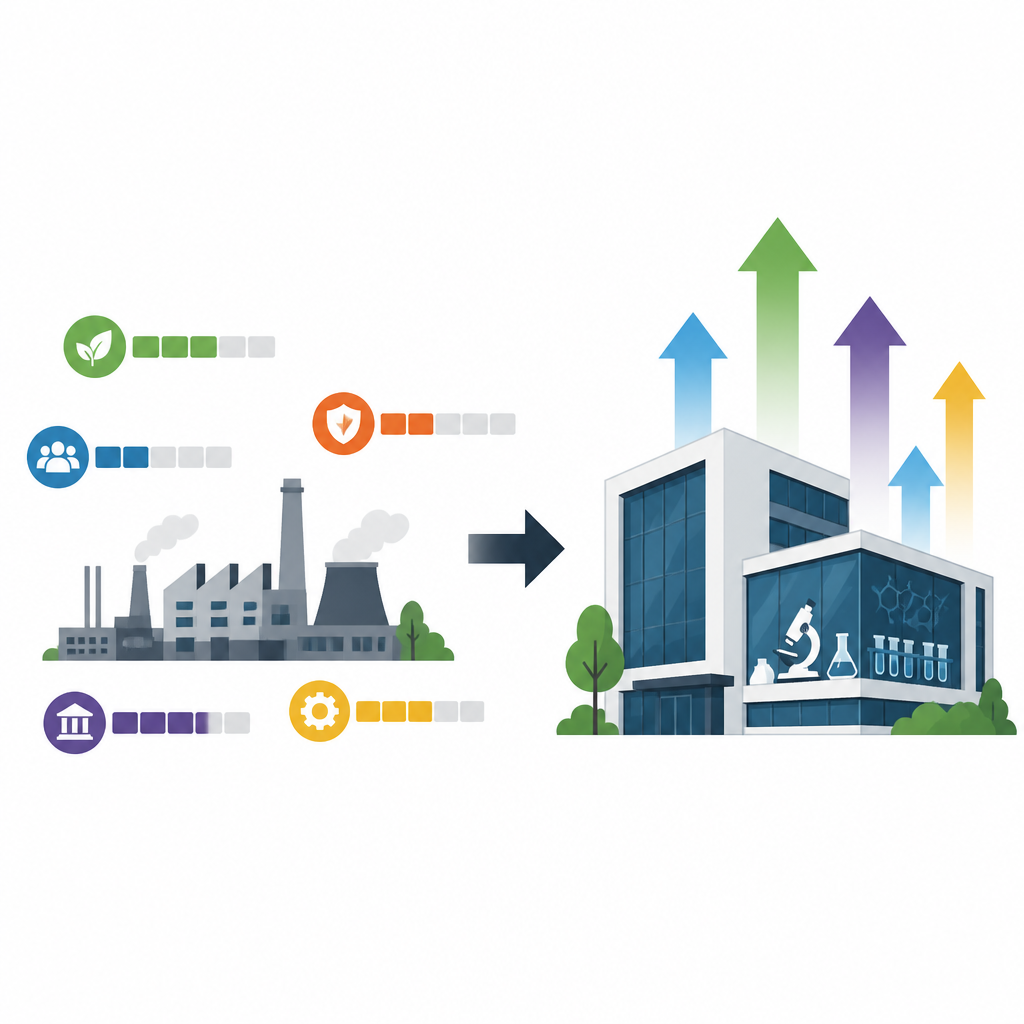
A U shaped pattern between confusion and creativity
Instead of finding a simple positive or negative link, the researchers uncovered a U shaped pattern. When rating differences are small, a rise in divergence is linked to lower R&D spending. In this zone, investors see a bit more uncertainty, lenders become cautious, and it gets harder and more expensive for companies to raise money. Because R&D requires steady, long term funding, firms react by tightening their innovation budgets. However, once the disagreement among ratings becomes large, the pattern reverses. Big gaps in ESG scores can seriously threaten a firm’s image and hint at future financial trouble. Faced with this pressure, managers become more willing to take risks, and they ramp up R&D as a “self rescue” strategy to signal commitment to improvement and to search for new growth paths.
Where the money for innovation comes from
Digging deeper, the study shows how firms under strong financing pressure still manage to fund that extra R&D. When external money is harder to get, companies turn inward. They cut back on cash dividends to shareholders and scale down investment in buildings and equipment. The freed resources are redirected toward laboratories and development teams. The U shaped pattern is especially clear in firms with stronger internal governance, such as higher leadership share ownership, and in those facing tougher outside scrutiny or stronger market competition. In contrast, when analysts closely follow a firm or when average ESG scores are already high, the push from rating divergence on innovation becomes weaker.
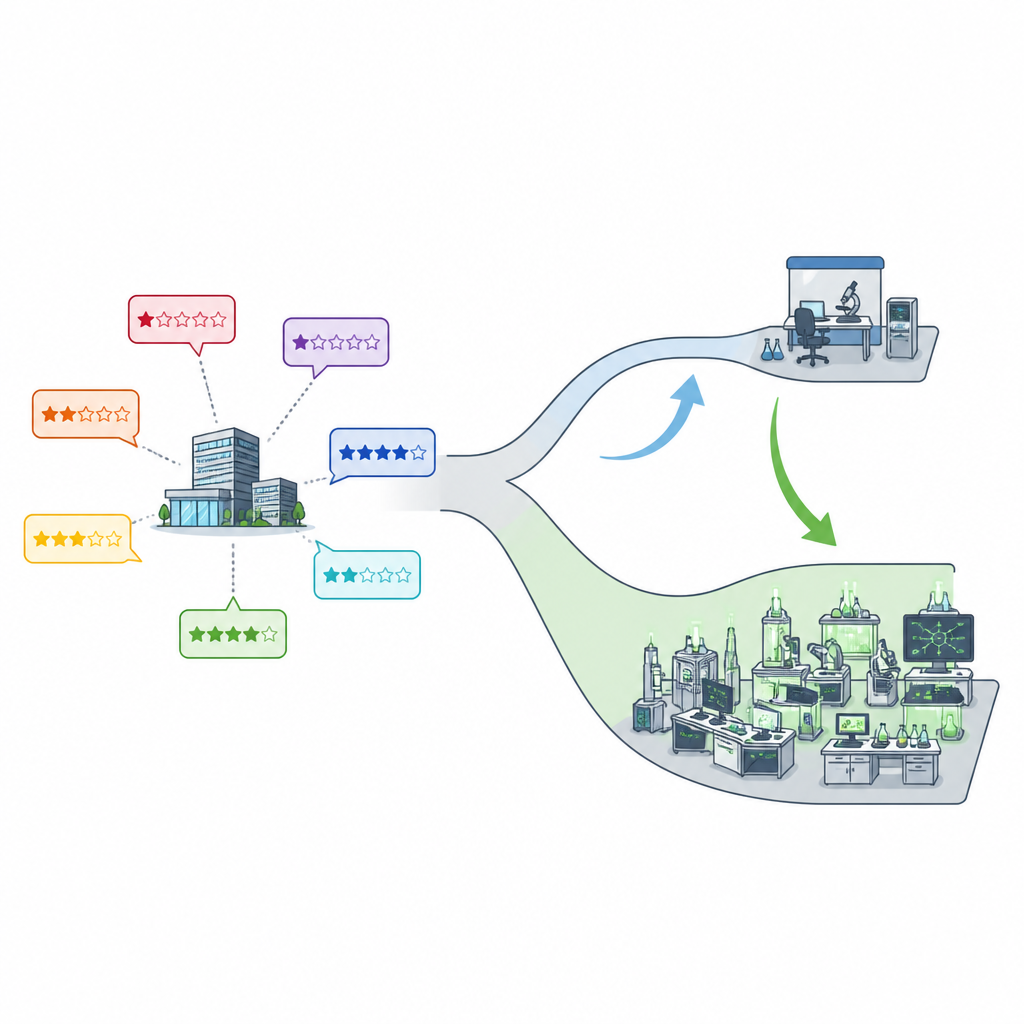
What this means for the future of sustainable business
For a lay reader, the key message is that noisy and conflicting ESG scores do not simply help or hurt innovation. Mild confusion can choke off vital funding and discourage long term projects, while extreme disagreement can jolt firms into taking bigger bets on new ideas. The study suggests that clearer and more consistent ESG ratings would reduce harmful financing strain without losing the useful pressure that drives companies to improve. It also shows that when outside funding is tight, companies that genuinely care about their future often choose to protect and even grow their R&D budgets by tightening their belts elsewhere. In short, how we measure corporate responsibility can quietly reshape the flow of money into the ideas that will power tomorrow’s economy.
Citation: Wang, Y., Xu, D. & Sun, G. ESG rating divergence and corporate R&D investment in China. Humanit Soc Sci Commun 13, 667 (2026). https://doi.org/10.1057/s41599-026-07032-2
Keywords: ESG ratings, R&D investment, corporate innovation, China stock market, sustainable finance