Clear Sky Science · en
Exploring a framework for gamified self-directed practice for interpreting students
Why practice for interpreters is getting a game like upgrade
People who work as interpreters need countless hours of practice to turn fast changing speech into another language in real time. This study asks a simple question with wide appeal: can ideas borrowed from video games and virtual worlds make that long, often stressful practice feel more motivating, social, and enjoyable for students who are training to be interpreters?
How interpreters currently train together
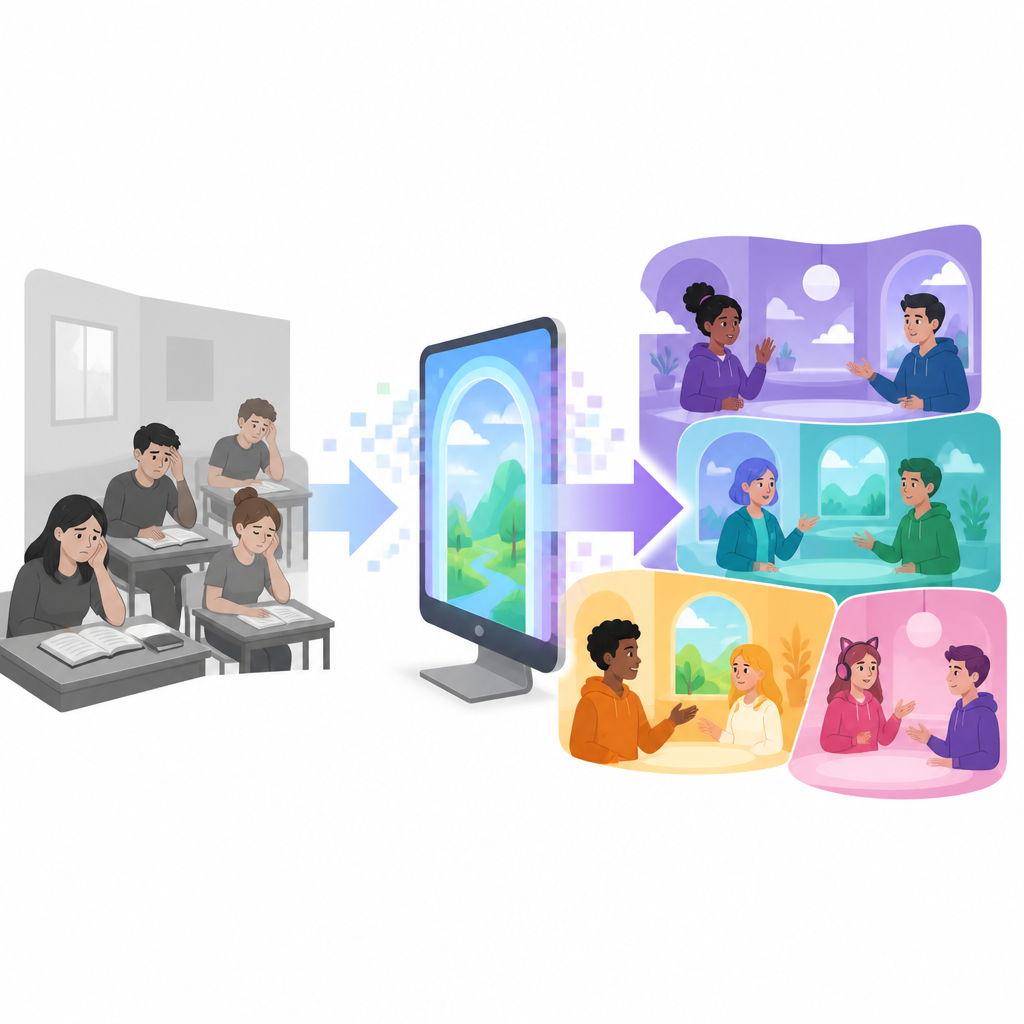
Graduate students in interpreter training programs usually practice in small groups outside of class, taking turns as speaker and interpreter with speeches drawn from texts, audio, or video. They value these sessions because they receive many different kinds of feedback, gain access to varied practice materials, and feel pushed to keep up with peers. Group practice also offers real life experience, helps them manage nerves, and builds friendships. Yet students report clear downsides: harsh or vague comments can be emotionally draining, partners may skip sessions or arrive unprepared, and feedback is not always accurate or useful, making some meetings feel like a waste of time.
Online tools and virtual worlds in the mix
The pandemic pushed much of this practice onto online platforms such as video conferencing tools and specialized training sites. Students now switch between in person and online sessions. Offline meetings feel more intense and immersive, allow partners to notice nonverbal habits, and encourage informal conversation, but they require travel and a quiet shared space. Online practice saves time, supports easy sharing of files and videos, and mirrors the rise of remote interpreting, though it suffers from weak connections, sound problems, and reduced focus. A newer option, the metaverse, offers shared three dimensional or two dimensional virtual spaces with avatars and customizable rooms, but students find current services clunky, glitchy, and sometimes risky in terms of privacy.
What students like and dislike about games
Many interpreting students say they are not regular gamers, often because they fear games will consume time or feel too complex. Still, when they do enjoy games, their reasons are revealing. They are drawn to attractive graphics, memorable characters, simple controls, and the chance to collaborate in teams. They stay engaged when there are quests, a sense of achievement, and opportunities for social connection and stress relief. Concerns about addiction, confusing rules, and low perceived usefulness shape their reluctance, suggesting that any game like study tool must feel straightforward, purposeful, and under students’ control rather than like a distraction.
Designing a playful practice space that fits learners
Based on a detailed questionnaire of 91 graduate students in South Korea, the author mapped which game style features would actually support interpreting practice. Students favored elements linked to achievement, such as clear challenges, visible progress indicators, and meaningful rewards, alongside affective elements, such as avatars for self expression, tools for friendly interaction, and features that support fellowship. They preferred cooperative practice in pairs or small groups over pure competition or public rankings, and they wanted penalties for unreliable behavior like repeated lateness. Most were open to working with unfamiliar partners online if the platform verified that everyone had similar training and skill levels, showing a desire for broader networks of practice partners without sacrificing trust or safety.

A simple framework for gamified virtual practice
Using these insights, the paper proposes a framework for a metaverse based platform tailored to interpreting students. In this virtual space, users appear as avatars in rooms that resemble real conference settings, form pairs or small groups, and bring or generate source speeches to interpret. As they practice, the system tracks effort and behavior and offers structured challenges that match their goals. Rewards and progress markers signal improvement, while emotional tools, customized avatars, and shared virtual spaces support bonding and mutual support. Penalties address repeated no shows or disrespectful conduct, helping maintain a reliable community. The design emphasizes cooperation, clear feedback, and emotional safety rather than intense head to head competition.
What this could mean for future interpreter training
In plain terms, the study concludes that interpreter training could benefit from a carefully tuned mix of game like features and virtual environments. Students already work hard and take practice seriously, but their efforts are often limited by partner problems, uneven feedback, and exhaustion. A metaverse platform built around challenges, rewards, avatars, and social connection could make self directed practice more engaging and sustainable, provided that technical glitches, privacy, and community rules are handled well. The proposed framework is a starting blueprint; future research will need to test and refine it in real virtual classrooms and with a wider range of learners.
Citation: Huh, J. Exploring a framework for gamified self-directed practice for interpreting students. Humanit Soc Sci Commun 13, 690 (2026). https://doi.org/10.1057/s41599-026-07028-y
Keywords: interpreter training, gamification, metaverse learning, self directed practice, virtual education