Clear Sky Science · en
Corporate carbon risk and stock price fragility
Why climate risk matters for your investments
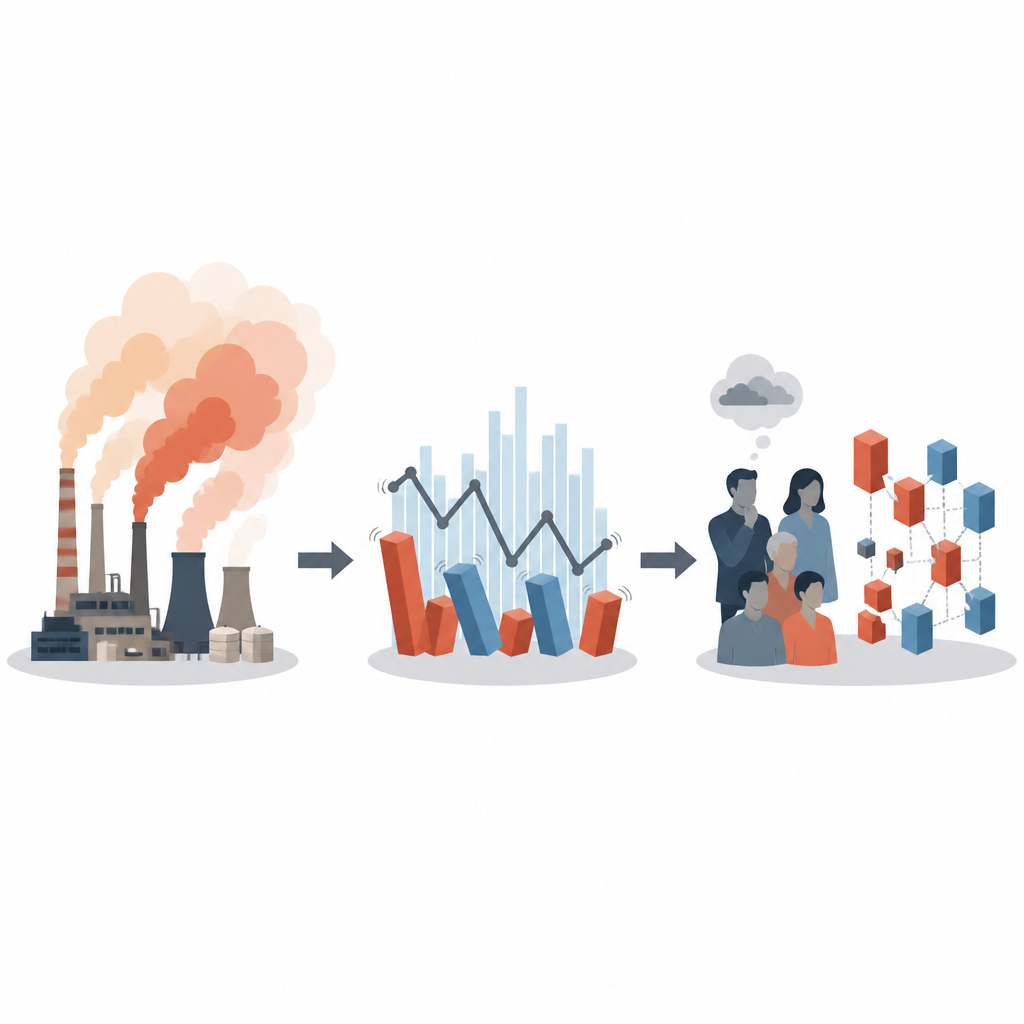
When we hear about climate change, we often think of melting ice or extreme weather, not our retirement savings. This study shows how the carbon pollution of companies can quietly make their share prices more fragile, meaning they are more likely to tumble sharply when bad news or small shocks arrive. By looking at how markets reacted after the Paris climate agreement, the authors reveal how climate policy can ripple through investment funds and reshape the stability of stocks held by ordinary investors.
A global climate deal as a financial stress test
The Paris Agreement, signed in 2015, committed countries to ambitious cuts in greenhouse gas emissions and sent a strong signal that the world is moving away from fossil fuels. The researchers treat this moment as a natural experiment that suddenly raised the financial importance of carbon risk for companies, especially in China. They divide Chinese listed firms into high and low carbon industries, such as power, steel and cement versus services and technology, and track how the fragility of their share prices evolved before and after China ratified the agreement in 2016.
What stock price fragility really means
Instead of focusing on everyday ups and downs, the study looks at how easily a stock price could suffer a sharp drop if investors rush to sell. This fragile state can arise even when company fundamentals have not changed much, simply because many funds move money in and out at the same time. Using detailed data on which mutual funds hold which stocks and how money flows between funds, the authors build a measure of price fragility that captures the risk of sudden, severe falls driven by shifts in investor demand rather than by profits or assets.
Carbon heavy firms became more brittle after Paris
The analysis shows that, after the Paris Agreement, stocks belonging to high carbon industries in China became noticeably more fragile than those in cleaner sectors. On average, their fragility rose by about a quarter relative to the overall sample. This pattern holds even after accounting for firm size, debt levels, profitability and many other financial characteristics, and it remains when the authors redo the tests using alternative ways to classify carbon risk or to measure fragility. In practical terms, markets began to treat carbon intensive firms as more likely to experience abrupt price crashes when conditions turn sour.
How fund behavior magnifies climate concerns
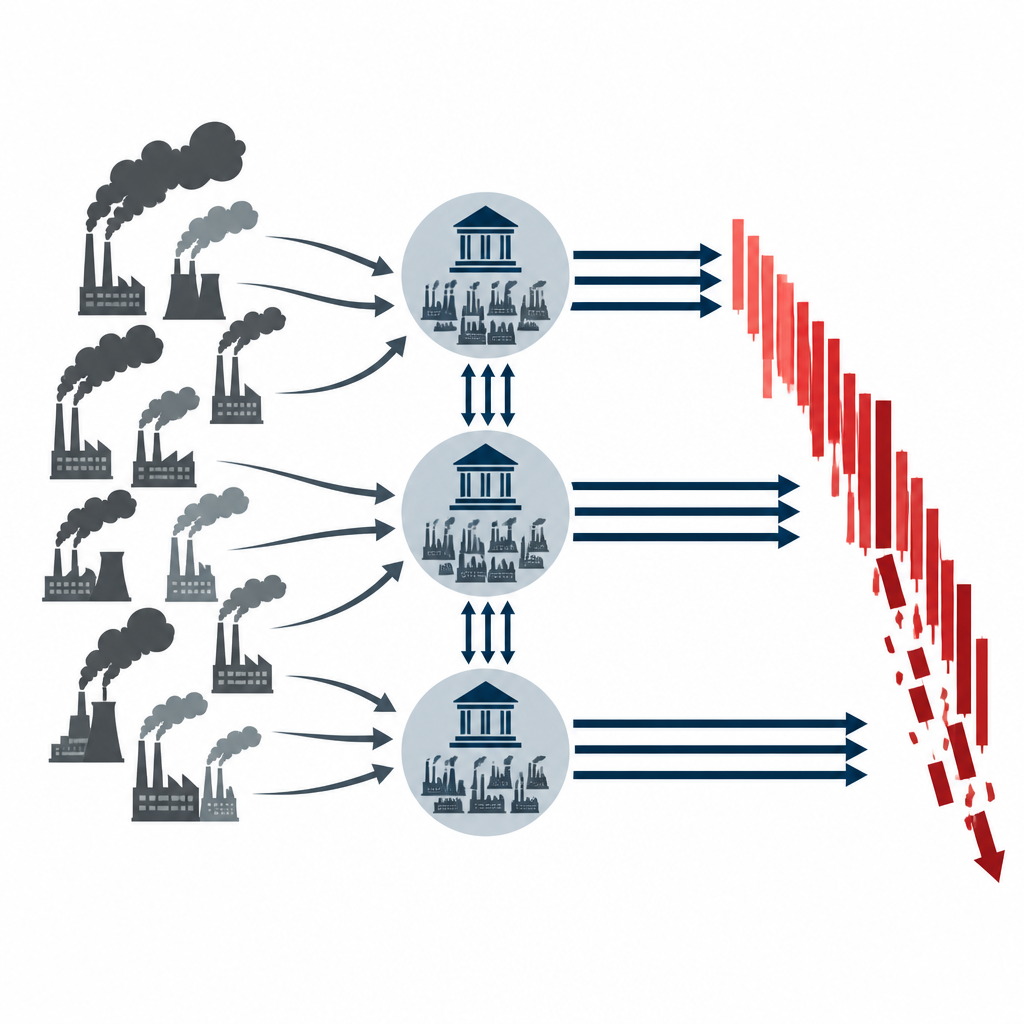
The study then asks why higher carbon risk translates into shakier stock prices. It finds that mutual funds actually reduced their overall holdings of high carbon stocks after Paris, suggesting some investors tried to clean up their portfolios. At the same time, however, the remaining holdings of these stocks became more concentrated in a smaller set of funds, and the cash moving into and out of those funds became more tightly synchronized. This combination means that when money flows change, there are fewer independent buyers to cushion the impact, so the prices of carbon heavy stocks move more violently.
When rules and disclosure calm the market
The link between carbon risk and fragile prices is especially strong when environmental policies are uncertain, such as during periods of shifting climate rules or shocks like the COVID 19 pandemic. By contrast, firms that provide clearer and more complete environmental, social and governance information experience a weaker connection between carbon risk and fragility. Better disclosure appears to reduce confusion, align expectations and soften the risk of sudden sell offs, even for companies facing tough low carbon transitions.
What this means for savers and policymakers
In plain language, the study concludes that companies with high carbon emissions are more exposed to sharp stock price drops as climate policy tightens, largely because of how investment funds trade and herd around them. For savers, this means that carbon risk is not only an ethical or environmental issue but also a financial one that can affect portfolio stability. For regulators and firms, the findings highlight the value of predictable climate policies and transparent reporting in keeping markets steady as the world moves toward a low carbon economy.
Citation: Wang, G., Wang, H. & Ji, T. Corporate carbon risk and stock price fragility. Humanit Soc Sci Commun 13, 643 (2026). https://doi.org/10.1057/s41599-026-06997-4
Keywords: carbon risk, stock price fragility, Paris Agreement, mutual funds, climate finance