Clear Sky Science · en
Experiencing linguistic prejudice and discrimination in Saudi Arabia: a path towards inequality
Why how we speak can change how we are treated
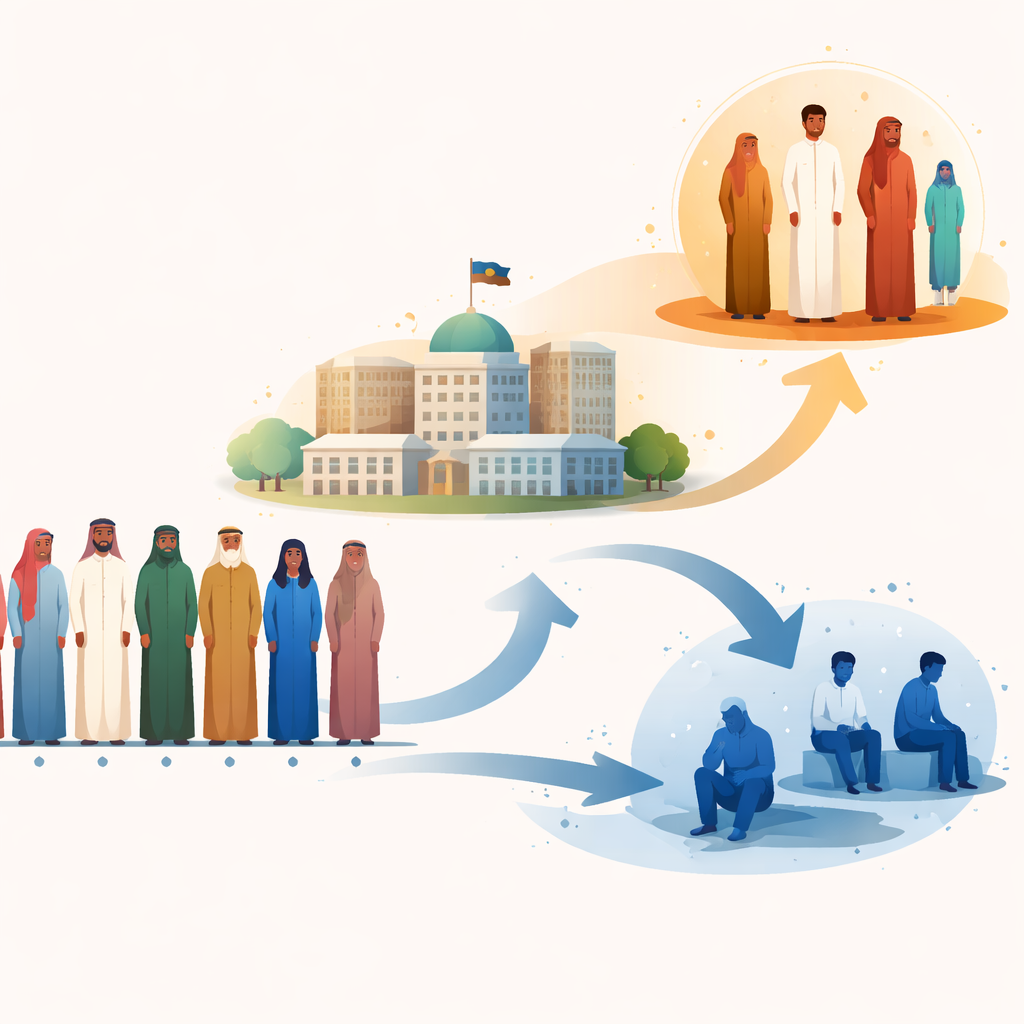
In many societies, the way a person speaks can quietly open doors—or close them. This article looks at how everyday speech in Saudi Arabia, especially regional ways of speaking Arabic, can lead to unfair treatment. Through in-depth conversations with Saudi men and women, the study shows that jokes, teasing, and subtle slights about dialect are not harmless; they can shape people’s chances at school, work, and in public life, and can deeply affect how they see themselves.
Voices, identity, and hidden unfairness
Saudi Arabia may appear linguistically uniform from the outside, but inside the country, regional dialects are powerful badges of identity and belonging. The study draws on ideas from sociolinguistics to show how certain ways of speaking become linked with status, region, class, and even morality. A prestige variety associated with the capital and national media often enjoys an unspoken advantage, while other dialects can be treated as less educated or less respectable. Because language is so tightly bound to identity, mocking someone’s speech can feel like an attack on who they are, not just on how they talk.
Listening to people’s stories
To understand these dynamics, the researcher conducted semi-structured interviews with 17 Saudi participants of different ages, genders, and regional backgrounds. Interviews were held online in Arabic, so people could speak comfortably and naturally. Rather than counting how often something happened, the study aimed to capture rich, detailed accounts of real experiences and perceptions. The recordings were transcribed and carefully coded to identify recurring patterns, which were then grouped into broader themes about mockery, discrimination, context, and psychological impact.
From joking around to crossing the line
One major theme was language mockery as a social habit. All participants agreed that making fun of someone’s way of speaking is a problem, often describing it as hurtful, disrespectful, or even morally forbidden. Many had been teased themselves, especially for southern or less prestigious dialects, and recounted experiences in school, university, or public offices where their speech triggered laughter, condescension, or negative assumptions. While some friendly teasing among close friends could be brushed off as humor, people stressed that the same behavior from strangers, teachers, or officials felt like bullying and left lasting emotional scars, including embarrassment, insecurity, and a sense of not belonging.
Unfair treatment in schools, workplaces, and public spaces
A second theme was the wider pattern of linguistic discrimination. Every participant believed that Saudis do treat people differently based on dialect, sometimes negatively, sometimes positively. Some described cases where speaking a certain dialect led to better service or warmer treatment, showing that “positive” bias still creates unequal ground. Others spoke of classroom experiences where teachers singled them out, encouraged classmates to laugh, or appeared to grade and respond based on where the student was from rather than what they knew. Similar stories emerged from universities, hospitals, banks, and government offices, suggesting that this is not just private prejudice but a systemic issue that can quietly shape life chances.

Emotional costs and quiet inequalities
The third theme concerned the inner toll of these experiences. Participants described feeling ashamed, anxious, or hesitant to speak, especially outside their home region, and some anticipated discrimination even when they had not yet faced it. Because dialect signals regional and social identity, being judged for one’s speech meant feeling that one’s community was being judged as backward or unworthy. The study argues that these emotional costs are part of a larger pattern in which language ideologies—shared beliefs about which ways of speaking are “better” or “proper”—support social hierarchies and keep certain groups at a disadvantage, even without open hostility.
Steps towards fairer treatment for every voice
In plain terms, the article concludes that how Saudis speak can unfairly influence how they are treated, with real consequences for dignity, opportunity, and mental well-being. Because this kind of discrimination is often brushed off as joking or tradition, it can go unnoticed and unchallenged. The author calls for schools and universities to teach respect for all dialects, for teachers and officials to be trained to recognize and avoid bias, and for clear laws that treat language-based discrimination as seriously as other forms of unfair treatment. Recognizing that every dialect reflects a rich history and culture, the study argues that a more inclusive Saudi society depends on making room for all voices, not just the most powerful ones.
Citation: Al-Hakami, A.Y.M. Experiencing linguistic prejudice and discrimination in Saudi Arabia: a path towards inequality. Humanit Soc Sci Commun 13, 614 (2026). https://doi.org/10.1057/s41599-026-06969-8
Keywords: linguistic discrimination, Saudi dialects, language and identity, social inequality, sociolinguistics