Clear Sky Science · en
Exploring the connections between integrated sustainable curricula, generative AI tools, and perceived climate change capabilities across the global south and north using multi-analytics
Why this study matters for students and citizens
As climate change accelerates, universities are under pressure to prepare young people not just to understand the problem, but to act on it. This study explores how course design, climate awareness, and new generative AI tools can help students in both poorer and richer regions of the world build the skills and confidence they need to respond to climate challenges.
Bringing climate into everyday learning
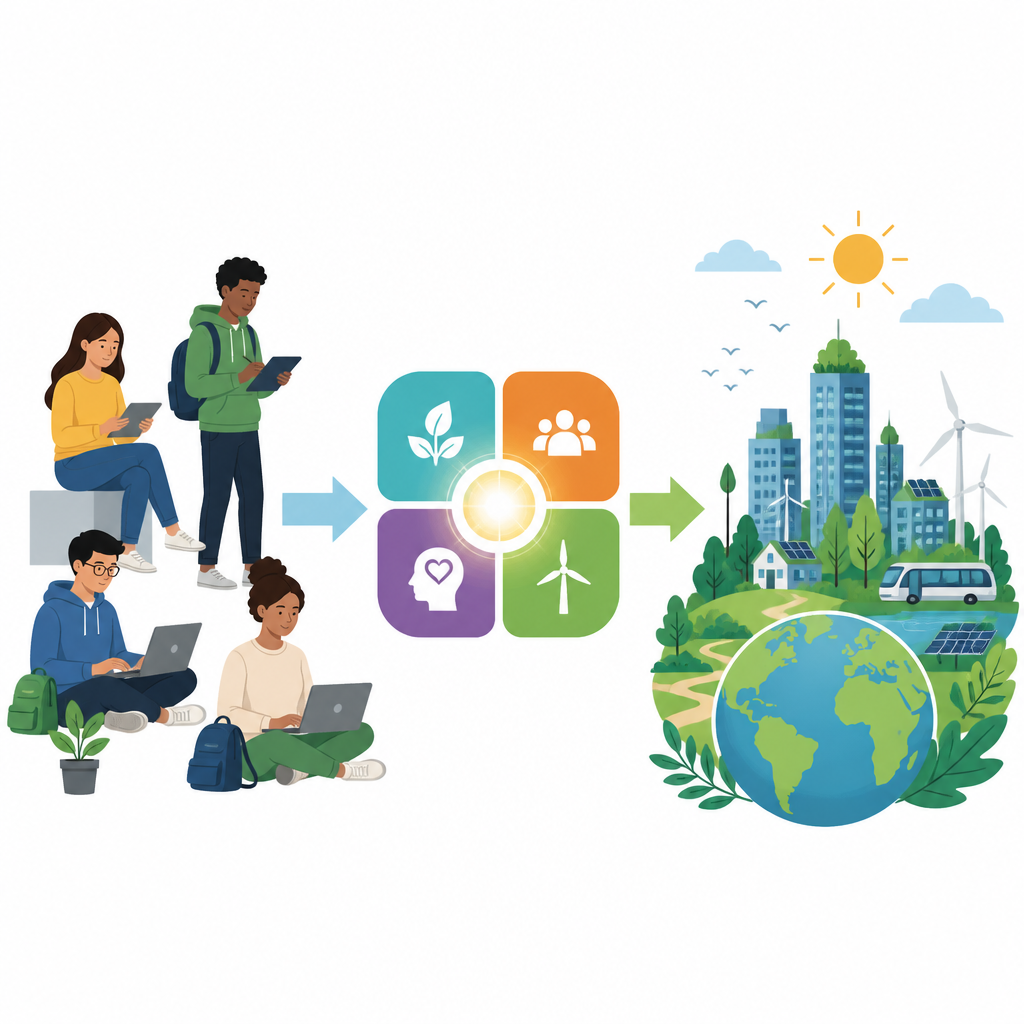
The researchers looked at what they call integrated sustainable curricula, which weave climate and sustainability themes into regular university teaching. Instead of treating climate change as a single elective, these programs redesign course content, teaching methods, learning activities, and assessment so that climate questions appear across students’ studies. The idea is that such a curriculum can help students think critically about climate risks, imagine new solutions, and manage uncertainty in a changing world.
Adding smart tools to the classroom
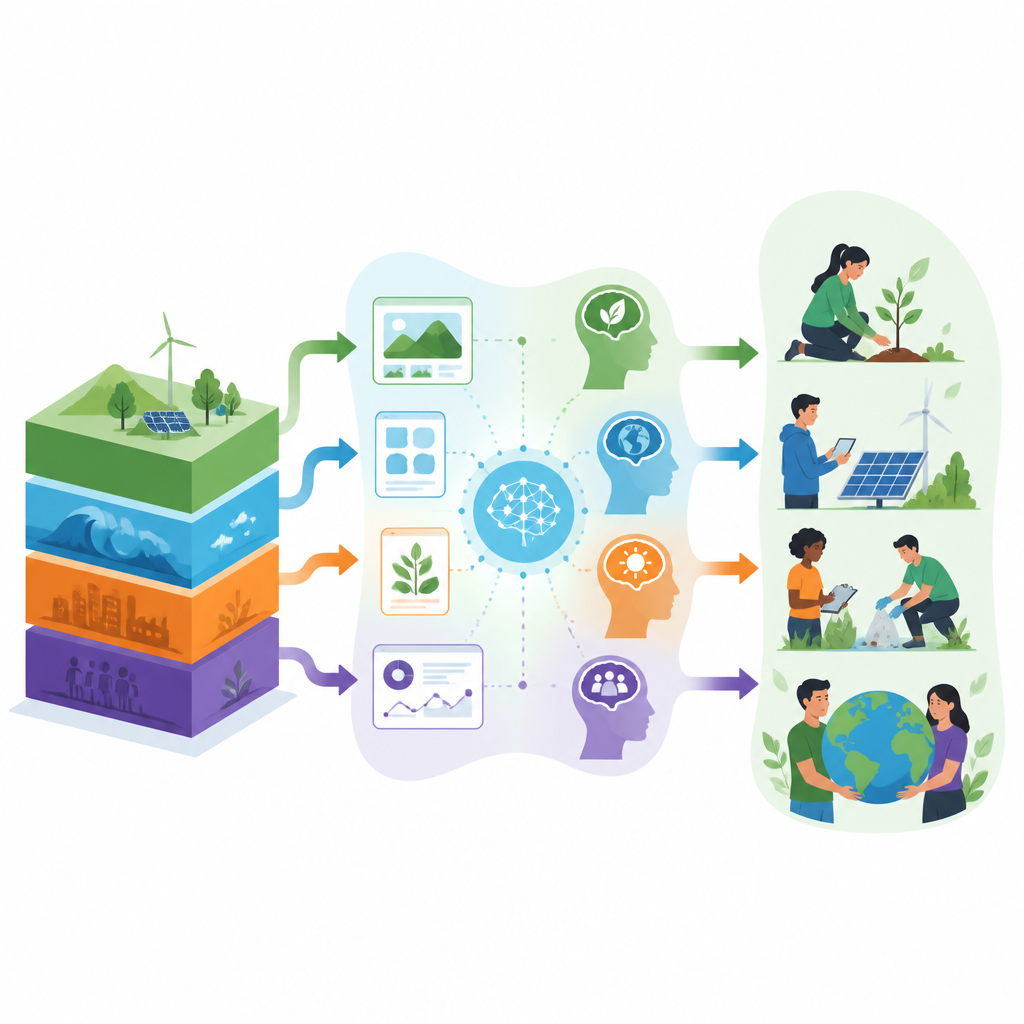
A second pillar of the study is generative AI, such as chatbots and content-creating tools, used to support learning. When thoughtfully built into courses, these tools can make complex climate ideas easier to grasp, offer quick feedback, and support group work across distances. The authors adapted a common technology acceptance model to understand how students expect AI to help them, how easy it feels to use, and how social and technical support on campus shapes their use of these tools.
From awareness to real capability
The third key ingredient is climate change sensitivity, defined as students’ personal awareness of their own impact, concern for vulnerable communities, and willingness to engage with climate information and activities. The study argues that this sensitivity is a bridge between what students learn in class and what they feel able to do in the real world. Climate change capabilities include the ability to innovate in response to climate risks, think in systems about sustainability, and plan and manage climate-related risks in their future work and communities.
What the researchers did across five countries
The team surveyed 486 higher education students in Ethiopia, Pakistan, Turkey, China, and Finland. All participants had taken at least one climate-related course and used generative AI tools during their studies. Using several analytic methods, they examined how curriculum design, AI use, and climate sensitivity relate to students’ reported climate capabilities. They found that integrated sustainable curricula are strongly linked to higher levels of climate capability, and that students who use generative AI in their learning tend to feel more capable of dealing with climate challenges.
How the puzzle pieces fit together
More detailed analysis showed that climate sensitivity plays a central role: courses that are rich in sustainability themes boost students’ sensitivity to climate issues, which then feeds into higher climate capabilities. Generative AI strengthens these links in two ways. It is directly associated with higher climate capability and sensitivity, and it also makes the influence of the curriculum stronger: when courses are well designed and students actively use AI tools, the gains in climate awareness and confidence are greater. An additional method showed that having any one of the three pieces – strong curriculum, strong sensitivity, or strong AI use – is often enough to raise capability, although they work best together.
What this means for the future of climate education
For a lay reader, the takeaway is clear: climate-ready graduates do not appear by chance. They emerge when universities redesign courses around sustainability, support thoughtful use of generative AI, and nurture students’ awareness and engagement with climate issues. The study suggests that these approaches can work in very different national contexts, from the Global South to the Global North. If universities and policymakers invest in these three areas together, they can better equip the next generation to understand climate risks, imagine fair solutions, and take informed action in their communities.
Citation: Iqbal, J., Hashmi, Z.F., Asghar, M.Z. et al. Exploring the connections between integrated sustainable curricula, generative AI tools, and perceived climate change capabilities across the global south and north using multi-analytics. Humanit Soc Sci Commun 13, 639 (2026). https://doi.org/10.1057/s41599-026-06895-9
Keywords: climate education, sustainable curricula, generative AI, student capabilities, global south and north