Clear Sky Science · en
What is the story behind female drivers? An analysis of how the media discourse surrounding women behind the wheel in China has evolved from 1949 to 2019
Why stories about women drivers matter
Anyone who has driven in a busy city has heard jokes or complaints about women behind the wheel. In China, these casual comments have grown into a powerful stereotype: the supposedly clumsy or dangerous "female driver." This article asks where that idea came from, how it has changed over the last 70 years, and what it reveals about gender, power, and the media in modern China. By tracing newspaper coverage from 1949 to 2019, the authors show that the image of women drivers is not a simple reflection of reality, but something built up step by step through news stories, headlines, and online debates.
From patriotic heroes to everyday workers
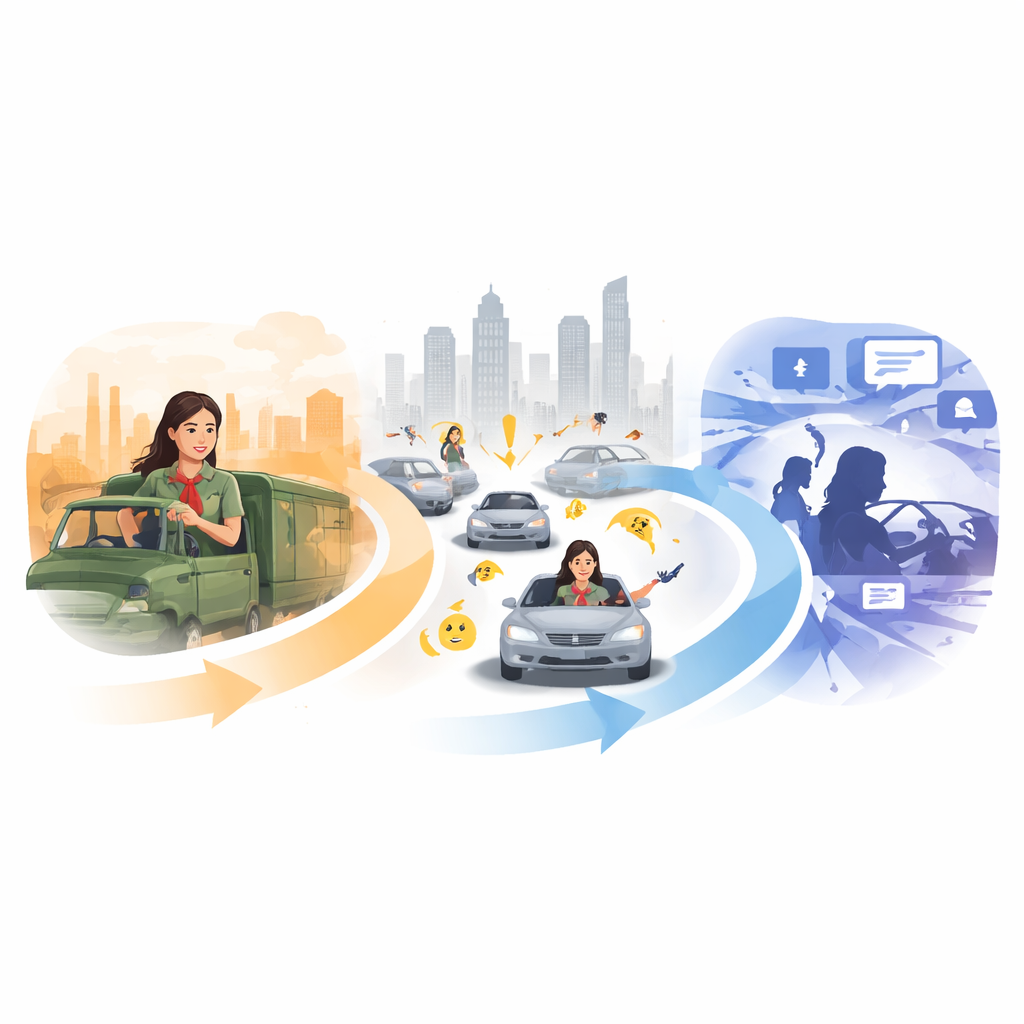
In the early decades after the founding of the People’s Republic of China, women who drove trains, trucks, or military vehicles were seen as shining examples of national progress. Newspapers such as People’s Daily celebrated them as model workers who mastered heavy machinery and helped build a new socialist nation. Reports focused on their skills, bravery, and dedication, tying their stories to a broader slogan that “women hold up half the sky.” In this period, the term “female driver” simply marked a profession and carried a proud, forward-looking tone. It symbolized women’s liberation from homebound roles and their participation in modern industry and warfare.
How praise turned into blame
Starting around 2000, China’s rapid urbanization and the rise of private cars changed what it meant to drive. Driving became a routine part of city life rather than a heroic job, and the focus of news reports shifted accordingly. Metropolitan newspapers reported more and more stories about traffic accidents, violations, and quarrels on the road. When women were involved, they were often singled out as “female drivers,” described in ways that highlighted looks, wealth, or inexperience. Although most reports still described individual cases, the same kinds of stories appeared again and again, encouraging readers to see these women as typical of a larger group. Over time, scattered incidents hardened into a stereotype in which “female driver” suggested incompetence, danger, or foolish behavior.
From single incidents to a social label
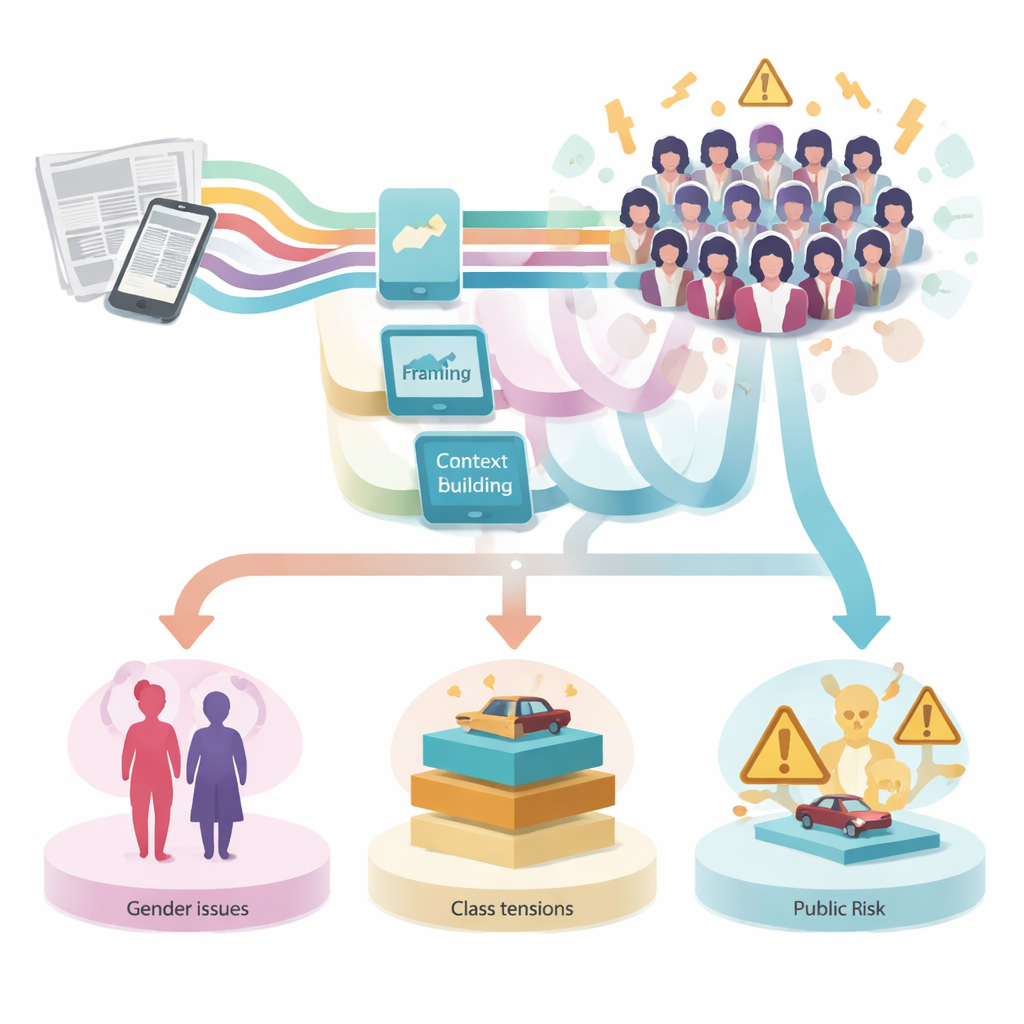
The authors show how this stereotype was constructed through three linked processes. First, news stories repeatedly attached a gender tag to women at the wheel, turning “driver” into “female driver” and loading that phrase with hints of clumsiness, vanity, or wealth. Second, the growing pile of similar stories created a shared backdrop: each new report reminded readers of earlier ones and seemed to confirm a pattern. Third, coverage applied a double standard. Male drivers were usually just called “drivers,” while women’s gender was highlighted, marking them as outsiders in a supposedly male space. Together, these habits transformed an ordinary description into a negative label applied to a whole group, rather than to specific people and situations.
Online storms and deeper social tensions
After 2015, the media image of women drivers entered a new phase as online platforms amplified high-profile incidents. One widely discussed case in Chengdu, where a woman driver was beaten after a traffic dispute, sparked nationwide arguments about road rage, online "human flesh" searches, and cyberbullying. Later events involving luxury cars and serious crashes stirred anger about wealth, privilege, and social inequality. In these debates, the “female driver” label became a lightning rod that connected three big concerns: gender discrimination, class resentment, and fears about public safety. News outlets and social media users did not just report what happened on the road; they used these events to talk about who has power, who is at risk, and whose behavior is seen as a threat.
What this story tells us about gender and media
By combining statistical counts of news reports with close reading of key stories, the study concludes that the idea of the “female driver” in China has passed through three stages: a hopeful symbol of women’s participation in nation-building, a stigmatizing tag attached to accident stories, and finally a loaded sign that carries broader worries about gender, class, and risk. For a lay reader, the main takeaway is that stereotypes do not appear out of nowhere. They are built as the media choose which events to spotlight, how to describe them, and what patterns to emphasize. Understanding how the image of women drivers was constructed over time can help society question unfair labels, challenge gender bias, and move toward a more balanced view of who belongs behind the wheel.
Citation: Shi, D., Wu, J., Tam, KY.B. et al. What is the story behind female drivers? An analysis of how the media discourse surrounding women behind the wheel in China has evolved from 1949 to 2019. Humanit Soc Sci Commun 13, 620 (2026). https://doi.org/10.1057/s41599-026-06894-w
Keywords: female drivers, gender stereotypes, Chinese media, public opinion, social stigma