Clear Sky Science · en
Can bilateral relations promote border construction? Evidence from China-Vietnam borders
Why border ties matter for everyday life
When neighboring countries get along—or fall out—the effects are felt far from diplomatic meeting rooms. Along the frontier between China and Vietnam, shifts in political trust and economic cooperation have literally reshaped the landscape: new roads, warehouses, factories and towns have appeared, while other stretches have stayed quiet. This study asks a deceptively simple question with big implications: can warmer bilateral relations actually drive the physical building-up of border regions, and if so, how and where does that happen?
From battle lines to busy gateways
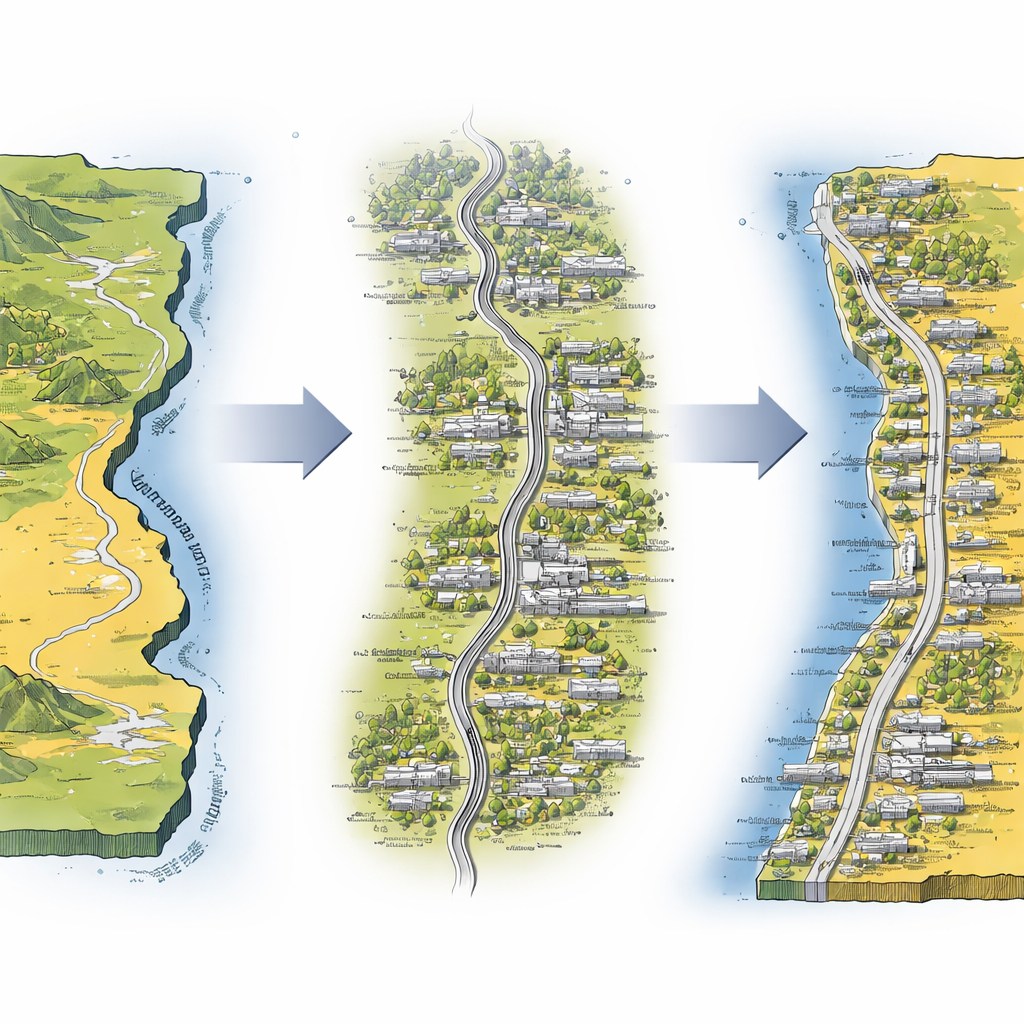
The authors focus on the roughly 30-kilometer-wide strip on both sides of the China–Vietnam border. This area has moved from tense confrontation in the 1980s to dense cross-border trade today. Early on, the border functioned mainly as a military barrier, with only scattered outposts. As the two countries normalized relations in the 1990s, signed a land border treaty around 2000, and deepened regional cooperation after 2010, the frontier slowly turned into a chain of contact zones—places where people, goods and capital could move more freely. The study shows that key diplomatic turning points in 1990, 1996, 2000 and 2010 line up closely with later bursts of construction along the frontier.
Turning news and satellite images into a border barometer
To move beyond political anecdotes, the researchers built a numerical index of China–Vietnam relations using the GDELT database, which records hundreds of thousands of news-reported events between countries and scores them as cooperative or conflictual. In parallel, they used a global satellite dataset of impervious surfaces—materials like concrete and asphalt that signal buildings and roads—to track how much artificial construction appeared each year from 1986 to 2021. By pairing these two records, they could see not just that relations and construction grew, but how strongly and how quickly changes in relations were followed by changes on the ground.
How the border has filled in over time
Across the full length of the frontier, construction expanded dramatically, but not evenly. China’s side showed much faster and larger growth, especially after 2010, when regional initiatives such as the China–ASEAN Free Trade Area and the Belt and Road drive took hold. New built-up areas formed ribbons along major crossings and transport routes, especially around ports like Dongxing–Mong Cai on the coast and Hekou–Lao Cai inland. These hotspots account for well over half of all new construction in the border belt. Vietnam also expanded its border towns and infrastructure, but with smaller total areas and more selective investment, often concentrating on a few strategic gateways.
Border boom with limits and different national strategies
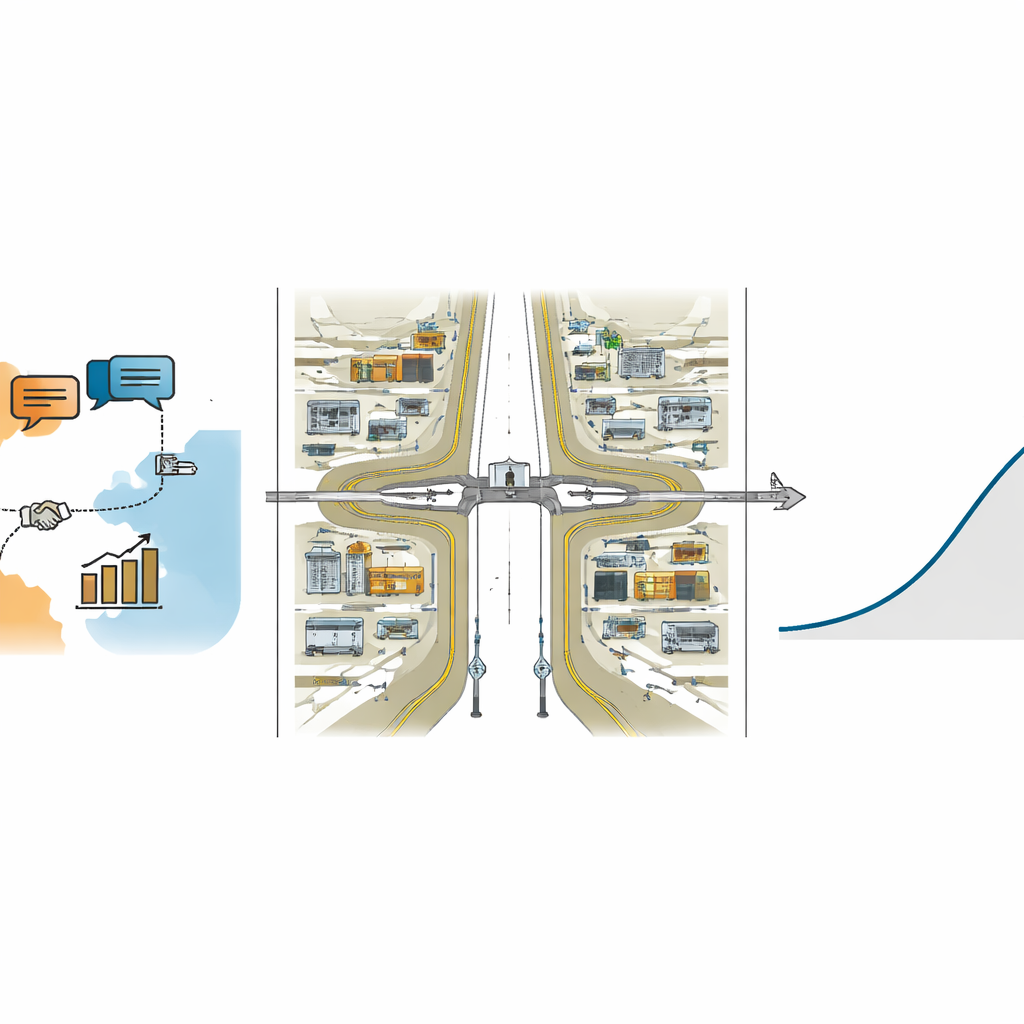
By applying flexible statistical models, the authors find that better bilateral relations do promote more construction in the border region—but with a twist. The relationship is not a simple straight line. As diplomatic and economic ties improve, construction first accelerates and then begins to level off once cooperation reaches a high level. This suggests that after key ports, roads and logistic hubs are in place, simply improving relations further does not keep adding concrete at the same pace. The pattern also differs by country and by port. At Dongxing–Mong Cai, China moved first and strongest, using state-led infrastructure and special zones to pull development forward, while Vietnam’s side responded more gradually. At Hekou–Lao Cai, Vietnam acted earlier and more aggressively, leveraging the port as a vital overland corridor into China and the wider region.
What this means for future border planning
To a lay observer, the lesson is that diplomacy leaves clear footprints in the landscape—but only up to a point, and not in the same way on each side of a border. The study shows that friendlier relations can convert once-militarized frontiers into engines of trade and regional growth, yet also warns that simply building more is not always better. Once basic networks of ports, roads and industrial parks are in place, the challenge shifts from expanding construction to using space more intelligently: coordinating investments across the border, avoiding wasteful overbuilding, and making sure that both countries share in the benefits. In short, good bilateral relations can open the door to border development, but careful joint planning determines what actually gets built and who gains from it.
Citation: Zhang, L., Wang, P. & Lu, R. Can bilateral relations promote border construction? Evidence from China-Vietnam borders. Humanit Soc Sci Commun 13, 525 (2026). https://doi.org/10.1057/s41599-026-06861-5
Keywords: China–Vietnam border, bilateral relations, cross-border cooperation, border region development, infrastructure expansion