Clear Sky Science · en
Innovation spillovers, economic growth and role of absorptive ability
Why Innovation Flows Matter for Everyday Life
How do ideas invented in faraway laboratories end up shaping jobs, prices, and pollution levels in a country like Pakistan? This paper tackles that question by looking at how “innovation spillovers” – the spread of new technologies and know‑how across borders – affect long‑term economic growth and the environment. The authors focus on green technologies and measure how well Pakistan turns both local and foreign research into real productivity gains, highlighting why ordinary citizens should care about research spending, education, and the country’s ability to learn from the rest of the world.
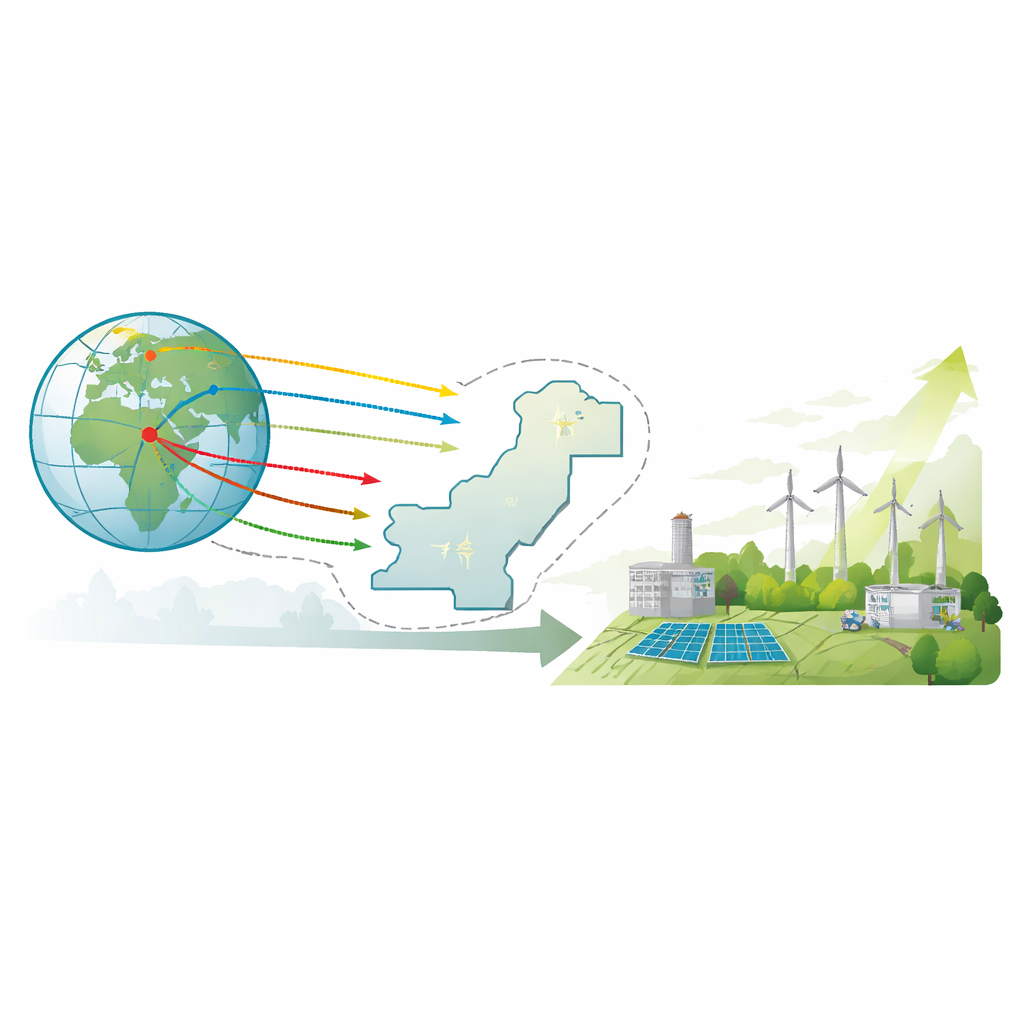
From Raw Materials to Knowledge-Driven Growth
The study begins by explaining how modern economies move from relying mainly on land and raw materials to depending on ideas, skills, and smart machines. Earlier growth theories emphasized adding more workers and physical capital; newer approaches show that the quality of labor, the effectiveness of machines, and the spread of new knowledge are equally crucial. Green technologies, reverse engineering, “learning by doing,” and artificial intelligence all raise what economists call total factor productivity – essentially, how much output a country can squeeze from a given bundle of resources. These advances rarely stay locked within one nation. They spill over through trade, foreign investment, student exchanges, and collaborations between universities and firms.
Pakistan’s Innovation Weak Spots
Pakistan, the authors show, has not yet built a strong foundation to benefit fully from this global wave of innovation. On an international innovation index, the country ranks near the bottom, reflecting weak research institutions, limited high‑quality infrastructure, and a modest pipeline of new products and patents. Public spending on research and development (R&D) is very low, at a fraction of one percent of national income, and has even fallen in some years. Universities carry much of the formal research burden, but their work has not translated into significant local knowledge creation or widely used new technologies. As a result, Pakistan struggles to turn imported machines, foreign training, and green technologies into broad‑based gains in productivity and living standards.
Measuring the Power of Ideas
To understand how ideas affect growth in practice, the authors construct a detailed picture of Pakistan’s economy from 1972 to 2022. They estimate total factor productivity using standard production functions that relate output to capital and labor, then layer in indicators of innovation, such as domestic patents, university research spending, foreign direct investment, technology imports, and trade in high‑tech goods. Using a time‑series approach called an autoregressive distributed lag model, they separate short‑term fluctuations from long‑run relationships. This allows them to ask whether R&D at home and abroad has left a lasting imprint on Pakistan’s productivity, and whether that effect depends on the skills and education of the country’s workforce – its “absorptive capacity.”
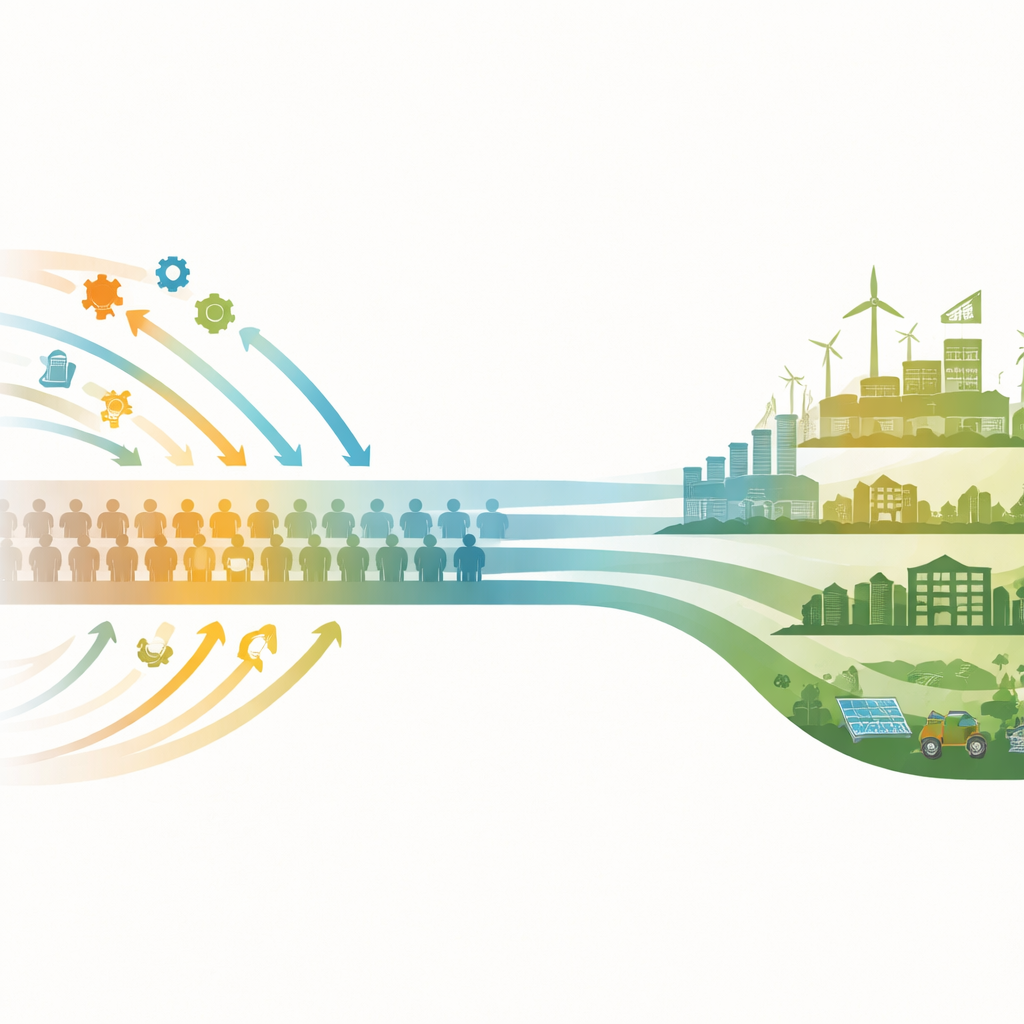
Foreign Ideas Help; Local Capacity Lags
The results paint a nuanced picture. On the positive side, the study finds clear evidence that both domestic and foreign R&D activity are linked to higher productivity in Pakistan over the long run, especially when the technologies are green or efficiency‑enhancing. International channels – such as foreign direct investment, trade openness, and imports of advanced machinery – are particularly powerful. R&D spending in major economies like the United States and China, and global R&D in general, generates measurable benefits for Pakistan through these spillovers. However, the country’s own ability to absorb and adapt these ideas is weak. When the authors interact foreign R&D measures with indicators of human capital, the combined effect often turns negative, signaling that the existing workforce and institutions are not yet equipped to make full use of the inflow of knowledge.
What This Means for the Future
For non‑specialists, the takeaway is straightforward: new ideas can lift incomes and reduce environmental harm, but they do not do so automatically. Pakistan already sits in a stream of global innovation, yet much of that potential is lost because domestic research systems, training, and institutions are underdeveloped. The paper concludes that to achieve sustainable, greener growth, policymakers should boost stable R&D funding, strengthen universities and research alliances with industry, improve extension services that teach workers how to use new technologies, and expand high‑quality education to raise the country’s absorptive capacity. In everyday terms, this means investing not just in gadgets and factories, but in people and institutions that can learn, adapt, and innovate over time.
Citation: Usman, M., Hameed, G., Almas, L.K. et al. Innovation spillovers, economic growth and role of absorptive ability. Humanit Soc Sci Commun 13, 465 (2026). https://doi.org/10.1057/s41599-026-06726-x
Keywords: innovation spillovers, green technology, Pakistan economy, research and development, absorptive capacity