Clear Sky Science · en
An analysis of pause placement in bursts of writing in translation: a product- and process-oriented approach
Why pauses in translation matter
When we picture translators at work, we often imagine a smooth flow of words from one language to another. In reality, writing a translation is a stop‑and‑go activity, full of tiny pauses and bursts of typing. This paper looks closely at those pauses while students translate a short biotechnology text from English into French. By tracking where translators stop and start as they type, and linking those moments to the structure and meaning of the sentences they produce, the authors show that pauses reveal how meaning is built and where the work becomes mentally demanding.
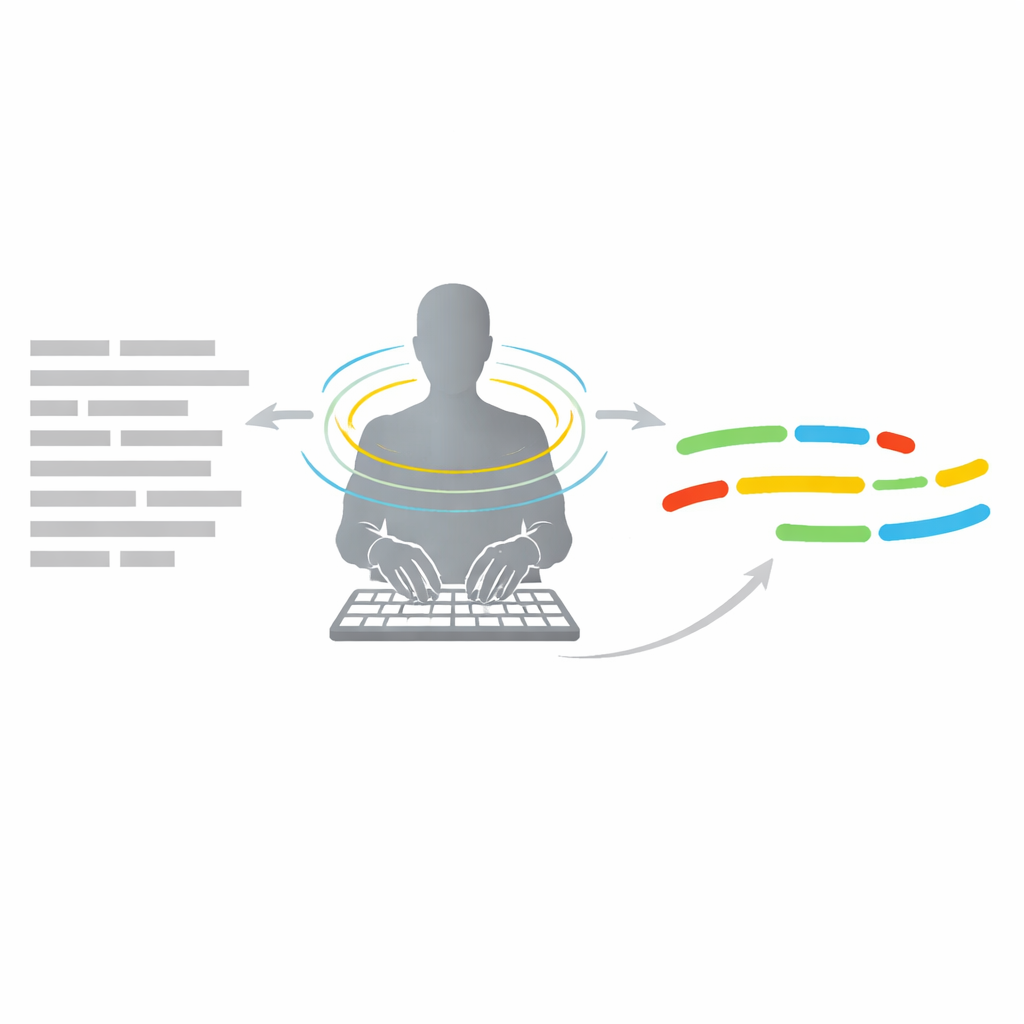
Short spurts of writing
Earlier research on writing has shown that people do not compose word by word in a steady stream. Instead, they produce “bursts” of text separated by pauses and occasional revisions. These bursts can be just a phrase or a whole sentence, and they serve as basic units of written performance. Translation, which is a special form of writing based on an existing source text, follows the same pattern. However, most earlier studies described bursts using traditional grammar labels like “noun phrase” or “clause,” which left out many fragments and did not fully capture how writers actually organize their thoughts.
A new way to look at sentence parts
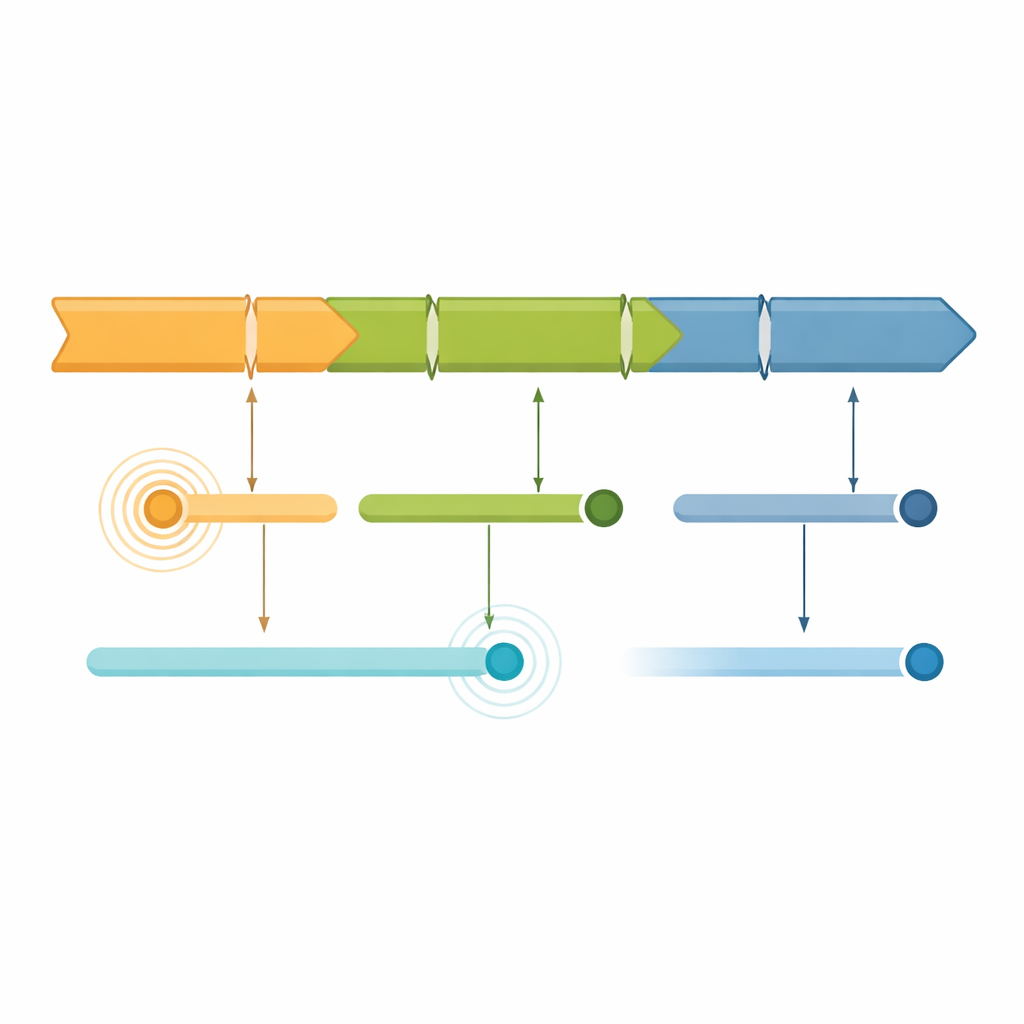
The authors build a new analytical framework inspired by Systemic Functional Linguistics, a theory that treats language as a tool for making meaning rather than just a set of rules. In this view, each sentence can be divided into two main zones: a starting point that tells us what the sentence is about, and a continuation that carries the core message. The framework refines these zones into three functional parts: the “subject theme” (who or what the sentence is about), the “rheme” (the verbal core that moves the message forward), and the “N‑rheme” (the final, most news‑carrying part, such as key details or specifications). Instead of simply asking whether pauses happen before a noun or a verb, the study asks whether they appear between these functional parts or inside them.
Following students as they translate
The study uses keystroke logging software to record every key the translators press, including the timing between keystrokes. Sixteen native French students translated a short, specialized text about producing transgenic mice. The researchers first identified stretches of the English source text that received very similar French translations across students—for example, phrases like “the third method uses…” or “are then transferred to the oviduct(s).” These repeated solutions, found in the final products, were traced back into the typing logs to see how they were actually written. The authors then coded where pauses of at least about two seconds occurred with respect to the three functional parts of the sentence.
Where pauses fall and what they signal
The analysis reveals three main patterns. In about a quarter of cases, a similar translated stretch was typed as one uninterrupted burst, framed by pauses on both sides. More often, pauses fell exactly at the boundaries between functional parts—for instance, between “the third method” and “uses”—or even inside one of these parts, splitting the subject or the core message. Pauses were especially common between the subject and the rest of the sentence, and within the final, most informative zone. Close readings of two key phrases show why. In “the third method exploits…,” students often hesitated, waited for long periods, or revised the verb, apparently struggling with an unusual word combination and with classroom norms that discourage borrowing English‑like wording. In the phrase involving “oviduct(s),” they paused, misspelled, or changed between singular and plural, reflecting both grammatical differences between English and French and uncertainty about the underlying biology.
What this tells us about translation effort
For a general reader, the main takeaway is that pauses in translation are not just random delays or signs of slowness. Their placement—especially when many translators hesitate in similar places—can pinpoint where meaning is hard to rebuild, where background knowledge is shaky, or where classroom training pulls in a particular direction. The study shows that similar final sentences can hide very different paths of thought, and that difficulties arise not only from grammar but also from habits, teaching practices, and domain knowledge. By treating pauses as windows into how ideas unfold, this framework helps researchers and teachers better understand how translators think, where they struggle, and how they gradually shape precise meaning across languages.
Citation: Sfeir, M., Vandaele, S. & Cislaru, G. An analysis of pause placement in bursts of writing in translation: a product- and process-oriented approach. Humanit Soc Sci Commun 13, 485 (2026). https://doi.org/10.1057/s41599-026-06683-5
Keywords: translation process, writing pauses, keystroke logging, translation difficulty, text production