Clear Sky Science · en
Cultural attitudes towards the future shape the semantic structure of emotion concepts
Why our feelings depend on how we see the future
Across the world, people feel joy, anger, fear and hope—but we don’t all carve up the emotional landscape in the same way. This study asks a deceptively simple question: does a culture’s attitude toward the future change how its members understand and group emotions? By comparing how speakers of 15 languages mentally arrange dozens of emotion words, the researchers show that one cultural trait in particular—whether a society is focused on the long term or the here and now—powerfully shapes the meaning of our feelings.
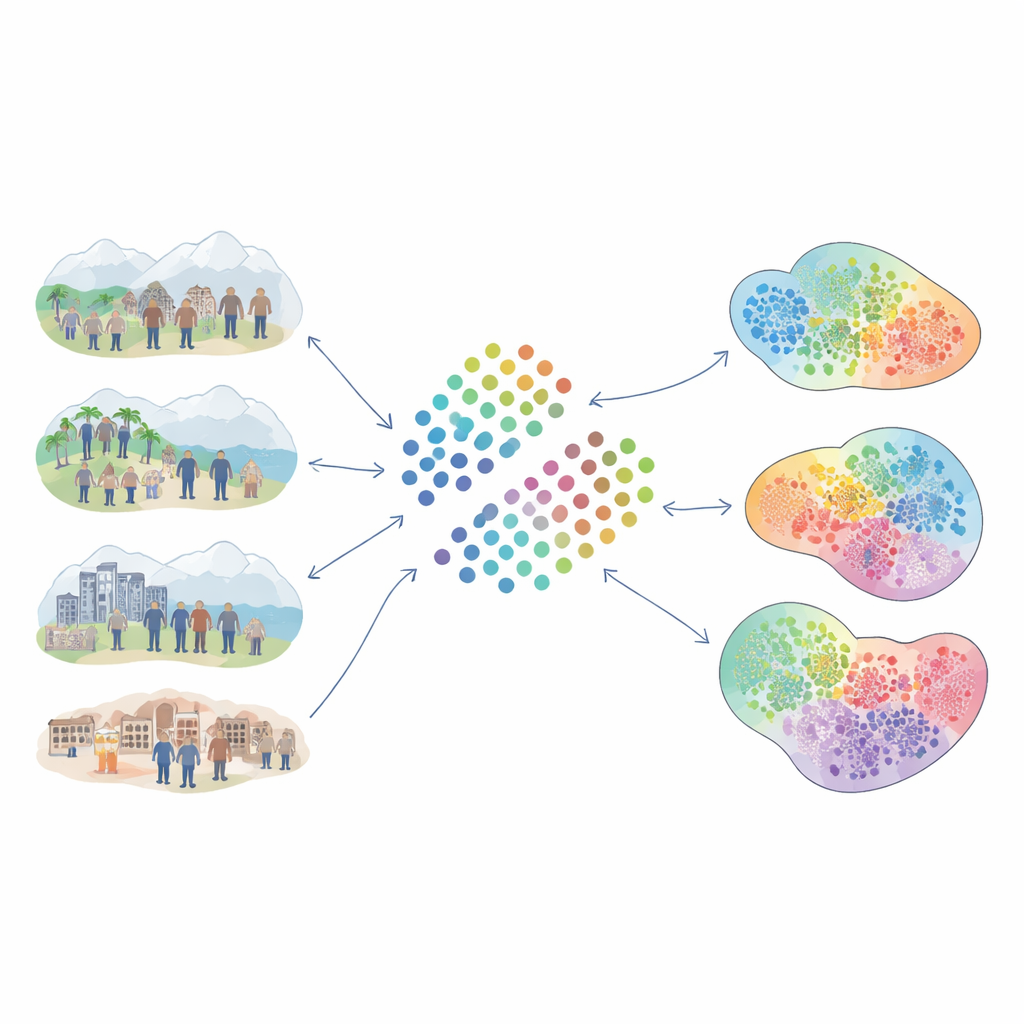
How people built maps of their emotions
The team worked with native speakers of 15 languages from Europe and Asia, including Arabic, Chinese, English, Hindi, Japanese, Spanish and others. Each volunteer saw 47 emotion words on a computer screen and was asked to drag and drop them so that similar feelings sat close together and dissimilar ones farther apart. This simple arrangement task turned each person’s intuitive sense of emotional similarity into a visual “map.” By averaging across 50 participants per language (fewer for a few hard-to-reach groups), the researchers created a high‑resolution emotion map for each language, capturing how that community organizes emotional meaning.
Comparing emotional worlds across cultures
With these maps in hand, the researchers measured how alike or different they were from one another. Statistical tools treated each map as a network of distances between every pair of emotions, then correlated those networks across all 15 languages. Overall, there was substantial common ground: many languages shared broadly similar emotional structures. But the real interest lay in the differences—and whether they lined up with known cultural dimensions or with simple geography. To test this, the team drew on a widely used framework from cross‑cultural psychology that scores countries on six value dimensions, such as individualism, power distance, indulgence, and especially long‑term orientation, which captures how much a society prioritizes future rewards over immediate concerns.
The surprising power of time orientation
When the researchers compared cultural scores with the similarity of emotion maps, one factor stood out. Societies that shared similar long‑term orientation—whether high or low—also shared more similar emotion structures. Differences in this single trait explained more variation than any other cultural dimension, even after controlling for language family, writing system and predominant religion. Geographical distance between countries also mattered, but somewhat less, and a composite “cultural distance” index lagged behind. In other words, how a culture relates to time is a better guide to how it organizes emotions than where it sits on the globe or how it scores on broader one‑number measures of culture.
Negative feelings shift the most
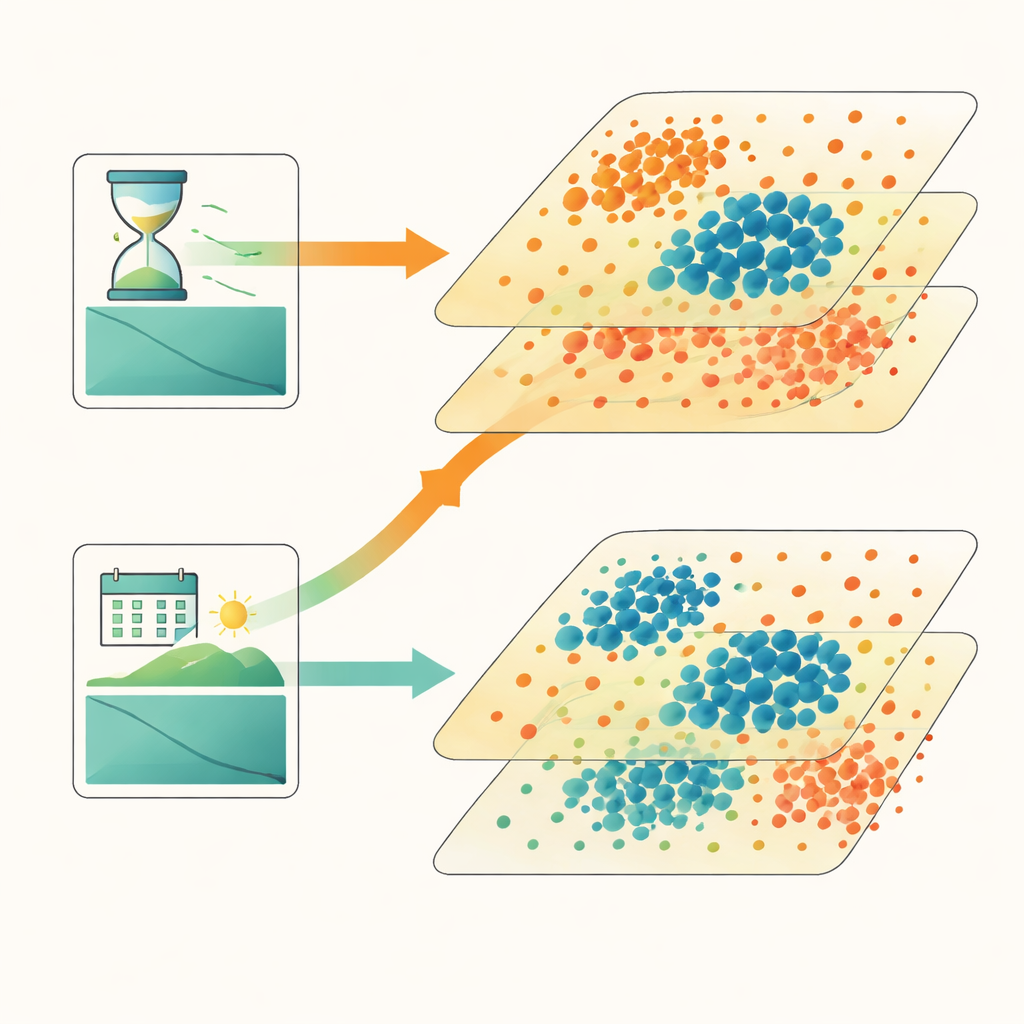
Diving down to individual words, the researchers asked which emotions were most sensitive to cultural differences. Again, time orientation played the leading role: it was the strongest predictor of meaning shifts for 31 of the 47 emotions studied. Strikingly, these were mostly negative feelings. Words for shame, embarrassment, pride, anxiety, worry, fear, sorrow, compassion and sympathy changed their semantic neighborhoods more across cultures that differed in long‑term orientation than did most positive emotions. This pattern suggests that in societies where planning, perseverance, status and social obligation are tied to the distant future, people carve up and connect negative feelings—especially those about risk, reputation and care for others—in more culturally specific ways.
What this means for understanding emotions
The study shows that culture does not just tell us when to show our feelings; it helps shape what those feelings mean in the first place. In particular, a society’s stance toward the future appears to reorganize the mental “map” of negative emotions, fine‑tuning concepts like shame, worry and compassion to fit its moral and social priorities. While the work is correlational and focused on a limited set of societies, it offers one of the clearest demonstrations yet that specific cultural values, rather than a vague East–West divide, sculpt the semantic structure of our emotional lives.
Citation: Chaouch-Orozco, A., Li, X. & Li, P. Cultural attitudes towards the future shape the semantic structure of emotion concepts. Humanit Soc Sci Commun 13, 387 (2026). https://doi.org/10.1057/s41599-026-06623-3
Keywords: emotion concepts, cultural values, time orientation, cross-cultural psychology, semantic space