Clear Sky Science · en
Anticipating influenza-like illness outbreaks via syndromic surveillance using over-the-counter drug sales and primary health care data
Why everyday purchases can help spot a coming wave
Long before headlines warn of a new wave of flu‑like illness, people start buying cold medicine and visiting their local clinic. This study asks a simple but powerful question: can those everyday actions, recorded in pharmacy sales and primary care visits, warn health authorities that hospital beds are about to fill up? By turning routine data from across Brazil into an early‑warning system, the researchers explore a low‑cost way to gain precious weeks of preparation time before serious respiratory outbreaks hit.
Following medicine and clinic visits across a continent‑sized country
The team focused on influenza‑like illness, a cluster of symptoms such as cough, fever, and sore throat that can be caused by many respiratory viruses. They gathered three streams of information for 510 regions in Brazil between late 2022 and mid‑2025: sales of over‑the‑counter (OTC) drugs commonly used to treat these symptoms, records of primary health care (PHC) visits for flu‑like complaints, and hospital admissions for respiratory diseases. Because Brazil has a universal public health system and a very large private pharmacy network, these data cover a vast and diverse population, from big cities to remote areas.
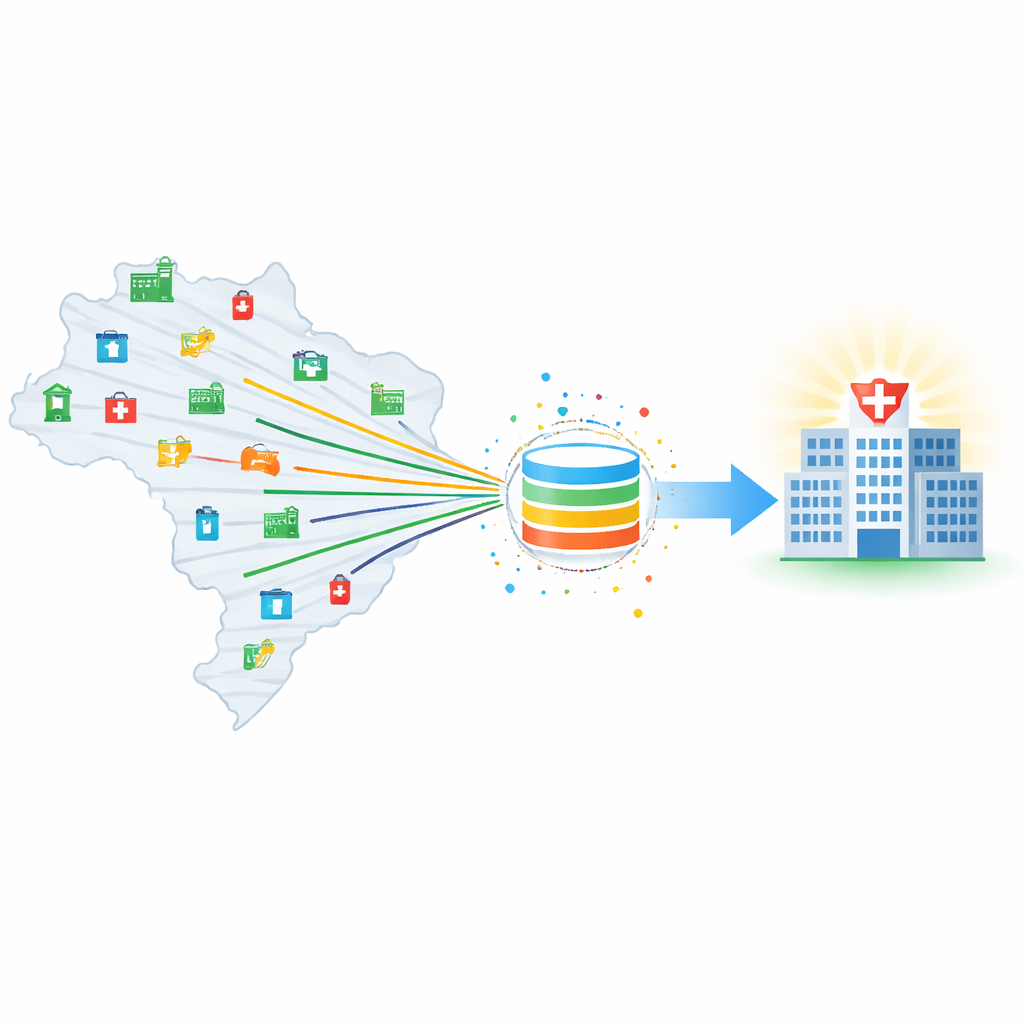
Turning noisy real‑world data into warning signals
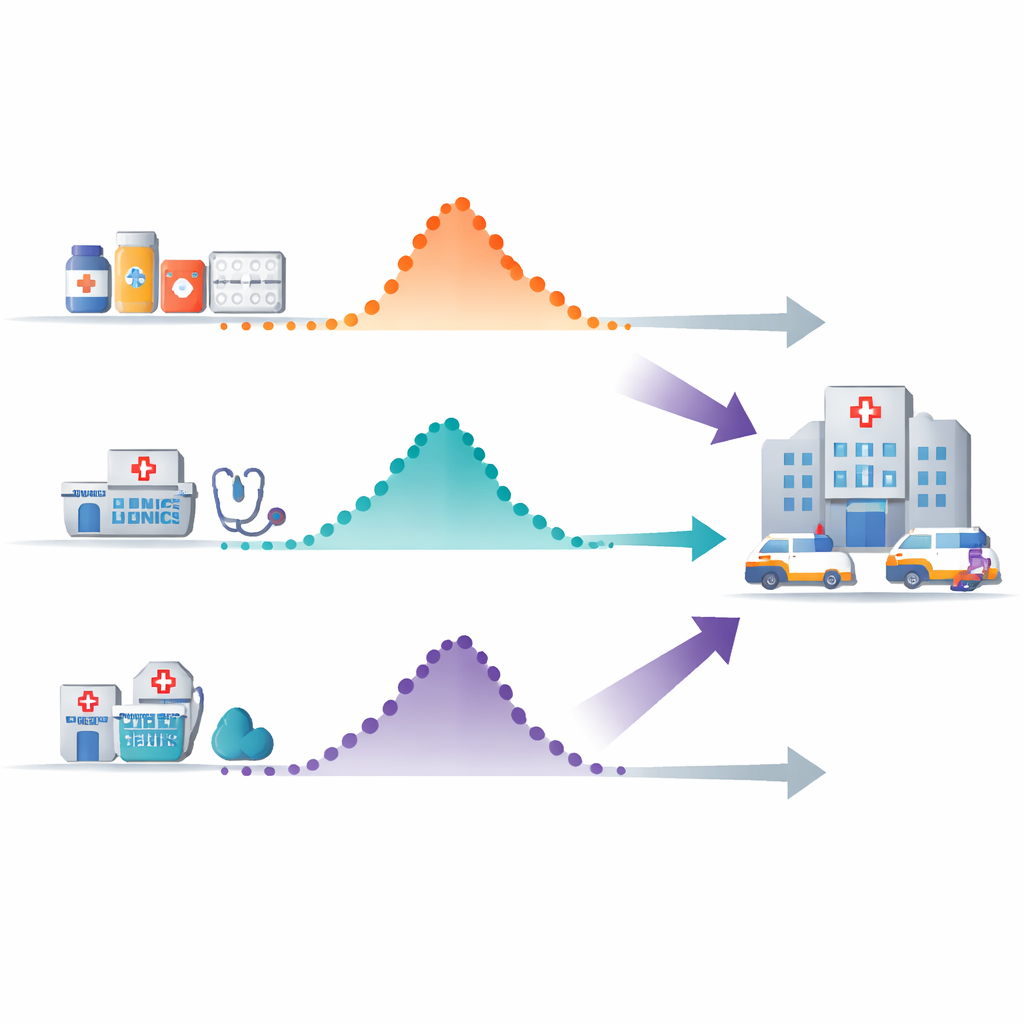
Everyday data can be messy, with school holidays, promotions, or local events all nudging numbers up and down. To separate real outbreaks from random bumps, the researchers used statistical models that learn the usual pattern for each region, including seasonal ups and downs, and then flag weeks when activity rises above what would normally be expected. They applied this approach separately to OTC sales and PHC encounters, and then looked at how often those “warnings” appeared shortly before a surge in hospitalizations, which they treated as the clearest sign that illness in the community had become serious.
How well the early warnings matched real hospital surges
Across the study period, Brazil recorded more than 62 million primary‑care visits for flu‑like symptoms and over 2.2 million respiratory‑related hospital stays. The models identified 746 distinct surges in hospitalizations in most regions. Signals in OTC sales anticipated 56.6% of these surges by one to three weeks and caught another 9.5% in the same week, missing about one‑third. PHC encounters did slightly better, foreseeing 59.5% of surges early and another 10.3% on time, while missing 30.2%. In measures that balance missed outbreaks against false alarms, PHC data showed somewhat higher sensitivity and precision than OTC data, though both streams performed similarly overall.
Different regions, different strengths
Brazil’s size and diversity meant that the usefulness of each data stream varied by place and population. In the Center‑West region, for example, both OTC and PHC data detected the majority of surges early and with relatively few false alerts. In some parts of the Northeast, however, more surges went unnoticed, especially when based on PHC data alone. City size also mattered: medium‑sized regions tended to show the clearest signals, while in very large urban areas early signs were more easily “diluted” in the data. When the researchers combined insights from both sources, they found that in more than three‑quarters of regions at least one stream offered high‑precision alerts, highlighting how pharmacies and clinics can complement each other.
What this means for future outbreaks
To a lay reader, the key message is straightforward: watching how many people buy cold medicines or visit local clinics can give health systems a head start before hospitals begin to overflow. In Brazil, routine OTC sales and primary‑care records were able to flag most surges of serious respiratory illness one to three weeks in advance, even though the data were never designed for this purpose. While the method sometimes raises false alarms and needs fine‑tuning for local conditions, it offers a scalable, low‑burden way to strengthen pandemic preparedness, especially in places where more advanced laboratory or hospital surveillance is hard to maintain. With longer observation periods and similar analyses for other diseases, this approach could become a key part of how countries around the world spot trouble early and act before the next big outbreak takes hold.
Citation: Oliveira, J.F., Cerqueira-Silva, T., Brito, P.A.N. et al. Anticipating influenza-like illness outbreaks via syndromic surveillance using over-the-counter drug sales and primary health care data. npj Digit. Public Health 1, 10 (2026). https://doi.org/10.1038/s44482-026-00014-w
Keywords: syndromic surveillance, influenza-like illness, over-the-counter drug sales, primary health care data, early outbreak detection