Clear Sky Science · en
Sunlight exposure–driven changes in heavy metals and organic pollutants in bottled water: implications for Human Health in Nigeria
Why Sunlit Bottled Water Deserves a Second Look
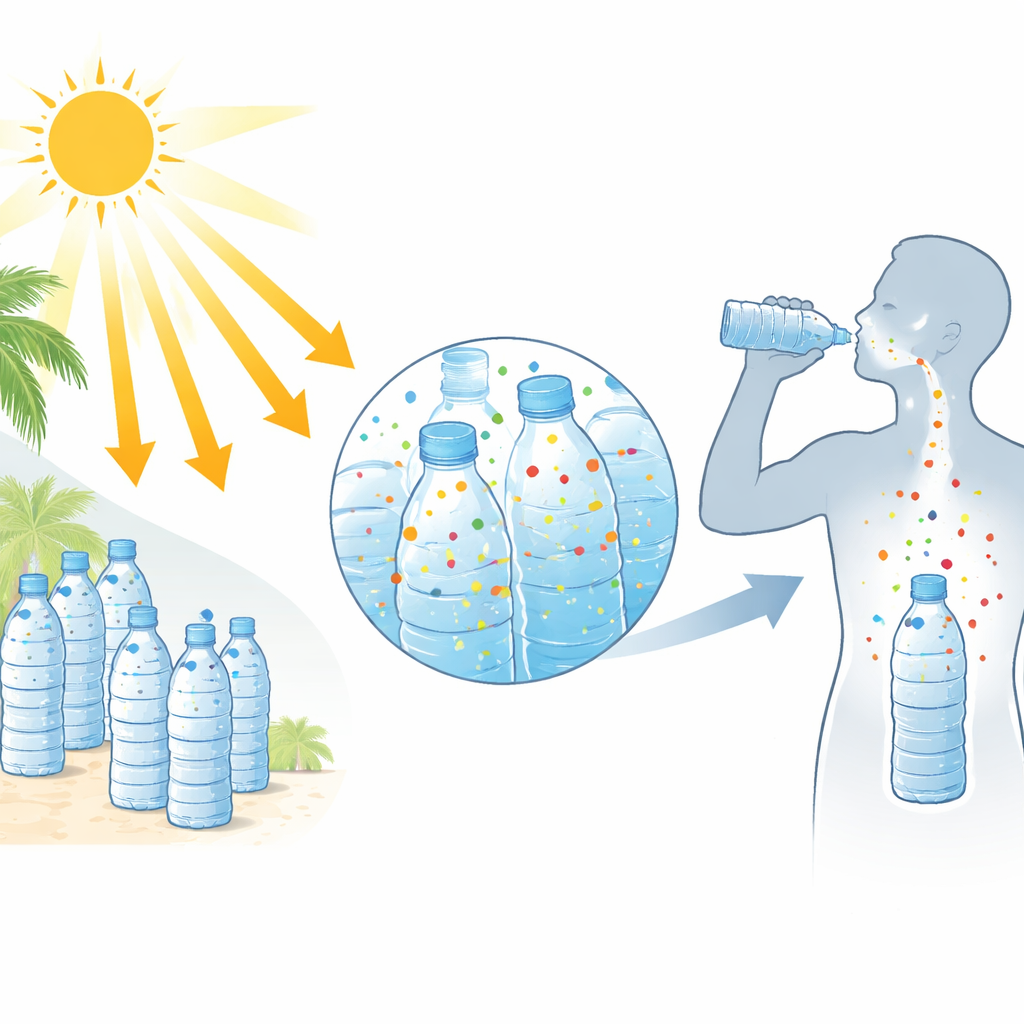
In many hot countries, including Nigeria, bottled water is seen as a safer alternative to tap water and is often stored on roadside stalls, in car trunks, and in open markets under blazing sun. This study asks a simple but important question: what happens to the chemicals inside plastic bottles when they sit for weeks in strong sunlight and heat, and what might that mean for the people who drink that water every day?
Everyday Bottles in Hot, Real-World Conditions
The researchers focused on two popular Nigerian bottled water brands, Junac and Cway, both sold in standard polyethylene terephthalate (PET) plastic bottles. They recreated three common storage situations: bottles kept at room temperature; bottles left in direct sunlight for two weeks and then brought indoors; and bottles exposed to sunlight continuously for four weeks. After these treatments, they carefully measured several groups of contaminants known to affect human health: heavy metals like arsenic, lead, cadmium, chromium, and manganese; a group of cancer-linked compounds called polycyclic aromatic hydrocarbons (PAHs); and highly toxic, long-lasting chemicals known as dioxins.
Hidden Chemicals Rising with the Heat
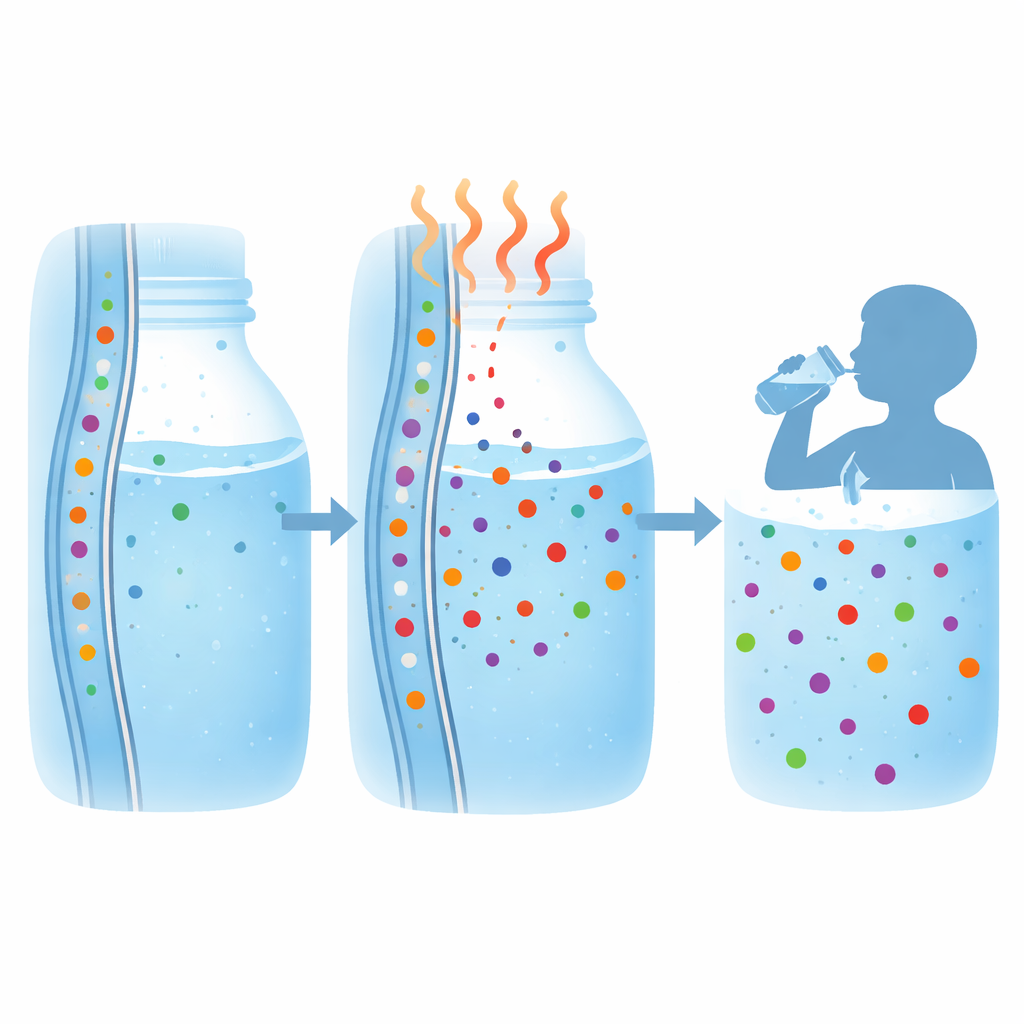
Across the different setups, heat and sunlight clearly altered what was in the water. In many cases, metal levels changed as bottles warmed, with arsenic and lead often rising above the limits recommended by the World Health Organization and Nigerian standards. One brand, Junac, tended to accumulate more contaminants and reacted more strongly to high temperatures than Cway, pointing to differences in source water, treatment, or packaging. PAHs, especially a compound called benzo[a]pyrene that is widely used as a marker for cancer risk, were detected in most heat-exposed samples at concentrations far above safety guidelines. Dioxins, including some of the most toxic known variants, also increased markedly when bottles were left in the sun.
From Bottle to Body: Estimating Health Risks
To translate these measurements into real-world meaning, the team applied standard human health risk assessment methods used by agencies such as the U.S. Environmental Protection Agency. They estimated how much of each contaminant an adult or child might swallow by drinking the water daily over many years, and then compared these doses with health-based benchmarks. For non-cancer effects, they calculated "hazard quotients" and combined "hazard indices"; values above one suggest potential concern. Arsenic dominated these calculations, with hazard indices exceeding safe levels in nearly all scenarios, especially for children, who are more vulnerable because of their lower body weight. For long-term cancer risk, they found that a large share of sun-exposed samples fell above widely accepted risk ranges for drinking water, again with children facing the highest modeled risks.
Uncertain but Concerning Risk Levels
Recognizing that they had a small number of bottles and that real-life drinking habits vary, the researchers used Monte Carlo simulations—computer runs that randomly vary assumptions within realistic ranges—to see how often concerning risk levels might arise. These simulations still suggested that, under hot, sunlit storage conditions, arsenic and chromium in particular could contribute to non-negligible cancer risks in a fraction of the population. The study also highlights that people are not exposed to one chemical at a time: mixtures of metals, PAHs, and dioxins may interact in the body, potentially amplifying damage to DNA, the nervous system, and the heart beyond what each substance would cause alone.
What This Means for Everyday Water Choices
For lay readers, the takeaway is not that all bottled water is immediately dangerous, but that where and how it is stored matters, especially in hot climates. The study shows that prolonged sunlight and heat can pull harmful metals and industrial chemicals out of plastic and into drinking water at levels that, under cautious assumptions, may raise the risk of chronic disease over a lifetime, particularly for children. The authors argue that regulators should tighten oversight of bottled water storage and transport, encourage shaded and temperature-controlled conditions, and update monitoring to include these chemical mixtures. For consumers, simple steps like avoiding bottles that have sat in the sun for days or weeks, not leaving water in hot cars, and choosing trusted brands may meaningfully reduce long-term exposure.
Citation: Ezejiofor, A.N., Abdulai, P.M., Akande, I.O. et al. Sunlight exposure–driven changes in heavy metals and organic pollutants in bottled water: implications for Human Health in Nigeria. npj Emerg. Contam. 2, 16 (2026). https://doi.org/10.1038/s44454-026-00033-5
Keywords: bottled water safety, plastic leaching, heavy metals, PAH contamination, Nigeria public health