Clear Sky Science · en
Multiplex NGS Panel for whole-genome recovery and molecular epidemiology of canine morbillivirus
Why this matters for pets and people
Dog lovers, wildlife enthusiasts, and public health watchers all have a stake in a virus called canine distemper. This highly contagious disease can devastate pet dogs and wild carnivores, and its close relatives include measles in humans. The study described here unveils a new, affordable genetic test that reads the full genetic code of the distemper virus directly from sick animals, helping scientists track how it spreads, changes, and might one day threaten new species.
A virus that crosses animal boundaries
Canine distemper virus is a worldwide threat that infects domestic dogs, wild carnivores like foxes and big cats, and even some non‑carnivorous species. It attacks multiple organs, causing fever, breathing problems, gut disease, and sometimes brain damage. Although it is not currently a human disease, experiments show that the virus can adapt to use the same cell doorway that measles uses in people. That makes it important to watch how the virus evolves across different hosts and regions, both to protect animals and to anticipate rare but serious shifts in its behavior.
From partial snapshots to full genetic portraits
Until now, most studies of this virus relied on reading just one of its genes, known as H, which helps the virus latch onto cells. Looking at this single stretch of code has been useful for grouping viruses into lineages and following broad patterns of spread. But it leaves out much of the 15,000‑plus genetic “letters” that control how the virus replicates, dodges the immune system, and adapts to new hosts. Full genomes are far more informative, yet they have been hard to obtain from routine clinical samples, especially in low‑resource settings and in underrepresented regions such as much of Latin America.
A new toolkit for reading whole viral genomes
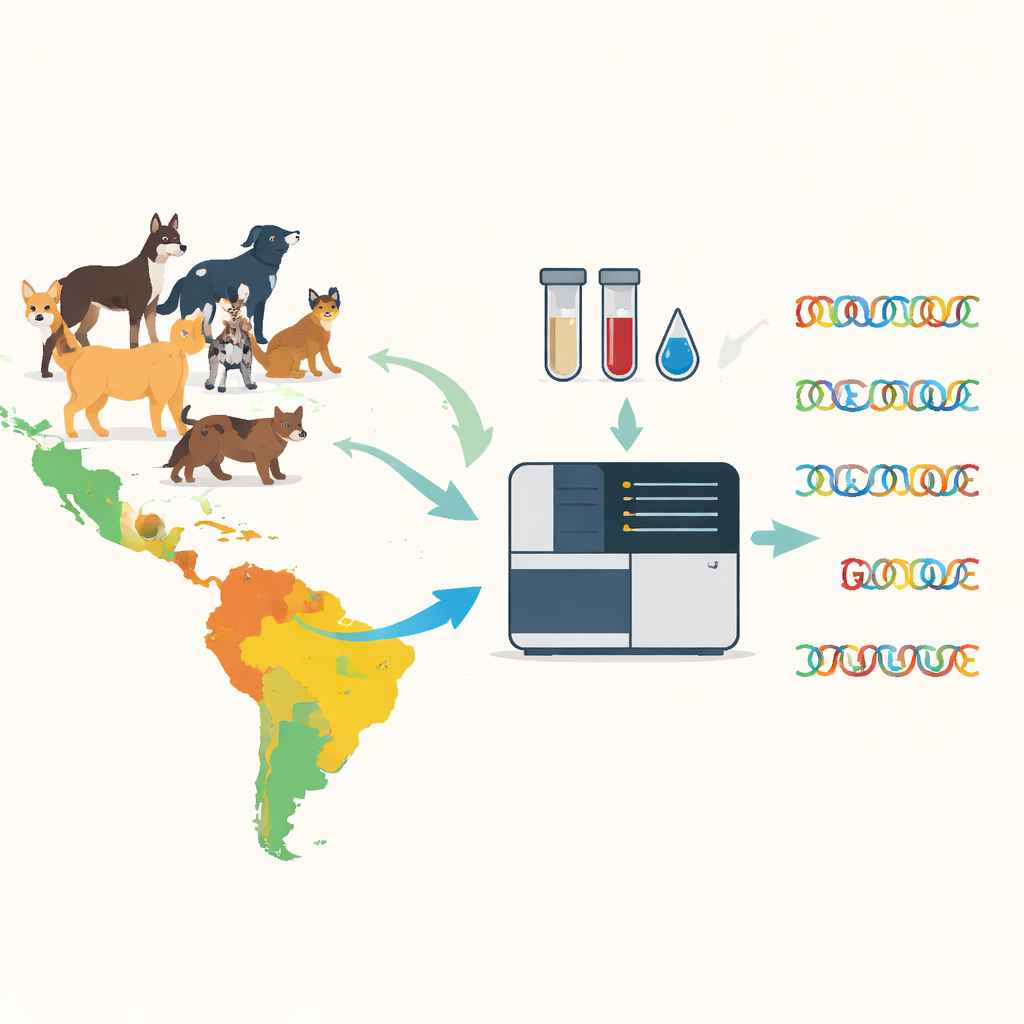
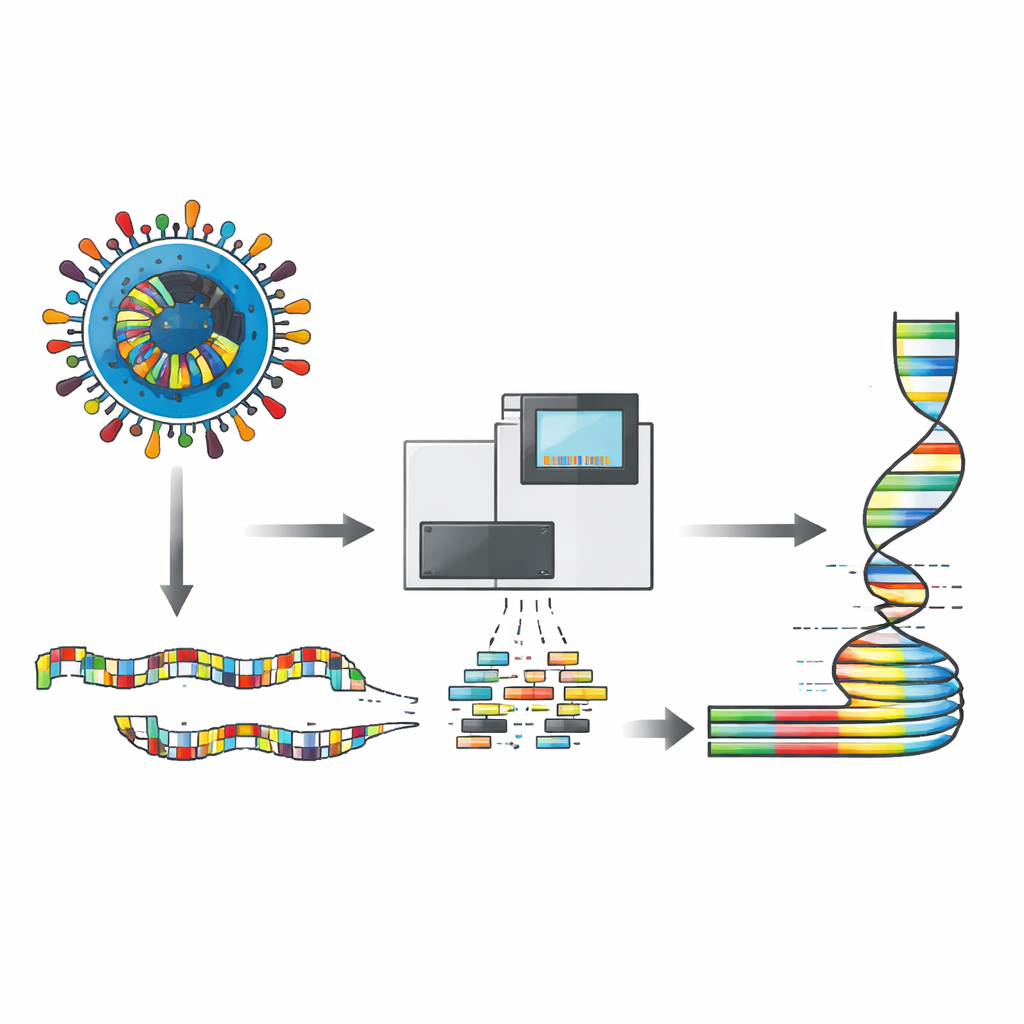
The researchers developed a laboratory panel that breaks the virus’s genome into many small, overlapping pieces that can all be copied in the same reaction and then read by an Illumina next‑generation sequencer. The design used 236 short starter pieces, grouped into two mixes, chosen to match distemper viruses from around the world so that even varied strains can be captured. This setup favors short fragments, which are easier to recover from damaged or low‑quality samples—exactly the kind often collected from sick or dead animals. Tested on a vaccine strain and 15 infected dogs from Bolivia, Ecuador, Mexico, Peru, and Uruguay, the method routinely covered more than 97% of the genome, often with thousands of reads at each position, even when the original viral amount in the sample was low.
What the new genetic maps revealed
Armed with these complete sequences, the team compared their 15 Latin American viruses with 173 previously available full genomes. This broader view allowed them to position each virus within known lineages and to see finer branching patterns that a single gene could not resolve. Dogs from Bolivia carried viruses belonging to a lineage previously seen in Uruguay, Brazil, Argentina, and Chile, stretching that lineage’s known range. Mexican dogs carried a North American lineage. Strains from Ecuador and Peru formed a distinct cluster that sits close to, but separate from, another North American group, hinting at regional diversification that may deserve its own formal label as more data accumulate. When they repeated the analysis using only the H gene, many broad groupings held, but some relationships blurred, underlining how much clearer the full‑genome picture can be.
Hidden variation inside individual animals
Because the method generates very deep coverage, it can also detect minor versions of the virus that circulate within a single host but do not dominate the infection. The researchers found such minority variants in most dogs they studied. Many were single‑letter changes, and some altered the amino acids in viral proteins that interact with host defenses. In Mexican samples, small deletions cropped up in surface proteins that help the virus bind to cells, potentially changing how the immune system sees it. One Uruguayan sample carried an insertion in a protein involved in replication and immune evasion. Some of these changes may reflect genuine viral experimentation inside the host; others might be artifacts of the amplification process. Either way, the work illustrates that the virus population within one dog is not uniform but a cloud of slightly different genomes that can fuel evolution.
What this means going forward
For non‑specialists, the key message is that scientists now have a practical, relatively low‑cost way to read nearly the entire genetic code of canine distemper virus directly from sick animals in the field, without the slow, specialized step of growing the virus in cells. This opens the door to more routine genomic surveillance in regions where data have been scarce, improving our ability to see how the virus moves between countries, spills over between pets and wildlife, and explores new genetic possibilities. By coupling whole‑genome tracking with a view of hidden variants inside each host, this approach strengthens efforts to protect dogs, conserve vulnerable wildlife, and keep an eye on viruses that share a family tree with major human diseases.
Citation: Panzera, Y., Condon, E., Escardó, J. et al. Multiplex NGS Panel for whole-genome recovery and molecular epidemiology of canine morbillivirus. npj Vet. Sci. 1, 5 (2026). https://doi.org/10.1038/s44433-026-00007-8
Keywords: canine distemper virus, viral genomics, multiplex sequencing, wildlife disease, One Health