Clear Sky Science · en
The role of community energy in mediating sustainable energy transitions in East and Southern Eastern Africa
Why local power matters
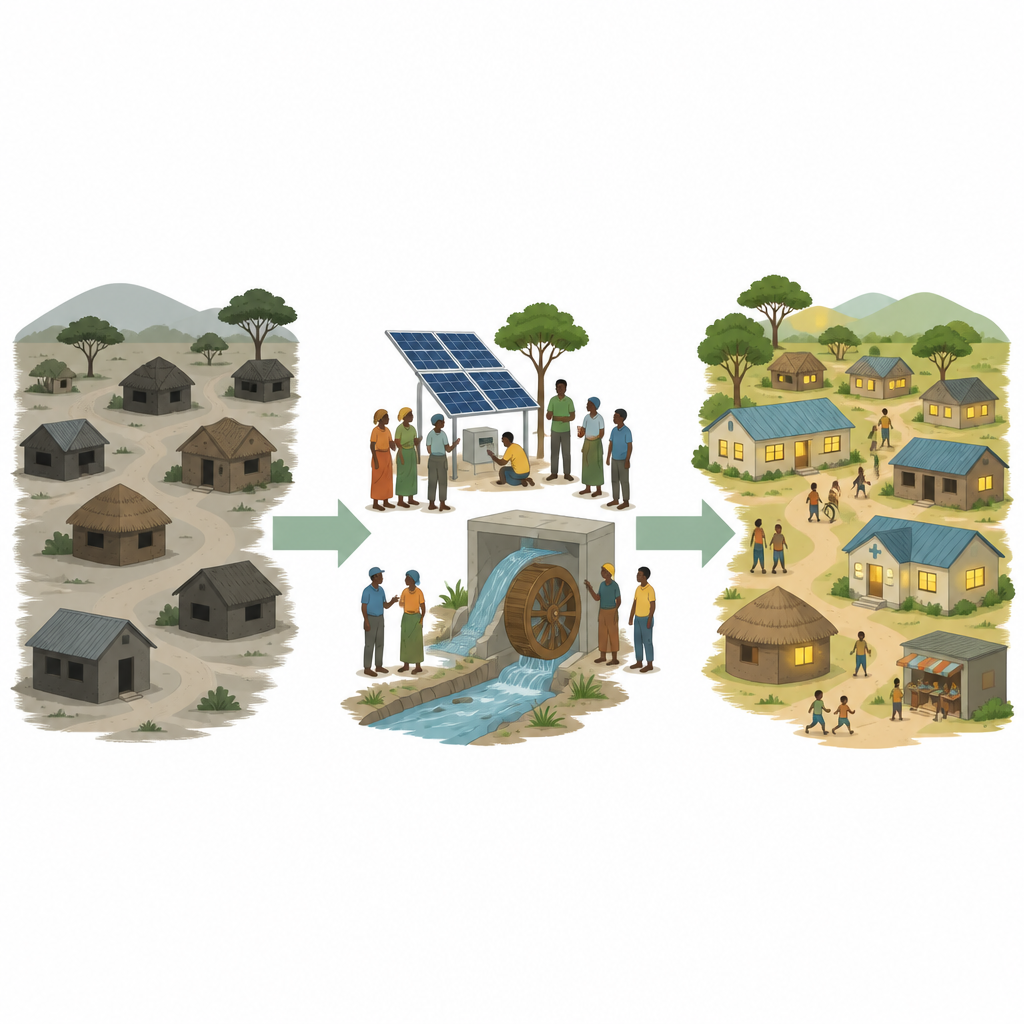
Across much of East and Southern Africa, millions of people still live without reliable electricity, even when power lines pass nearby. This paper explores how community energy projects, which are run with strong local involvement, can help close that gap in Ethiopia, Malawi, and Mozambique. It shows how putting people at the heart of small-scale hydro and solar systems can bring light, income, and services to remote and low income communities, while also exposing the political and financial hurdles that hold these efforts back.
People at the center of the energy story
Community energy means more than simply installing panels or turbines. In these projects, residents help decide how systems are built, use their own labor and land, and often manage day to day operations through local committees or cooperatives. The study finds that this people first approach makes renewable power more likely to reach households that big grid projects overlook, from rural villages to informal urban settlements. It also creates chances for women and other underrepresented groups to gain technical skills and influence decisions about local services.
Different national paths, shared obstacles
The researchers compared how national policies in Ethiopia, Malawi, and Mozambique shape community energy. All three countries have official plans to expand electricity access and support off grid systems, and Mozambique has the most extensive written energy laws. Yet on the ground, progress is slowed by complex licensing rules, poor coordination among government agencies, unclear land rights, and limited staff to follow projects through. Local authorities may have the mandate to support off grid schemes, but lack the training, budget, or clear guidance they need to turn policies into working mini grids.
Money, equipment, and the power of partnerships
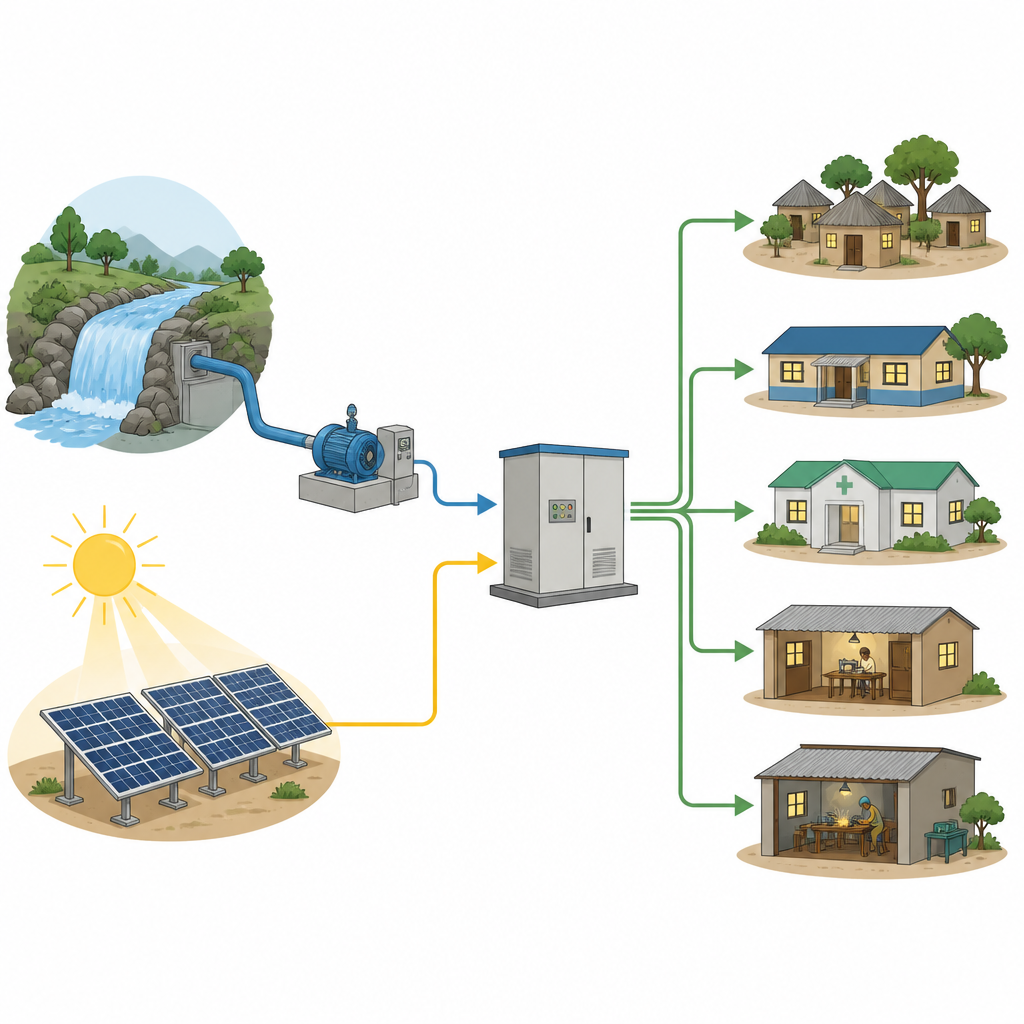
Financing is a major sticking point. Many projects depend on a patchwork of grants from governments, aid agencies, and charities, sometimes mixed with microloans or small private investments. Tariffs charged to households are usually kept very low so that poor families can pay, but this leaves little money for repairs or upgrades. At the same time, almost all hardware, from solar panels to turbines and batteries, is imported. Delays at customs, lack of spare parts, and weak local supply chains make projects costly and vulnerable to breakdowns. The study shows that successful schemes rarely stand alone: they rely on ongoing partnerships between communities, public agencies, universities, and donors.
Everyday benefits close to home
Surveys of over 500 households in Ethiopia and Malawi reveal how community energy changes daily life. People most often point to better lighting and a stronger sense of safety at night, improved opportunities for children to study, and new or improved public services such as clinics, schools, and water pumps. In Malawi, residents also stress new income sources, such as milling, small shops, or barbers powered by electricity. Many respondents, especially in Ethiopia, say the projects help women, older people, and people with disabilities, even if they struggle to put into words the wider social effects like stronger community ties or greater confidence in tackling local problems together.
What a fair energy future could look like
The authors conclude that community energy is a powerful tool for a just energy transition, but it will not spread widely without stronger institutional backing. Better aligned regulations, simpler permits, support for local technical skills, and reliable concessional funding are all needed. Because these projects show clear social benefits yet limited profits, they are unlikely to attract large private investors on their own. Instead, valuing their broader contribution to well being and inclusion could justify targeted public and donor support. In return, communities supply labor, knowledge, and long term commitment, helping to speed up the shift to clean energy while giving a voice to people who are often left out of national energy planning.
Citation: Castán Broto, V., Gebreslassie, M., Bekele, G. et al. The role of community energy in mediating sustainable energy transitions in East and Southern Eastern Africa. npj Clean Energy 2, 10 (2026). https://doi.org/10.1038/s44406-026-00024-w
Keywords: community energy, rural electrification, renewable mini-grids, just energy transition, East Africa energy