Clear Sky Science · en
Persistent and de novo postpartum hypertension: a scoping review of pathophysiology, evaluation, and management
Why Blood Pressure After Birth Matters
For many people, the weeks after childbirth are supposed to be a time of recovery and bonding. Yet for a significant number of new mothers, this period also brings a hidden threat: high blood pressure that appears or persists after delivery. This scoping review pulls together what is currently known about postpartum hypertension—who is at risk, why it happens, how it should be evaluated and treated, and where the blind spots in our knowledge still lie. Understanding these patterns is important not just for protecting mothers in the first year after birth, but also for preventing long-term heart and blood vessel disease later in life.
Two Ways Postpartum Blood Pressure Can Go Wrong
Postpartum hypertension refers to elevated blood pressure that occurs after delivery and can last up to a year or more. The review distinguishes between two main patterns. In persistent postpartum hypertension, a woman develops high blood pressure during pregnancy—often as part of conditions like preeclampsia—and it simply does not settle back to normal after birth. In de novo postpartum hypertension, blood pressure was normal throughout pregnancy but becomes high only after delivery. Studies from several countries show that up to half of women with preeclampsia still have hypertension weeks after birth, and around 1–12% of women with previously normal pregnancies develop new high blood pressure within a year. These wide ranges reflect differences in populations and, importantly, the lack of a single agreed-on definition and threshold for diagnosing postpartum hypertension. 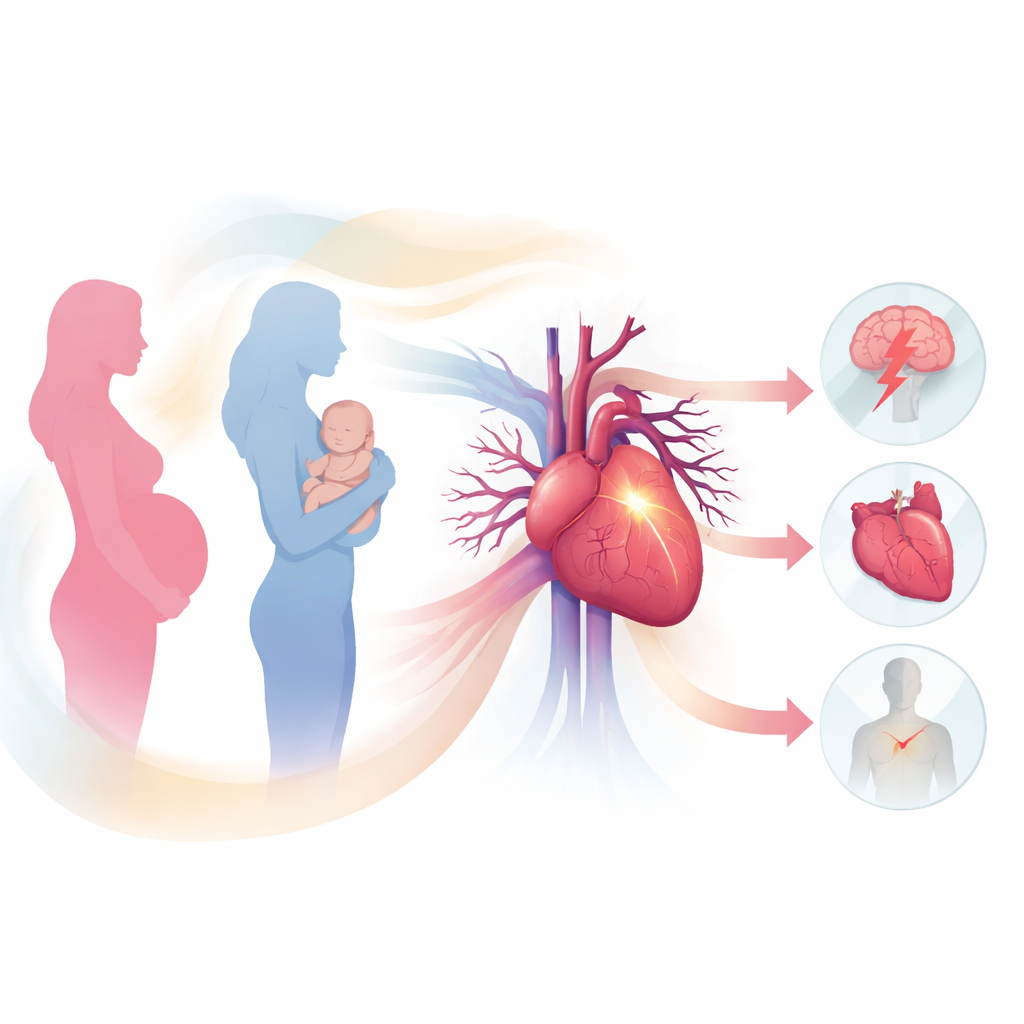
What Drives These Blood Pressure Changes
The body goes through rapid shifts in blood volume, hormones, and blood vessel tone after delivery, and in some women these changes appear to unmask or sustain problems in the circulation. For persistent hypertension after pregnancy-related high blood pressure, research points to ongoing injury or dysfunction in the small blood vessels, stiffening of arteries, and altered salt handling that keep pressures high. Blood markers involved in the growth and health of blood vessels, which are heavily influenced by the placenta during pregnancy, have been studied, but their ability to predict who will remain hypertensive is still uncertain. For de novo cases, scientists suspect a mix of leftover vascular changes from pregnancy, subtle inflammation, nervous system imbalance, and fluid and sodium shifts, with early work even hinting that chemical tags on placental DNA may help predispose some women to late-onset problems.
Who Is at Risk—and Who Is Protected
Risk factors for postpartum hypertension overlap but are not identical for the persistent and de novo forms. Higher body weight before pregnancy, excessive weight gain, metabolic syndrome, diabetes in pregnancy, and a history of hypertensive disorders of pregnancy all raise the likelihood that high blood pressure will persist. For new-onset postpartum hypertension, obesity, older maternal age, cesarean birth, multiple gestation, underlying kidney or thyroid disease, and a family history of cardiovascular disease stand out. Some chronic autoimmune conditions and HIV infection also appear to increase risk, as do poor sleep and certain blood test abnormalities. On the other hand, several behaviors and care decisions may offer protection. Breastfeeding for at least six months, avoiding excess weight gain, not smoking, vaginal delivery when possible, and taking low-dose aspirin during pregnancy in high-risk women are all associated with lower rates of postpartum hypertension in at least some groups.
How Doctors Monitor and Treat It
Once high blood pressure is present after birth, deciding when and how aggressively to treat it is surprisingly unsettled. Major professional societies offer clear goals for blood pressure in non-pregnant adults and for hypertensive conditions during pregnancy, but they do not agree on precise thresholds tailored to the postpartum period. Recent studies suggest that using lower targets, such as keeping pressures under 130/80 mm Hg, is safe and may reduce emergency visits and readmissions compared with more relaxed goals. Several commonly used medications—such as labetalol, nifedipine, amlodipine, and enalapril—have been tested against one another, and none has emerged as clearly superior overall; each has trade-offs in speed of control, side effects, and the need for additional drugs. Short courses of diuretics can help some women, particularly those with hypertensive disorders of pregnancy, but results are mixed. Meanwhile, telemedicine and home blood pressure monitoring programs consistently help women check their pressures more often, improve control, and, in some settings, narrow racial and economic gaps in follow-up care. 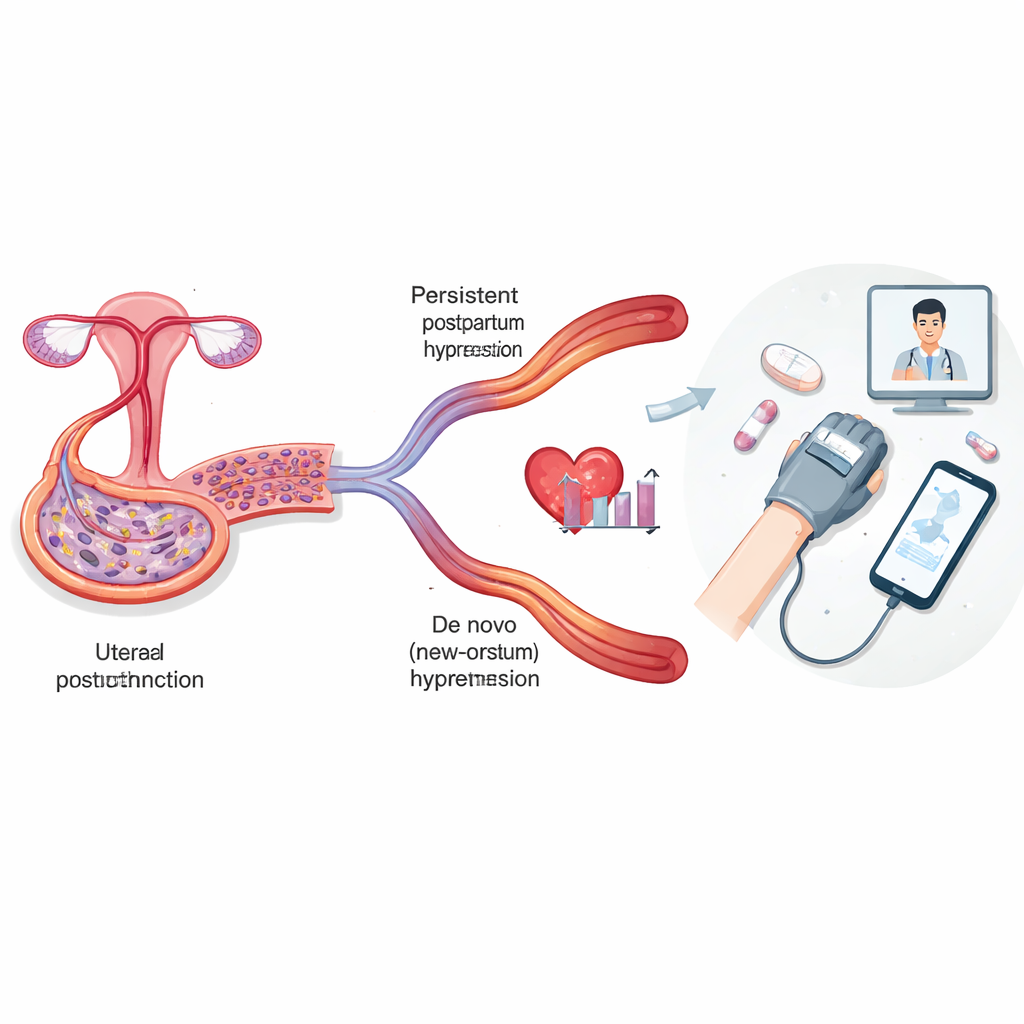
Looking Beyond the Six-Week Checkup
Perhaps the most important message from this review is that postpartum hypertension should not be seen as a short-term obstetric issue alone. Women with persistent or de novo high blood pressure after pregnancy are at greater risk for chronic hypertension, stroke, heart failure, and structural changes in the heart years down the line. Because pregnancy usually occurs in younger adults who might otherwise seem low risk, these blood pressure problems can serve as an early warning sign and an opportunity to change the long-term trajectory of cardiovascular health. The authors argue for clearer definitions and treatment thresholds, more research separating persistent from de novo disease, longer follow-up in clinical trials, and better systems—such as dedicated postpartum clinics and telehealth programs—to connect new mothers with ongoing primary and heart care. In plain terms, watching and managing blood pressure after birth could pay dividends for a mother’s heart health for decades to come.
Citation: Garneni, M., Huang, A., Obionu, I. et al. Persistent and de novo postpartum hypertension: a scoping review of pathophysiology, evaluation, and management. npj Cardiovasc Health 3, 25 (2026). https://doi.org/10.1038/s44325-026-00120-x
Keywords: postpartum hypertension, preeclampsia, maternal heart health, telemedicine monitoring, pregnancy blood pressure