Clear Sky Science · en
Lipid membrane remodeling by myristic acid treatment reverses Parkinson’s disease α-synuclein phenotypes in patient neurons
Why Fats in the Brain Matter for Parkinson’s
Parkinson’s disease is usually linked to trembling hands and stiff movements, but deep inside the brain the trouble often begins with tiny changes in fats and proteins. This study explores how a particular dietary fat, myristic acid—found in coconut and palm oils—can reshape the fatty outer coats of brain cells from people with Parkinson’s and, in turn, calm a key disease-related protein called alpha-synuclein. The work suggests that carefully tuning brain fats could one day become a new way to prevent or slow this common neurodegenerative disorder.
A Sticky Protein Meets a Softening Membrane
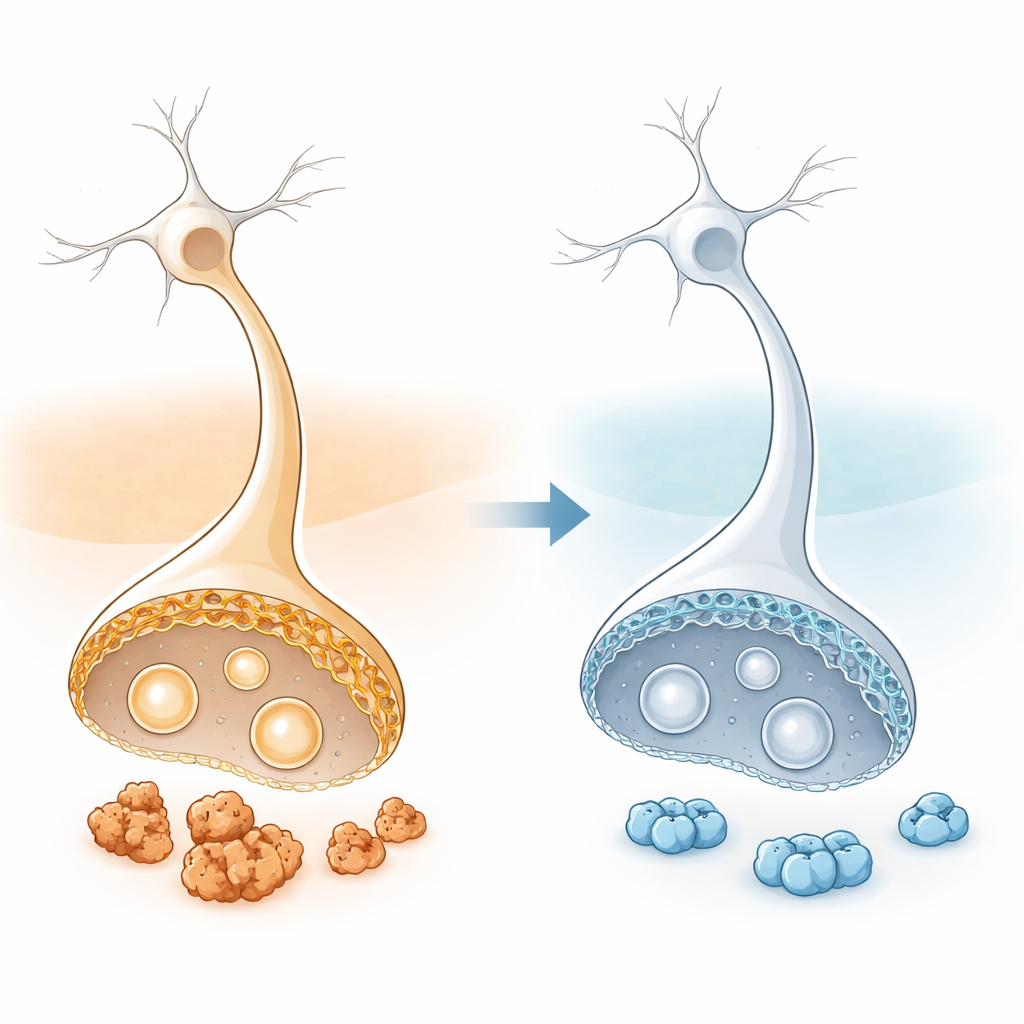
In Parkinson’s and related conditions, alpha-synuclein, a protein that normally helps nerve cells manage the release of chemical signals, becomes sticky and clumps into structures known as Lewy bodies. These clumps are mixed with broken bits of fatty membranes. Earlier research showed that when nerve cell membranes are rich in long, bendy, unsaturated fats (especially oleic acid), alpha-synuclein is drawn to them, lingers too long, and is more likely to misfold and clump. Under healthy conditions, the protein briefly visits small curved membranes, does its job, and then returns to a safer, non-clumping form inside the cell.
A Shorter Fat with a Surprising Effect
The researchers tested whether adding a shorter, saturated fat called myristic acid (C14:0) could rebalance this system. In human nerve-like cells engineered to show strong Parkinson’s features, a rise in oleic acid increased the number of round alpha-synuclein–rich inclusions and boosted a chemical mark associated with disease (phosphorylated “pSer129” alpha-synuclein). When myristic acid was added instead, these harmful inclusions dropped, and the disease mark declined—without harming cell survival. Even more striking, when both fats were present, myristic acid countered the negative impact of oleic acid, bringing inclusion formation and abnormal phosphorylation back toward normal levels.
Watching Proteins and Fats Interact Up Close
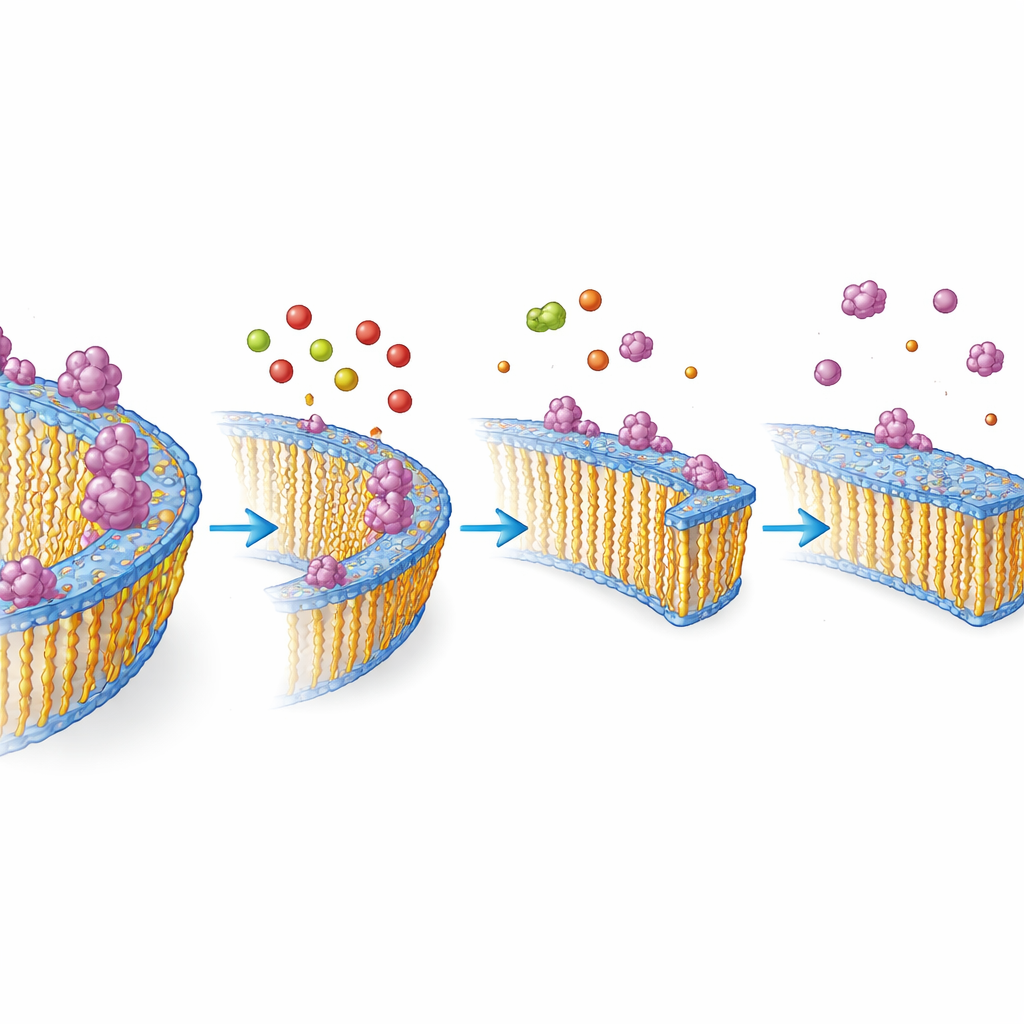
To understand how this works at a basic physical level, the team recreated tiny membrane bubbles in the lab, each built with either long unsaturated fats, shorter saturated fats, or a mixture of the two. Using nuclear magnetic resonance, they observed that alpha-synuclein bound strongly to bubbles rich in oleic acid but far less to those made from myristic acid. When more myristic acid was mixed into the oleic acid membranes, protein binding decreased, and separate tests showed that alpha-synuclein clumped more slowly. In other words, making membranes shorter and more tightly packed kept more of the protein floating freely, where it is less likely to form harmful aggregates.
Resetting Patient Neurons by Remodeling Their Fats
The team then moved to neurons grown from patients with an inherited form of Parkinson’s who carry extra copies of the alpha-synuclein gene and naturally build up more of the protein and more oleic acid–rich lipids. Treating these patient-derived neurons with myristic acid reduced the disease-linked phosphorylated form of alpha-synuclein, shifted the protein away from membranes back into the watery interior of the cell, and restored a healthier balance between its normal four-part (tetramer) form and its single-chain (monomer) form that tends to aggregate. Detailed chemical “fingerprinting” of the cells’ lipids showed that myristic acid was actively woven into many fat families, increasing the abundance of shorter, more saturated molecules in membranes and storage lipids, while reducing some of the overly long and highly unsaturated species associated with disease.
What This Could Mean for Future Therapies
Together, these findings support a simple but powerful idea: by subtly reshaping the mix of fats in nerve cell membranes—specifically by boosting shorter, more saturated chains like myristic acid—we can dial down the harmful interactions between alpha-synuclein and membranes that help kick off Parkinson’s pathology. While the study was done in cells and not in patients, and safe dosing and side effects will require careful testing, myristic acid has already been shown to reach the brain. This raises the possibility that tailored nutritional or drug strategies aimed at membrane “remodeling” could complement other treatments to maintain protein balance in neurons and slow the march of Parkinson’s disease.
Citation: Pacheco, J.A., Sauli, G., Fonseca-Ornelas, L. et al. Lipid membrane remodeling by myristic acid treatment reverses Parkinson’s disease α-synuclein phenotypes in patient neurons. npj Metab Health Dis 4, 15 (2026). https://doi.org/10.1038/s44324-026-00110-8
Keywords: Parkinson’s disease, alpha-synuclein, brain lipids, myristic acid, neuronal membranes