Clear Sky Science · en
Fecal melatonin as a biomarker of emerging circadian maturity and gut microbiota in infancy
Why Baby Poop Can Tell Time
Parents quickly learn that diapers are a big part of life with a baby. But beyond being a daily chore, those diapers may hold clues about how a baby’s internal clock and gut are maturing. This study explored whether melatonin found in infant stool can act as a simple, non-invasive sign of how the baby’s body clock and gut bacteria are developing together during the first year of life.
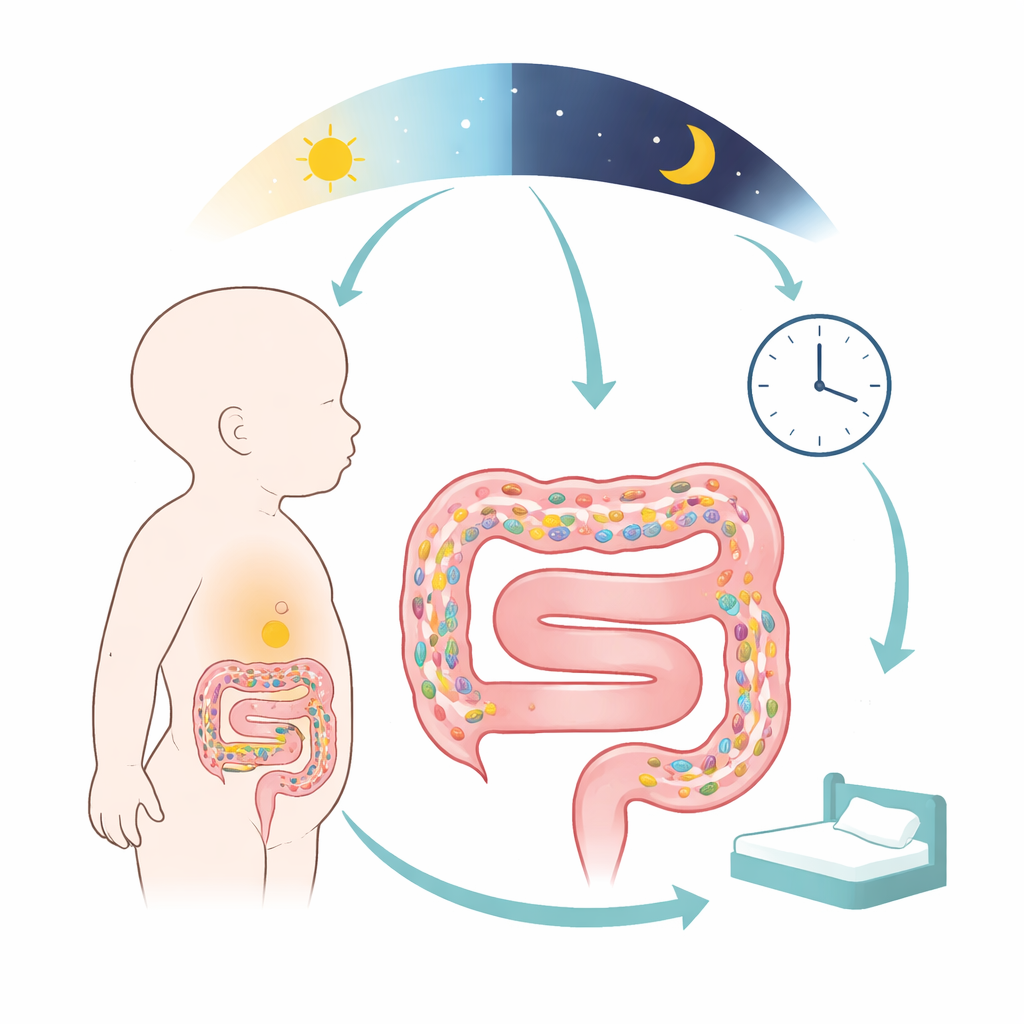
A Night-and-Day Hormone in an Unexpected Place
Melatonin is best known as the “darkness hormone” that helps us fall asleep at night. While it is usually linked to the brain’s pineal gland, the gut actually produces much larger amounts. In adults, gut melatonin helps regulate digestion, immunity, and communication with trillions of resident microbes. In early infancy, when a baby’s own melatonin rhythm is still emerging and they partly depend on melatonin from breast milk, the gut may play an especially important role. Yet almost nothing was known about what melatonin in baby stool reveals about development.
Following Babies Through Their First Year
To answer this, researchers followed healthy infants in Switzerland at 3, 6, and 12 months of age. Parents collected diaper samples, which were analyzed for melatonin and for the composition of gut bacteria using DNA-based methods. At the same time, babies wore ankle motion sensors for over a week so the team could objectively track sleep-wake rhythms and compute a summary measure of circadian maturity called the Circadian Function Index. Parents also kept detailed diaries of feeding, sleeping, and bowel movements, letting the researchers link each stool sample to the time of day, time since the last stool, time since the last meal, and how sleepy the baby had recently been.
What Stool Melatonin Reveals About Time and Microbes
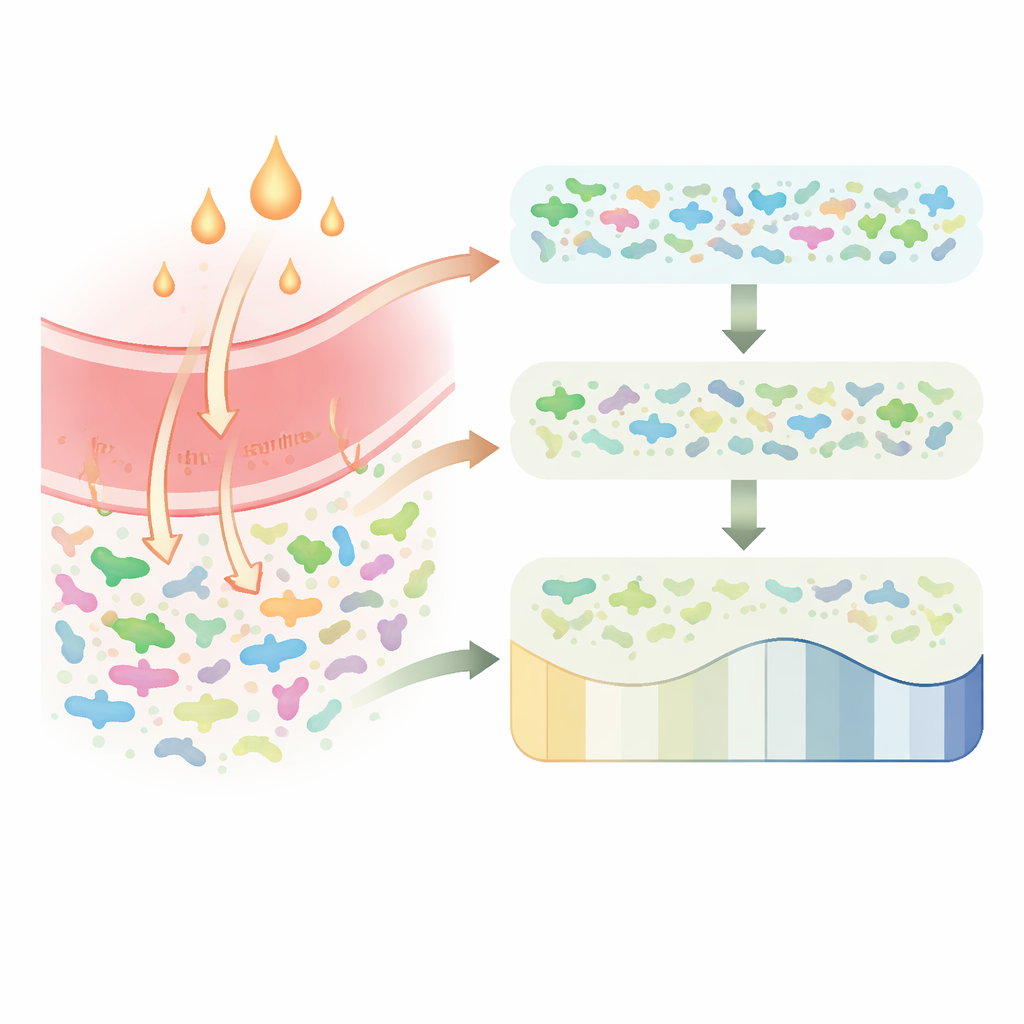
Melatonin levels in stool tended to rise with age, but babies differed widely from one another. Two time-related factors stood out: stools passed earlier in the day contained more melatonin, and samples collected after a longer gap since the last bowel movement tended to have higher levels. In contrast, recent sleep and feeding history had little influence. Higher stool melatonin was consistently linked to lower richness and diversity of gut bacteria, particularly by 12 months, suggesting that melatonin may be tied to a more selective subset of microbes as the gut ecosystem matures. Indeed, hundreds of individual bacterial types showed associations with melatonin, and the number of linked types shrank over time, even as overall microbial diversity increased. Certain major groups of bacteria became more or less connected to melatonin with age, hinting at shifting partnerships between this hormone and the microbial community.
Links to Sleep Rhythms and Daily Regularity
The team then asked whether fecal melatonin was related to how infants slept. Across all ages, melatonin in stool showed only weak links with parent-reported sleep features such as nighttime duration or number of awakenings. However, by 12 months, higher stool melatonin was clearly associated with a more consolidated and stable 24-hour rhythm, as captured by the Circadian Function Index. Day-to-day comparisons revealed that when the timing of stool collection shifted more from one day to the next, melatonin levels also fluctuated more, whereas more regular patterns in bowel timing and, to a lesser extent, meal spacing were tied to more stable melatonin in stool. This supports the idea that consistent daily routines may help stabilize internal timing signals in late infancy.
What This Means for Parents and Future Care
Altogether, the findings suggest that melatonin in baby stool could serve as a practical biomarker of how gut bacteria and the body’s clock are developing together over the first year of life. Because it can be measured non-invasively from diapers, fecal melatonin offers a promising tool for studying early circadian and gut maturation at a population level. The study does not prove that melatonin directly causes changes in microbes or sleep, but it highlights a close, time-sensitive link among these systems. In the future, tracking stool melatonin—alongside feeding schedules and sleep patterns—may help researchers design gentle interventions, such as adjusted meal timing or microbiome-focused strategies, to support healthy sleep and gut development in infants.
Citation: Al-Andoli, M., Zimmermann, P., Schoch, S. et al. Fecal melatonin as a biomarker of emerging circadian maturity and gut microbiota in infancy. npj Biol Timing Sleep 3, 17 (2026). https://doi.org/10.1038/s44323-026-00080-6
Keywords: infant sleep, gut microbiome, melatonin, circadian rhythms, early development