Clear Sky Science · en
Molecular targeting of the meningioma cell signaling circuit reveals drug vulnerabilities including synergy between sulforaphane and focal adhesion kinase inhibition
Why this matters for brain tumor patients
Meningiomas are among the most common brain tumors, and while many are technically “benign,” their position inside the skull means they can still cause serious disability. For most patients, the only real options are surgery and radiation, both of which carry risks and do not always prevent tumors from coming back. This study explores whether already available or experimental medicines can target the inner control circuits of meningioma cells, opening the door to gentler, drug-based treatments that could complement or someday partly replace surgery.
Building a realistic lab model of the tumor
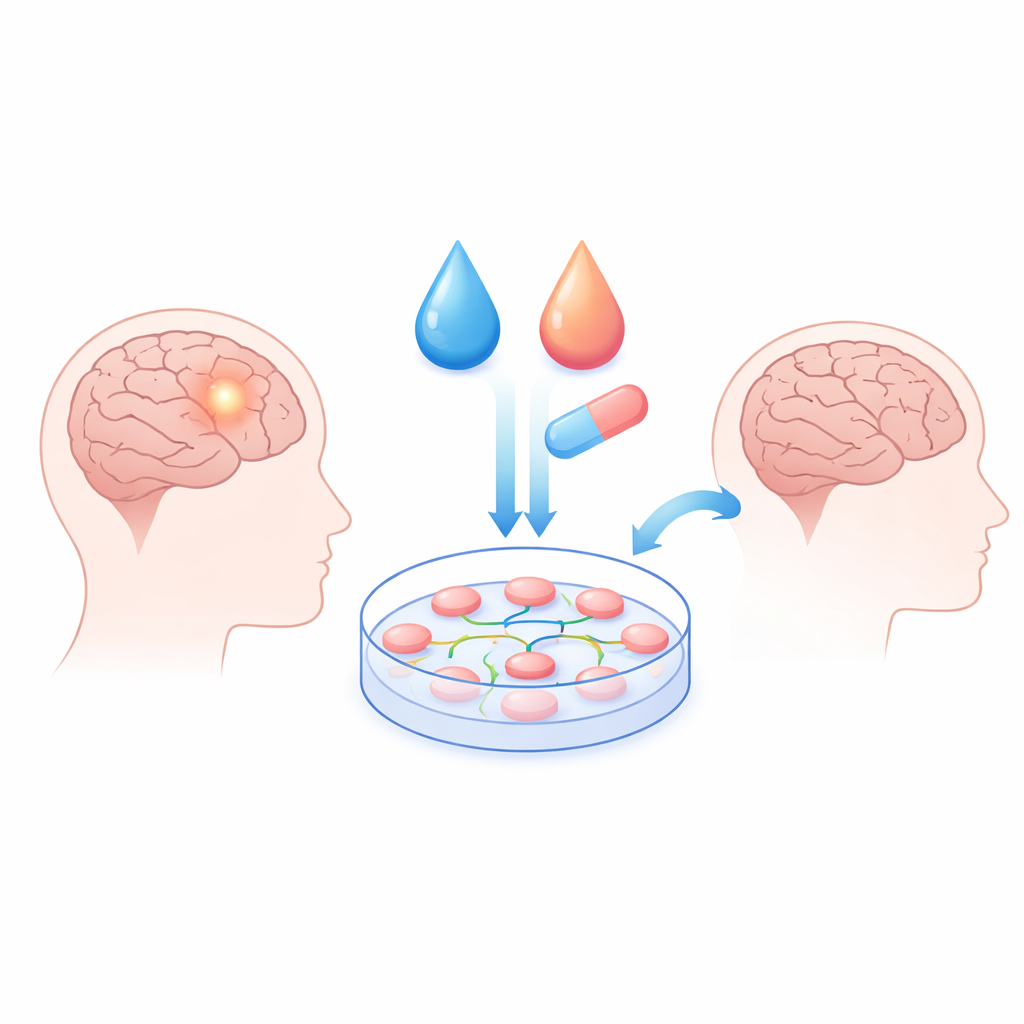
To probe new treatments, the researchers first needed a lab system that behaves like real patient tumors. They collected tissue from three people undergoing surgery for grade I or II meningiomas and grew the cells in dishes over many weeks. Each patient’s cells showed a distinct shape and growth pattern, but all expanded steadily at early passages before slowing down later. The team confirmed that these cultures truly represented meningioma tissue by checking for proteins commonly found in these tumors and not in normal nasal fibroblasts. This living model allowed them to test how different drugs affect tumor cell survival in a controlled, repeatable way.
Hitting the tumor’s signaling “wiring”
Meningioma cells often carry damage in a gene called NF2, which produces a protein (Merlin) that normally keeps several growth and survival pathways in check. When this brake fails, multiple signaling routes—linked to inflammation, growth factors, and cell attachment—can drive tumor expansion. Rather than chasing a single mutation, the authors targeted key points along this interconnected network. They tested a panel of drugs chosen for their ability to interfere with these pathways, including a diabetes medicine (metformin), a natural compound from cruciferous vegetables (sulforaphane), and inhibitors of focal adhesion kinase (FAK) and STAT3, molecules that help transmit pro-growth and pro-inflammatory signals inside the cell.
Finding weak spots and powerful pairings
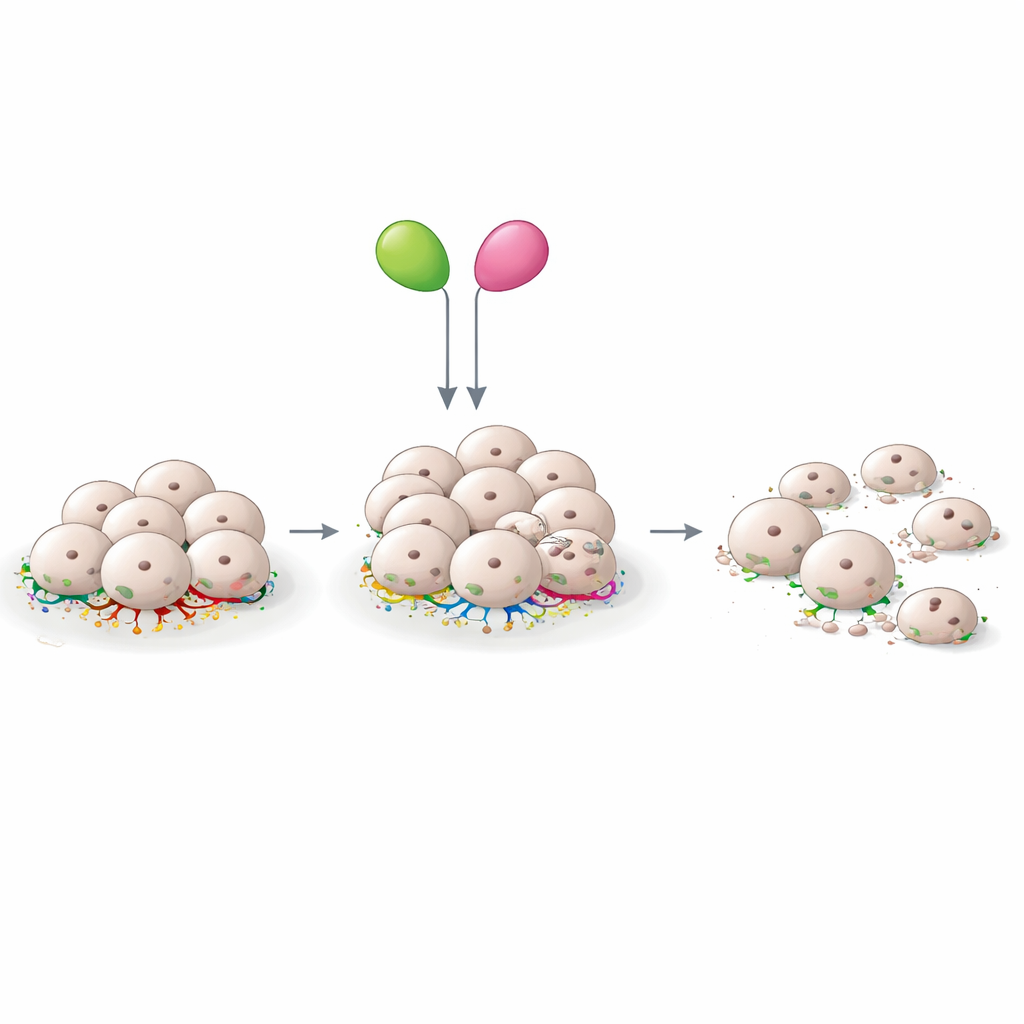
In initial screens, all tested drugs reduced meningioma cell viability to some degree, but several stood out as consistently effective across all three patient-derived cultures. Sulforaphane, metformin, the FAK inhibitor Y15, and the STAT3 inhibitor C188-9 each showed clear, dose-dependent killing of tumor cells. The researchers then focused on combinations, reasoning that coordinated hits at different nodes in the signaling circuit might be more potent and allow lower doses. Using standard synergy analysis, they discovered that sulforaphane plus Y15 formed a particularly powerful pair: each drug became effective at lower concentrations when used together, and their joint impact on cell survival was greater than the sum of their individual effects. Microscopy showed that this duo reduced markers of cell division and increased markers of programmed cell death, indicating a genuine shutdown of tumor cell growth rather than a temporary slowdown.
Inflammation, adhesion, and a promising natural helper
The study also highlights the importance of inflammatory signals and cell-attachment machinery in meningioma biology. Sulforaphane is known to dampen inflammatory pathways, while FAK helps cells sense and respond to their surroundings. Blocking both at once appears to leave meningioma cells especially vulnerable. Notably, this effect did not depend on whether the original tumors showed loss of Merlin, suggesting that the combination could work in a broad range of patients. In contrast, pairing sulforaphane with metformin produced an antagonistic interaction in this system, underscoring that not all seemingly logical combinations are beneficial and that careful testing is essential.
What this could mean for future treatment
Although these experiments were done in cell cultures and still need to be validated in animal models and clinical trials, the results are encouraging. Sulforaphane and metformin already have regulatory approval for other uses, making them attractive candidates for repurposing, while FAK and STAT3 inhibitors are progressing through early-stage development. Because meningiomas sit outside the blood–brain barrier, oral drugs can reach them more easily than tumors deeper in the brain. Taken together, the work suggests that targeting the tumor’s signaling circuitry—with combinations such as sulforaphane plus FAK inhibition—could eventually provide meningioma patients with less invasive, more tailored treatment options to reduce tumor burden, delay recurrence, and improve quality of life.
Citation: Schwab, M.C., Kocas, Y., Gendreizig, S. et al. Molecular targeting of the meningioma cell signaling circuit reveals drug vulnerabilities including synergy between sulforaphane and focal adhesion kinase inhibition. BJC Rep 4, 21 (2026). https://doi.org/10.1038/s44276-026-00204-2
Keywords: meningioma, targeted therapy, sulforaphane, focal adhesion kinase, brain tumor pharmacology