Clear Sky Science · en
Perceptual and conceptual influences on memory judgments
Why remembering the right thing matters
Everyday life is full of moments when getting a memory wrong could really matter: choosing the correct medicine bottle from a crowded shelf, recognizing your car in a busy parking lot, or picking your child out of a group at daycare. This study asks a deceptively simple question: when we decide that something is the “same” as what we saw before, are we relying more on what it looked like—the colors and shapes—or on what it meant—the kind of thing it was? And do these two sides of memory work together or get in each other’s way?
Two ways to remember an image
The authors focus on two broad kinds of information our memories can store about pictures. One is perceptual: surface details such as color, texture, and layout. The other is conceptual: what the object or scene is, which category it belongs to, and how typical it is of that category. Earlier work hinted that both types of information can be stored, but that our yes–no recognition decisions lean heavily on the conceptual side. Here, the researchers go further: they ask not only which type of information drives final accuracy, but how each shapes the entire decision process—from the gradual buildup of evidence, to the choice itself, to how confident we feel about that choice.
Measuring similarity with smart vision models
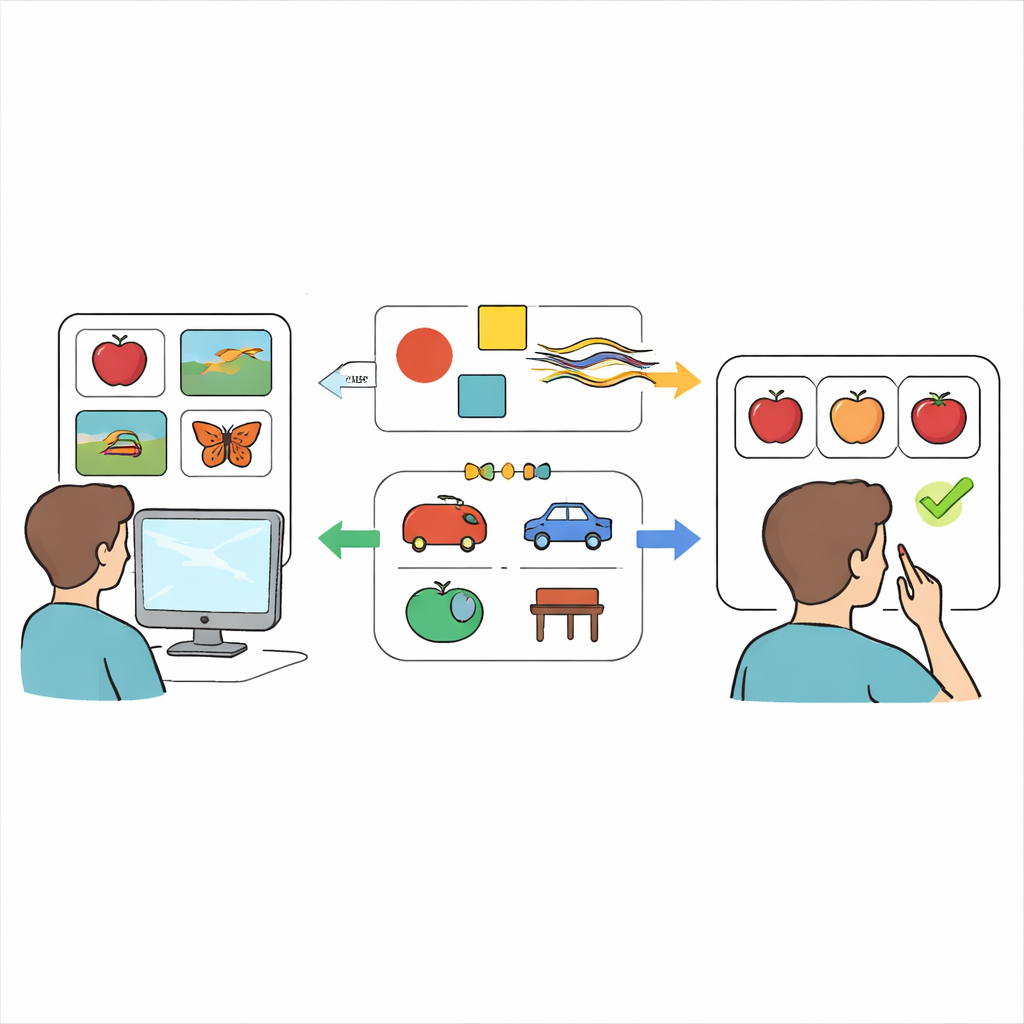
To probe these questions, the team ran several large online experiments in which hundreds of volunteers studied many pictures of objects or scenes and later had to pick the exact image they had seen from one or more lookalikes. Crucially, the “lure” images were not chosen by hand. Instead, the authors used modern computer vision systems—deep neural networks—to give each image a numeric fingerprint. One network, tuned to low-level visual structure, estimated how similar two images were in their raw appearance (perceptual similarity). Another, trained to link pictures with words, estimated how similar they were in meaning or category (conceptual similarity). This allowed the researchers to create image sets that varied cleanly in one kind of similarity while holding the other relatively constant, and to model how these graded similarities affected people’s choices and reaction times.
Concepts trip us up more than looks
In the first experiment, people chose between a studied picture and a single lure that was either very similar or dissimilar in looks, or in meaning. Detailed decision models showed that both types of similarity slowed the “evidence accumulation” process: when the target and lure were alike, it simply took longer to build up enough information to decide. But only conceptual similarity reliably reduced overall recognition accuracy and confidence. When the two images belonged to the same kind of thing—say, two different dogs—participants were more likely to pick the wrong one and to feel less sure about their decision. By contrast, when similarity was only in surface details—such as color or viewpoint—participants could usually resolve the confusion before making their final choice.
When lookalikes can actually help
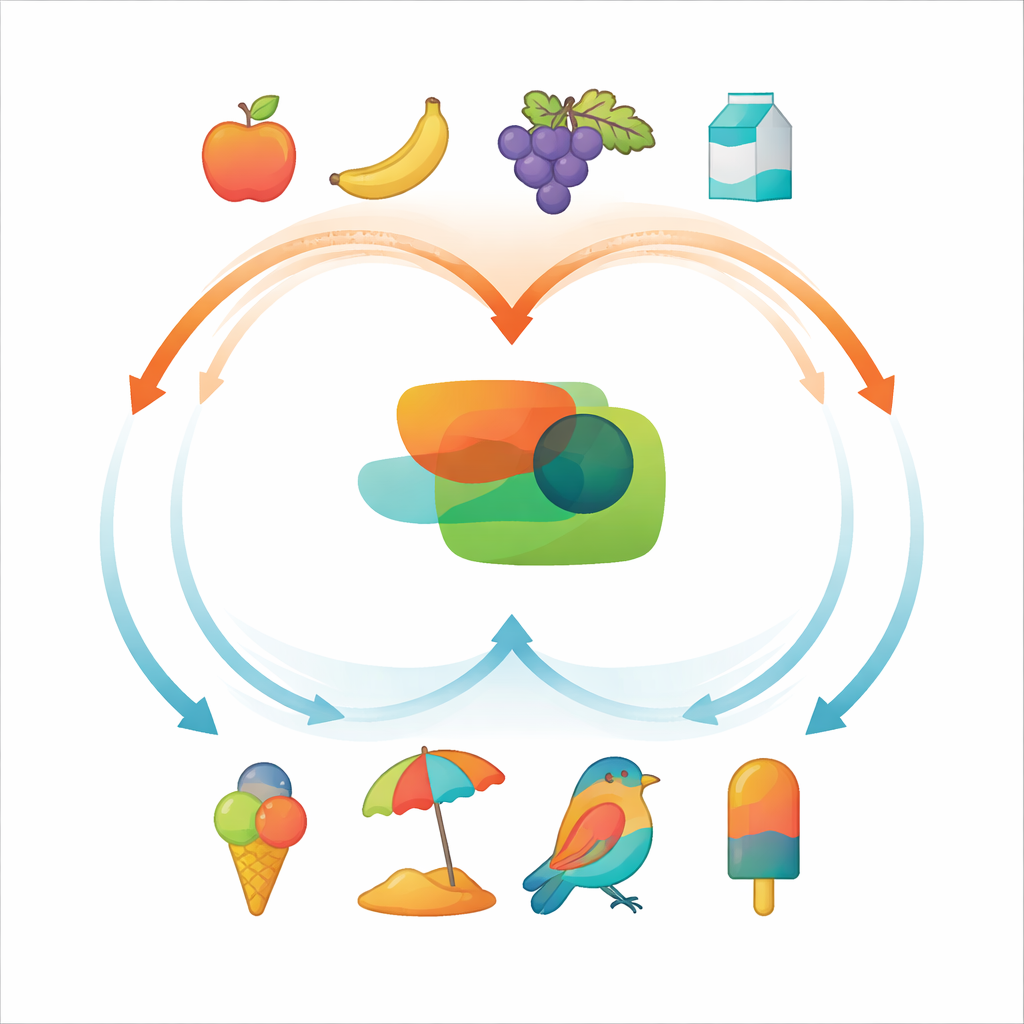
The next experiments moved closer to everyday situations by giving each target three lures at test and by using both objects and complex scenes. Here the story became more nuanced. As expected, increasing conceptual similarity between the target and its lures steadily harmed recognition and lowered confidence. But this damage was surprisingly smaller when the target and lures were also highly similar in their visual details. Under those tougher conditions, participants seemed to shift strategies: instead of relying on a broad sense of “what kind of thing this is,” they drew on more finely grained details to tell the target apart. A final experiment that asked people whether they were relying on a vague feeling of familiarity or on specific remembered details supported this idea: high visual similarity nudged people toward detailed “remember” experiences, which in turn blunted the disruptive effect of conceptual overlap.
What this means for everyday memory
Together, these findings suggest that our memory decisions are shaped by an ongoing tug-of-war between what things look like and what they mean. Conceptual overlap—different items that belong to the same kind—plays the starring role in producing memory mistakes and feelings of uncertainty. Yet visual similarity is far from irrelevant: by making easy shortcuts unreliable, it can push us to recruit richer, more detailed recollections that partly protect accuracy. For everyday life, this implies that situations filled with conceptually similar options (like similar medicines or near-identical exits) are especially risky for memory slips—but that drawing attention to distinctive visual details can help us choose correctly even when everything seems alike.
Citation: Morales-Torres, R., Davis, S.W. & Cabeza, R. Perceptual and conceptual influences on memory judgments. Commun Psychol 4, 73 (2026). https://doi.org/10.1038/s44271-026-00443-6
Keywords: recognition memory, perceptual similarity, conceptual similarity, metacognition, visual cognition