Clear Sky Science · en
A systematic review and meta-analysis of studies testing effects of cash transfers on child cognitive, language, and socio-emotional development in low- or middle income countries
Why money for families matters for young minds
Across the globe, many young children grow up in families who struggle to afford food, healthcare, or school. This paper asks a simple but important question: if governments give these families extra cash, does it help their children think, talk, move, and manage feelings better in the early years of life? The authors look at the best available experiments from low and middle income countries to see whether cash alone, or cash tied to certain actions, can give children a healthier start in life. 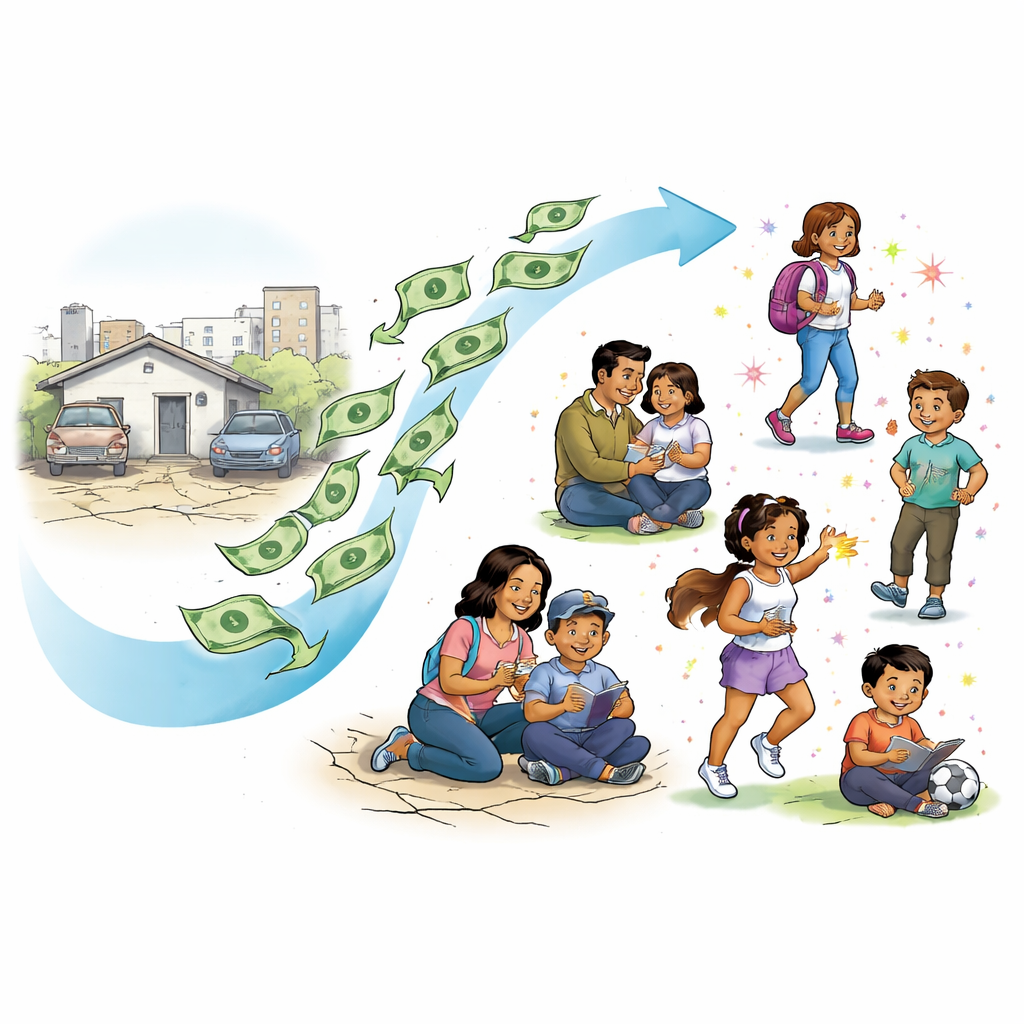
How extra cash can support early childhood
Child development depends on both biology and daily experience. From before birth through the first school years, children’s brains grow rapidly as they learn to pay attention, understand language, solve problems, and get along with others. Poverty can interrupt this process by limiting nutrition, safe housing, healthcare, toys, and time for responsive caregiving. Cash transfers are one tool governments use to ease this strain: they put money directly into the hands of low income households, often mothers, and let them decide how to spend it. Some programs simply provide cash, while others require families to attend clinic visits, nutrition talks, or keep children in school before they can receive payment.
What this study examined
The authors systematically reviewed and combined results from 16 randomized controlled trials involving nearly 30,000 children under eight years old in Africa, Asia, and Latin America. Only rigorous experiments with a true control group and direct measures of child development were included. They looked at four main areas: thinking skills, language, social and emotional skills, and motor abilities such as large body movements and hand control. Programs were grouped as unconditional cash only, unconditional cash plus extra services, conditional cash only, and conditional cash plus added supports such as parenting training or nutrition counseling.
Small gains, especially when cash comes with guidance
On average, children in families receiving cash did slightly better on tests of thinking, language, and gross motor skills compared with those who did not receive cash. The improvements were modest in size but consistent across studies. Social and emotional skills, such as behavior and emotional regulation, only improved in programs where cash was tied to conditions like clinic visits or school attendance. The strongest results tended to appear in conditional programs and in “cash plus” models that bundled money with parenting support, health or nutrition education, or direct stimulation activities, particularly in Latin American settings. Unconditional cash alone rarely showed clear benefits for children’s learning outcomes.
Why program design and size matter
Not all cash programs were equal. The review suggests that larger transfers, when expressed as a share of family income, may be linked to better thinking and social outcomes, although the number of studies was too small to test this firmly. The added components in cash plus programs often focused on helping caregivers understand child needs and practice play based interactions, which appear especially helpful for building cognitive skills. Conditional programs may work partly because they encourage families to use health and education services that already exist, while cash plus programs can fill gaps where such services are weak. At the same time, enforcing conditions can bring ethical concerns if families cannot easily meet the requirements or if clinics and schools are of poor quality. 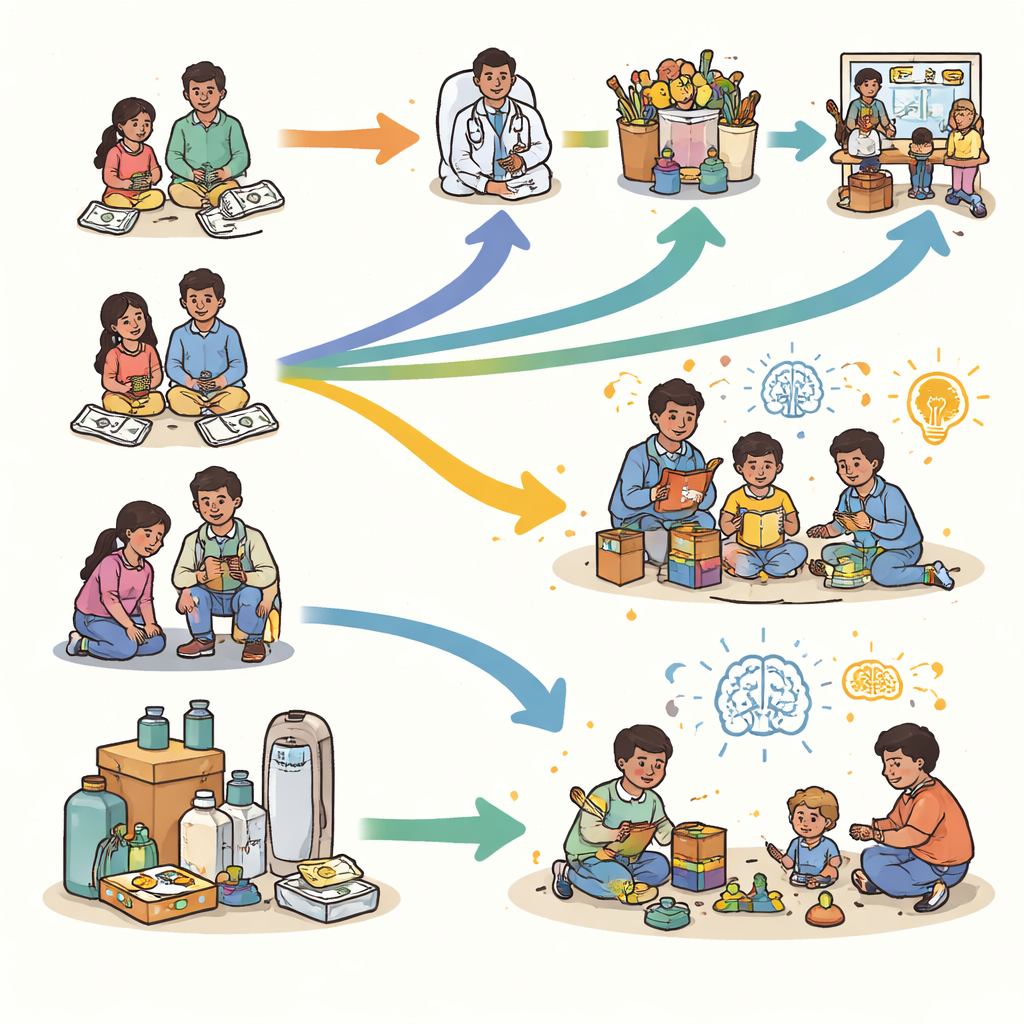
What this means for children and policy
For a lay reader, the key message is that giving poor families cash can support young children’s development, but money works best when it is paired with supports that help parents invest in children’s health, nutrition, and early learning. The effects are not dramatic, and the evidence base is still small and varied, yet the pattern is clear: programs that either require or actively guide families toward child focused services tend to yield more benefits than cash alone. For governments hoping to boost early learning, language, and emotional well being, the study points toward designs that link financial help with practical services for parents and children, while still paying attention to local context and the fairness of any conditions.
Citation: Fernald, L.C.H., Tsai, E. & Gertler, P.J. A systematic review and meta-analysis of studies testing effects of cash transfers on child cognitive, language, and socio-emotional development in low- or middle income countries. Commun Psychol 4, 79 (2026). https://doi.org/10.1038/s44271-026-00440-9
Keywords: cash transfers, early child development, conditional cash transfer, cash plus programs, low and middle income countries