Clear Sky Science · en
Predictors of depression outcomes among university students following brief smartphone-based interventions
Why Your Phone Might Matter for Your Mood
Feeling low at university is common, but getting help can be hard: long waitlists, high costs, or just not knowing where to start. This study looked at whether short, self-guided programs delivered entirely through a smartphone could help students’ depression, and, crucially, which kinds of students are most likely to feel better afterward. Understanding these patterns could make digital mental health tools more personalized and more effective for real students juggling study, work, and life.
Short App Programs Put to the Test
The researchers followed 1282 university students in Australia who all reported significant emotional distress. After a two-week monitoring period, students were randomly assigned to use one of four brief, two-week smartphone programs: a sleep-habit program, a mindfulness program, a physical-activity program, or a comparison condition that simply asked about mood twice a day. Each program was self-guided and designed to fit into busy student lives, using infographics, short videos, audio meditations, or quick workout routines, all delivered through a single app enhanced by artificial intelligence to manage how students were allocated across the four options over time. 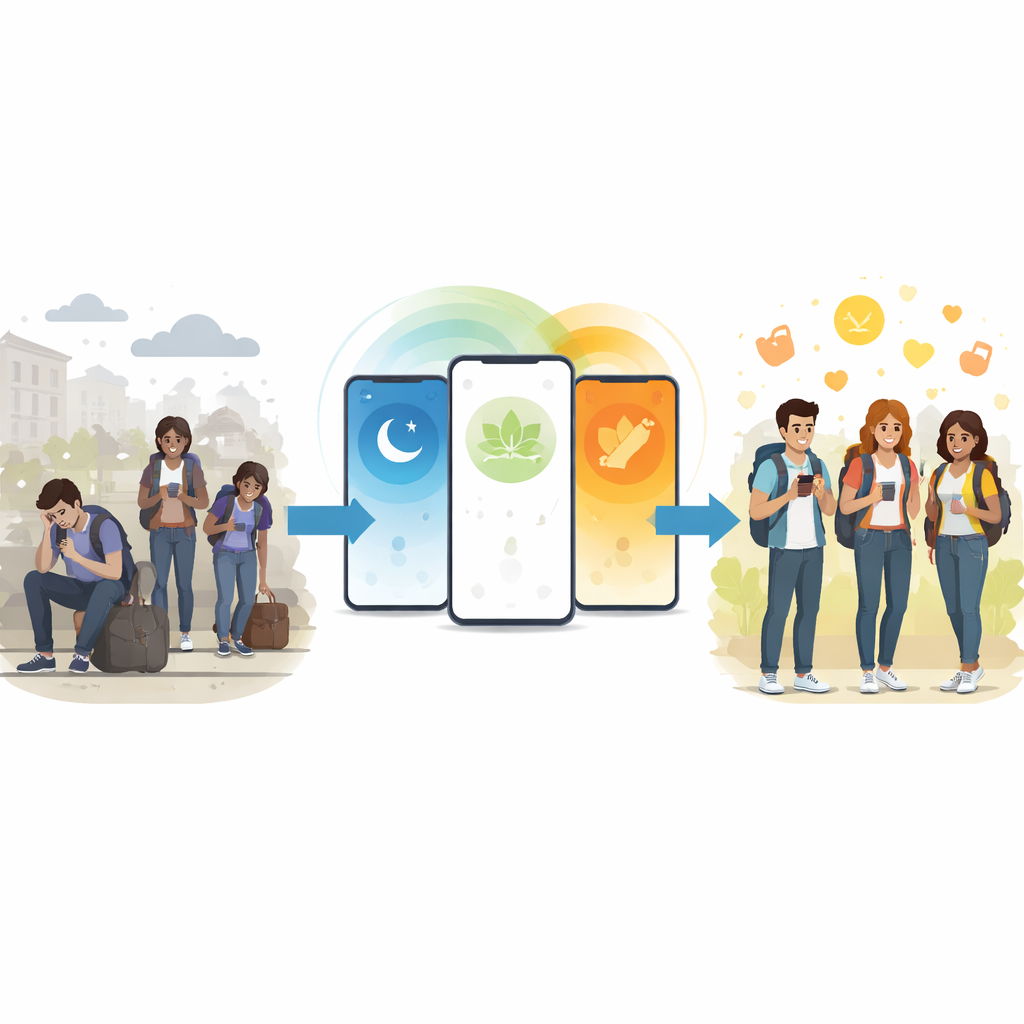
Who Got Better—and How Much
To judge improvement, the team focused specifically on symptoms of depression, measured before and after the two-week interventions. They looked at two kinds of success: “remission,” when a student’s depression scores fell into the normal range, and “response,” when scores dropped by at least half. By the end, about 41% of students met criteria for remission and nearly 30% showed a strong response. The three active programs—sleep, mindfulness, and physical activity—led to higher response rates than the mood-tracking comparison condition, suggesting that even very brief, low-intensity digital programs can make a meaningful difference for many students.
Clues Hidden in Starting Points
The study then dug into which personal factors predicted who was most likely to improve, regardless of which program they received. Students with milder depression at the start, better mental health–related quality of life, and fewer recent visits to a general practitioner for mental health reasons were more likely to reach remission and to show a strong response. In contrast, those with more severe depression or more frequent recent doctor visits tended to improve less, hinting that they might need longer, more intensive, or more specialized care than a short app-based program can provide. Surprisingly, basic demographics like sex and socioeconomic status, as well as identity factors such as LGBTQIA+ status or culturally diverse background, did not clearly predict who benefited. 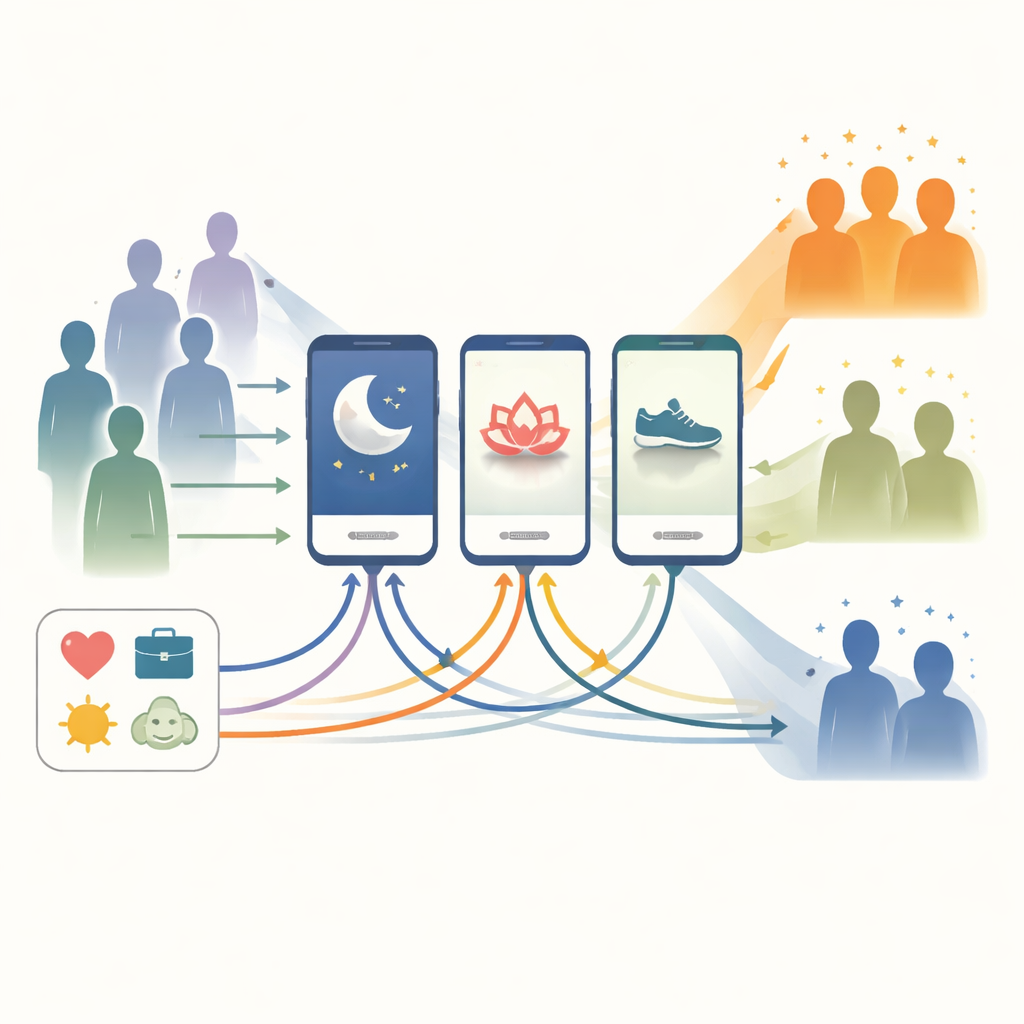
When Anxiety Steers the Best Choice
The researchers also searched for “prescriptive” factors—traits that might tell us which specific app is likely to work best for which person. Among all the characteristics tested, one clear pattern emerged: anxiety level at the outset changed how helpful the sleep-focused program was. For students with higher anxiety, the sleep-habit module was less likely to lead to remission or strong response when compared with the mindfulness or physical-activity modules, or even with simple mood tracking in some analyses. In other words, students who were both depressed and very anxious seemed to fare better with activity- or mindfulness-based tools than with a basic sleep-hygiene program, suggesting that anxiety can subtly steer which kind of digital support is the best fit.
What This Means for Students and Digital Care
Overall, the study shows that short, app-based programs can help many university students experiencing depression, but they are not a one-size-fits-all solution. Students starting with milder depression and better day-to-day wellbeing were more likely to bounce back, while those with more severe problems or higher healthcare use may require more robust support. Anxiety levels, in particular, seemed to matter for choosing between different types of digital tools, with sleep-focused tips working less well for highly anxious students than mindfulness or activity-based approaches. The authors argue that to truly personalize digital mental health care, future work should go beyond single snapshots of people’s symptoms and instead track how their mood changes over time, using these “trajectories” to guide who gets which kind of help, and when.
Citation: Liu, X., Zheng, W., Hoon, L. et al. Predictors of depression outcomes among university students following brief smartphone-based interventions. npj Mental Health Res 5, 25 (2026). https://doi.org/10.1038/s44184-026-00208-3
Keywords: digital mental health, university students, depression, smartphone interventions, personalized treatment