Clear Sky Science · en
Community-led climate resilience at the neighborhood scale: examining multi-level impacts of a participatory planning process
Why This Neighborhood Story Matters
Across many cities, the people who pollute the least often feel the impacts of climate change the most. This article follows a real attempt to change that pattern in Cincinnati, Ohio. Instead of experts designing plans from afar, residents of two historically neglected neighborhoods were invited to sit at the table with city officials and nonprofits. Together, they explored how heat, flooding, and poor air are tied to long histories of unfair investment—and then built their own plans to make their blocks safer, greener, and more resilient.
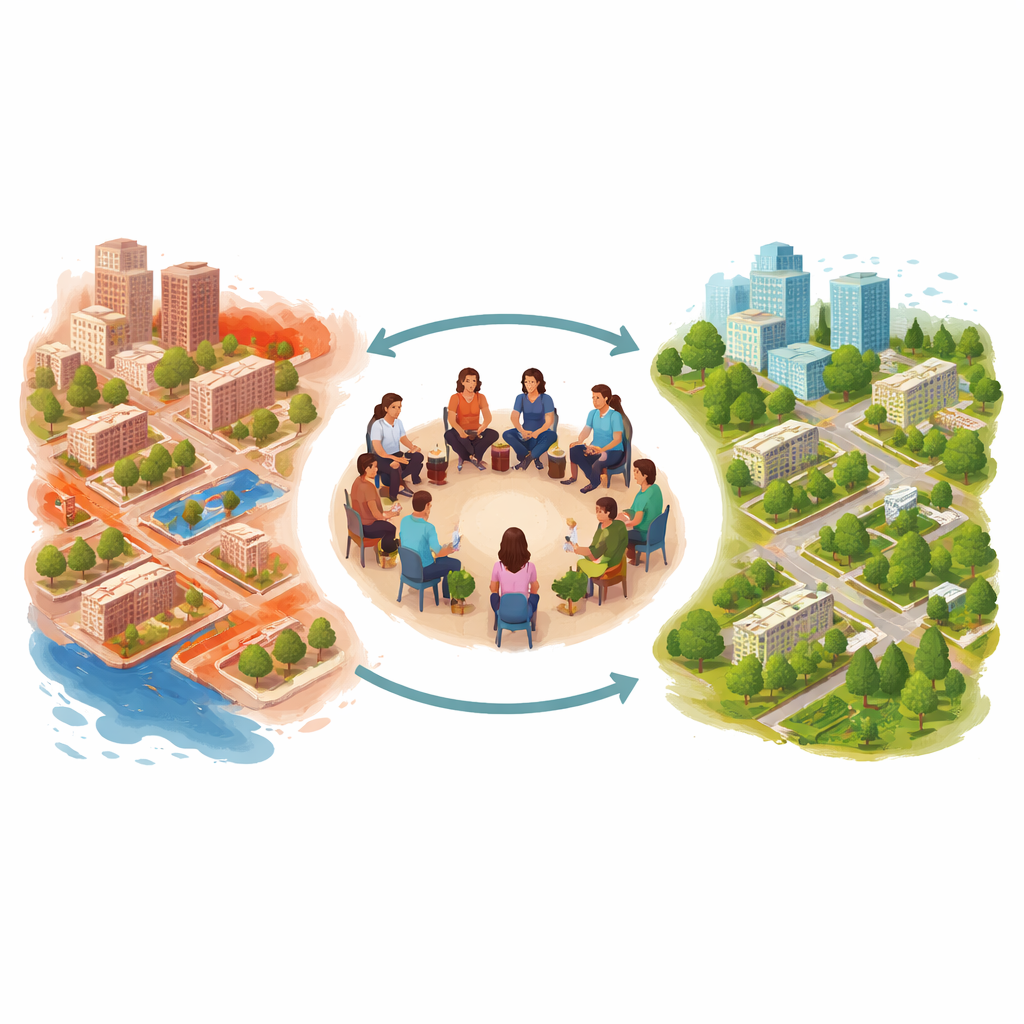
From Hot Streets to Shared Solutions
The project, called the Climate Safe Neighborhoods (CSN) Partnership, focused on parts of Cincinnati where residents, mostly Black and low‑income, face high heat, frequent flooding, and high housing costs. For 20 months, city staff, local nonprofits, university researchers, and ten community members formed Climate Advisory Groups. These residents were paid for their time, trained on local climate risks, and asked to share their experiences—where streets flood, where shade is missing, how high bills and poor health connect to the changing climate. Together they drew maps, drafted neighborhood “resilience statements,” and sketched practical ideas like tree planting, community gardens, and safer streets.
Seeing Climate Change in a New Light
Before joining the project, many residents saw climate change mainly as far‑off “environmental problems” or personal habits like recycling. Surveys and interviews showed that, afterward, they described it as something woven into housing, jobs, energy costs, and racial inequality. People began to talk about how redlining and disinvestment had left their blocks more exposed to heat and flooding, and how rising fuel prices deepen divides between rich and poor. This shift—from thinking of climate change as abstract weather to seeing it as part of everyday struggles for safety, health, and dignity—is what the authors call growing critical climate awareness.
From Concern to Collective Action
Residents did not just think differently; they acted differently. After the program, participants reported feeling more able to talk about climate change, more confident that they could influence local policies, and more likely to attend community meetings or events. Interviews revealed that some went on to organize clean‑ups, restart a community garden, pursue grants, and join youth “green teams.” A few even found jobs in climate‑related work. Crucially, new relationships formed across neighborhoods, nonprofits, and city hall. Residents gained access to people and resources they previously could not reach, and city staff gained a clearer picture of life in areas they rarely visited.
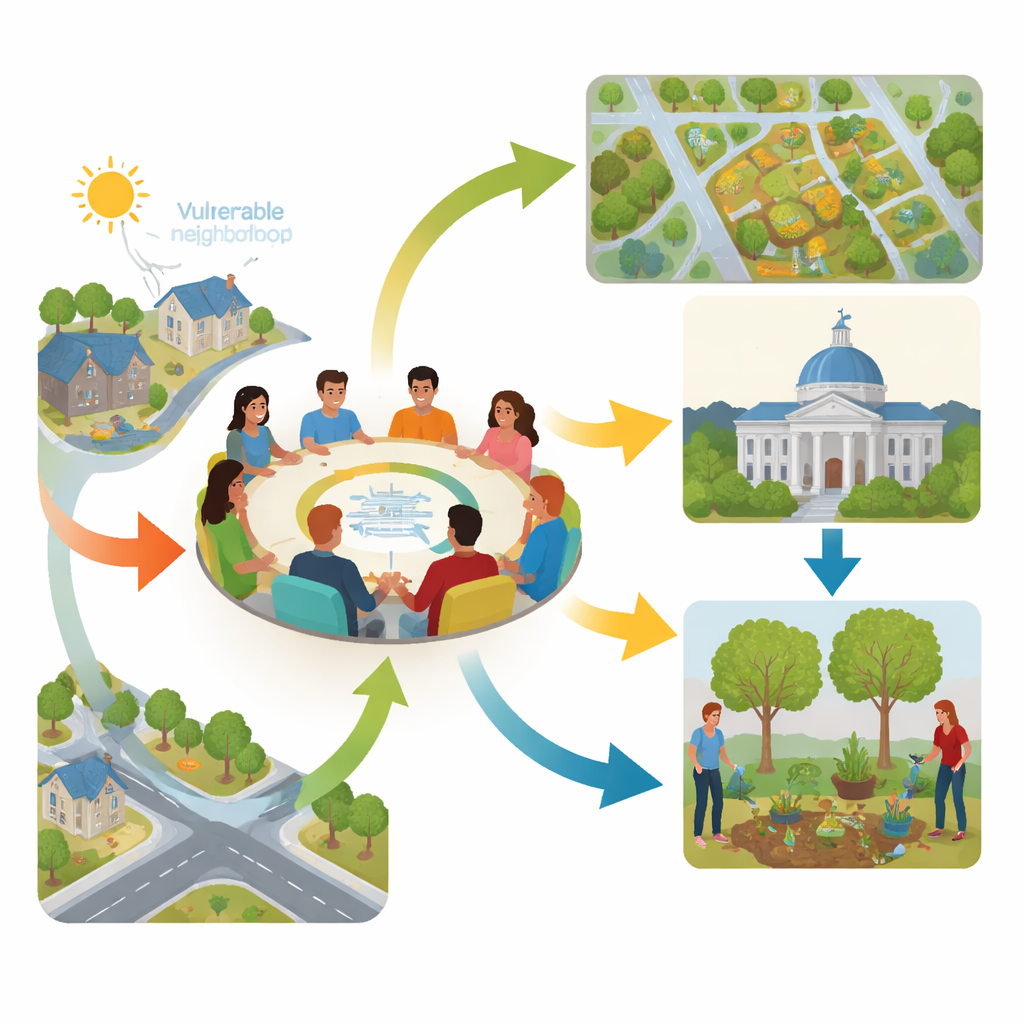
Changing How a City Listens
The experiment also reshaped institutions. City officials began weaving residents’ neighborhood plans into grant applications and into the Green Cincinnati Plan, the city’s main climate roadmap. Nonprofit staff and city workers described learning more about each other’s limits and powers, which helped reduce frustration and build trust. Over several years, the CSN model expanded to more neighborhoods and even across the river into Kentucky. It has since been written into Cincinnati’s official “equity framework” for how the city engages communities on climate, signaling a move away from one‑off listening sessions toward ongoing partnerships.
Ripples of Change Beyond One Block
To a lay reader, the core message is straightforward: when residents most exposed to climate risks lead the planning, everyone stands to gain. This study shows that a small, well‑supported group of neighbors can spark changes in how people understand climate change, how they participate in local democracy, and how a city sets its priorities. While the project involved only ten residents at first, its influence has spread into citywide policies, new funding for trees and air‑quality monitoring, and a broader culture of inclusion in climate work. The authors argue that such justice‑focused, community‑led planning is not just a nice extra—it is a powerful path to fairer, more durable climate resilience.
Citation: Trott, C.D., Shepherd-Reyes, E.M., Lam, S. et al. Community-led climate resilience at the neighborhood scale: examining multi-level impacts of a participatory planning process. npj Clim. Action 5, 49 (2026). https://doi.org/10.1038/s44168-026-00359-1
Keywords: climate justice, community resilience, urban neighborhoods, participatory planning, environmental equity