Clear Sky Science · en
Multilevel predictors of ultra-processed food intake in Canadian preschoolers
Why What Little Kids Eat Matters
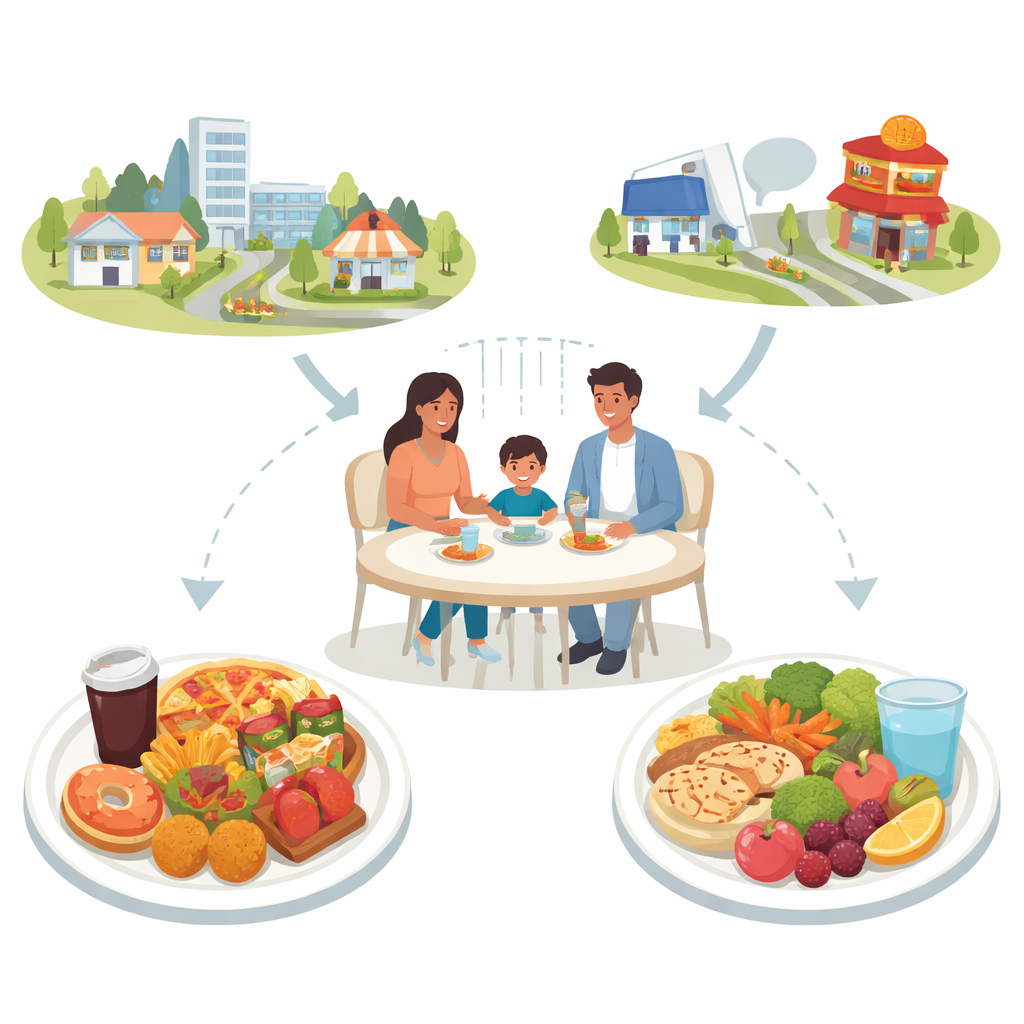
Many preschoolers today get a large share of their calories from ultra-processed foods—packaged products like sweetened cereals, nuggets, and sugary drinks that are far removed from whole ingredients. This study follows thousands of Canadian families to ask a simple but important question: why do some young children eat far more of these foods than others? The answer reaches beyond individual choice, revealing how parents’ habits and the neighbourhoods families live in quietly shape what ends up on children’s plates.
Looking at Families Across Canada
The researchers drew on data from more than 2,400 children in the nationwide CHILD Cohort Study, tracking families from pregnancy until the children were three years old. At age three, parents filled out detailed questionnaires about everything their child ate, which were grouped into categories ranging from minimally processed foods (such as fruits, vegetables, and plain meats) to ultra-processed products. The team also collected rich information on parents’ own diets, family circumstances, children’s health and routines, and where families lived, including how close they were to fresh-food markets and job centers.
Ultra-Processed Foods on Preschool Plates
By the time children reached preschool age, ultra-processed foods supplied nearly half of their daily calories on average, and for some children more than four-fifths. These foods generally crowded out healthier, less processed options. The share of ultra-processed foods varied by region within Canada, with higher intakes seen in some provinces than others, hinting that local food cultures and policies matter. But the researchers wanted to move beyond simple averages to identify which specific factors—from breastfeeding to commute times—most clearly predicted how much ultra-processed food each child consumed.
How Parents’ Habits Shape Children’s Diets
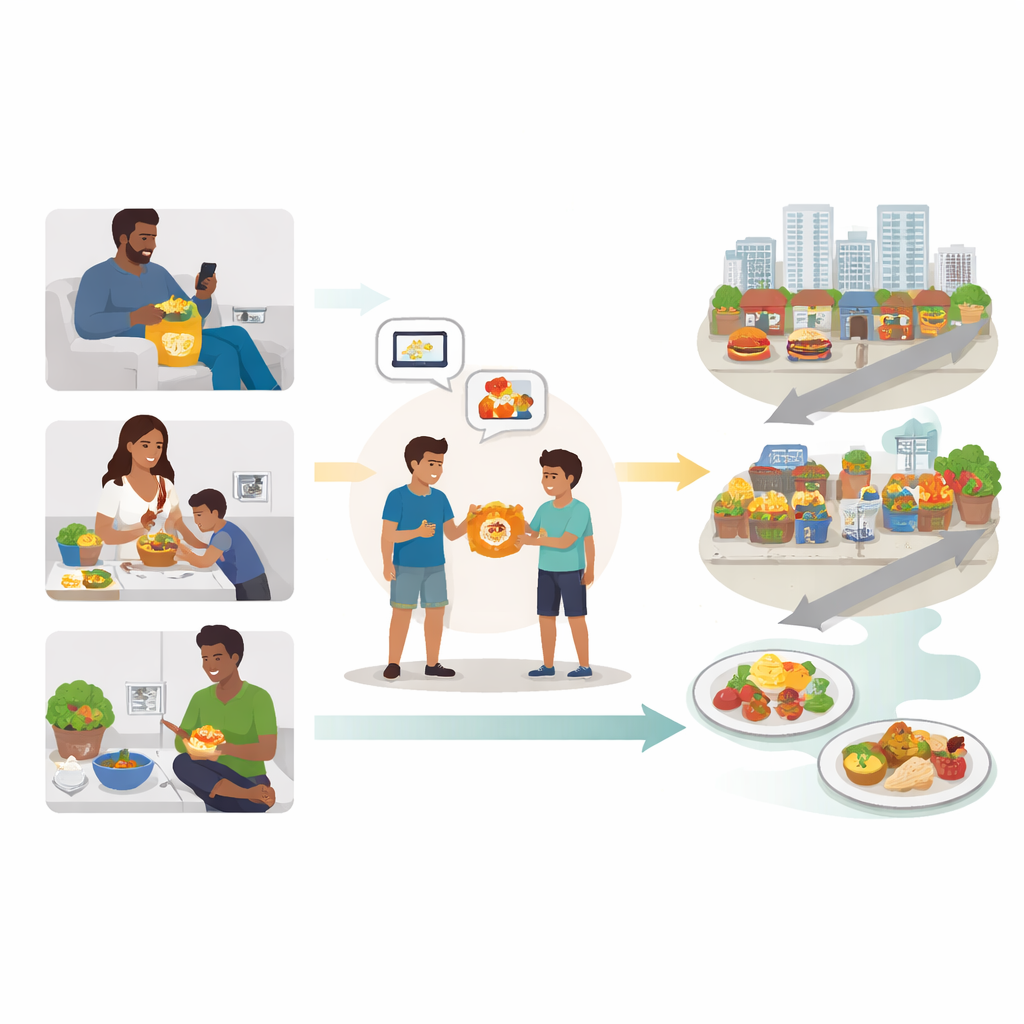
Using a machine-learning approach to sift through dozens of potential influences, the study found that family behavior played a powerful role. Children whose mothers ate more ultra-processed foods during pregnancy, and whose fathers followed a more “fast-food–style” pattern, tended to consume more of these products themselves at age three. Higher maternal body weight and younger maternal age were also linked to greater ultra-processed intake, pointing toward challenges such as tight budgets, limited time for cooking, or lower confidence in preparing meals from scratch. In contrast, children who were breastfed for longer periods generally ate fewer ultra-processed foods, supporting the idea that early feeding choices are tied to later preferences for less processed options.
Daily Routines and Screens in the Home
Inside the household, everyday routines further nudged children toward or away from packaged foods. Having older siblings was associated with higher ultra-processed food intake, possibly because busy parents lean on convenient foods that can feed multiple children quickly, or because younger children share snacks and habits with their brothers and sisters. Screen time stood out as another strong predictor: preschoolers who spent more hours each day with televisions, tablets, or phones tended to consume more ultra-processed items. This fits with growing evidence that advertisements, in-app promotions, and distracted eating during screen use can all push families toward quick, packaged snacks rather than fresh meals.
Neighbourhoods, Time Pressures, and Food Access
The physical surroundings outside the home also mattered. Children living in areas with better access to jobs—meaning shorter average travel distances for working adults—tended to eat fewer ultra-processed foods, suggesting that long commutes and “time poverty” make it harder for parents to shop for and prepare fresh food. Likewise, families in neighbourhoods with more fruit and vegetable markets nearby had children who consumed a smaller share of their energy from ultra-processed products. Surprisingly, traditional large grocery stores did not show the same protective pattern, underscoring the unique role of smaller outlets that focus on fresh items. Standard measures such as household income or parental education were less predictive in this relatively advantaged group, highlighting that even well-resourced families are heavily influenced by time, convenience, and the local food environment.
What This Means for Parents and Policymakers
For a layperson, the message is that young children’s diets do not simply reflect what they “like” or what parents know about nutrition. Instead, they arise from the combined pull of parental eating patterns, early feeding practices like breastfeeding, screen-filled routines, and the way cities are built—from commute times to the presence of fresh-food markets. The study concludes that cutting back on ultra-processed foods in early childhood will require more than advising parents to “choose better.” Effective solutions will need to improve neighbourhood food options, reduce time pressures on families, and rein in digital marketing aimed at kids, so that the healthier choice becomes the easier, more automatic one in everyday life.
Citation: Mousavi, S., Chen, Z.H., Lu, Z. et al. Multilevel predictors of ultra-processed food intake in Canadian preschoolers. Commun Med 6, 212 (2026). https://doi.org/10.1038/s43856-026-01473-1
Keywords: ultra-processed foods, preschool nutrition, family eating habits, food environment, Canada child health