Clear Sky Science · en
Individualized treatment effects of CPAP on secondary cardiovascular outcomes in non-sleepy obstructive sleep apnea patients
Why this matters for people with sleep apnea
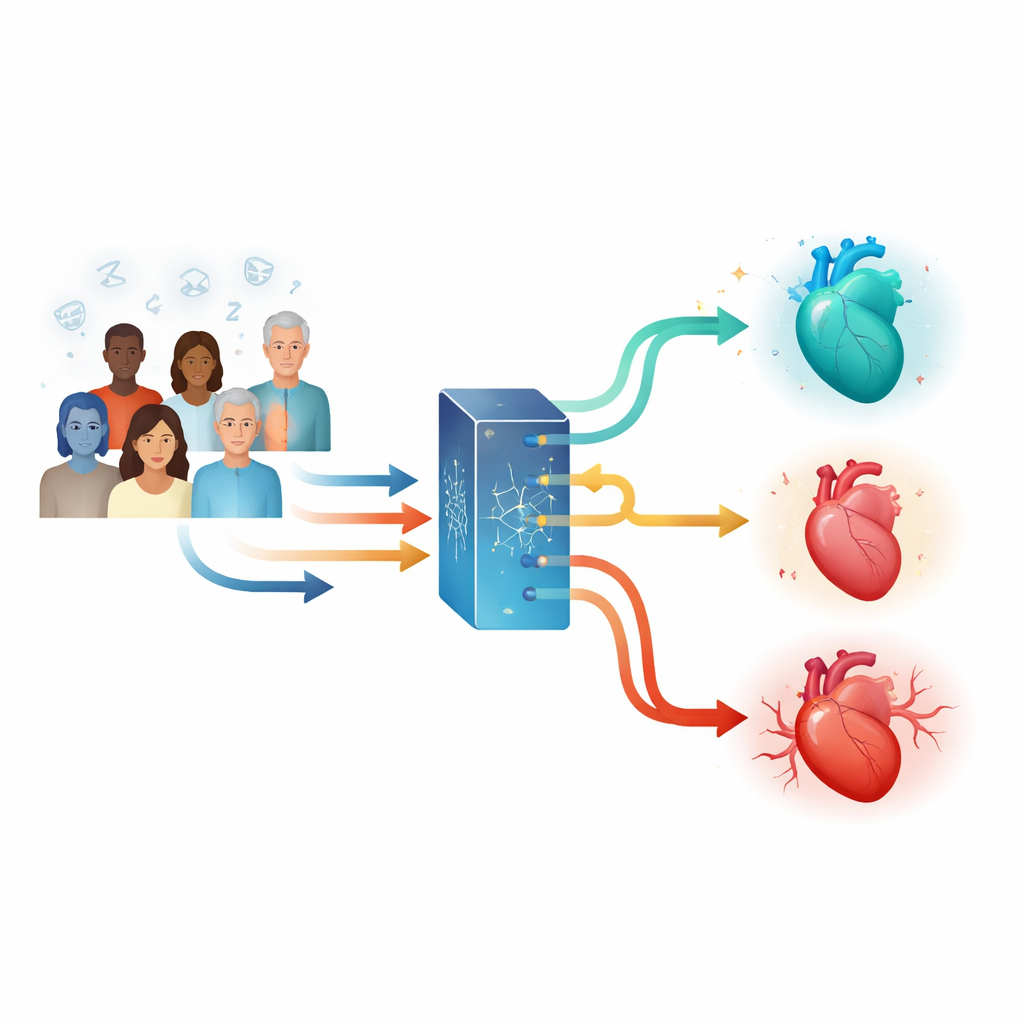
Many people wear a mask at night to treat obstructive sleep apnea (OSA), hoping it will also protect their heart and blood vessels. Yet large clinical trials have struggled to show that continuous positive airway pressure (CPAP) lowers the risk of heart attacks and strokes on average. This article asks a different question: instead of asking whether CPAP helps everyone, can we use modern data tools to figure out which specific patients are helped, which see no change, and which might even be harmed?
A common sleep problem with uncommon heart effects
OSA is a widespread condition in which a person’s airway repeatedly narrows or closes during sleep, causing brief pauses in breathing. These events are usually counted with an index called the apnea–hypopnea index (AHI). CPAP, which gently blows air to keep the airway open, reliably reduces these breathing disturbances and often improves symptoms such as snoring and poor sleep. Observational studies have suggested that regular CPAP use may also lower the risk of cardiovascular disease, but large randomized trials have not confirmed a clear heart-protective effect when patients are averaged together. This mismatch hints that OSA is more complicated than a single severity score, and that people with the same AHI may not share the same heart risks or responses to treatment.
Looking beyond one-size-fits-all measurements
The researchers turned to data from the SAVE trial, the largest study to test whether adding CPAP to usual care prevents heart attacks, strokes, and related events in middle-aged and older adults with OSA and existing heart or brain vessel disease. Rather than re-checking the overall result, they asked whether familiar tools could reveal hidden subgroups. They grouped patients into low, medium, and high categories based on their AHI and on the Framingham Risk Score, a standard calculator that estimates cardiovascular risk from factors such as age, blood pressure, and cholesterol. In all these groups, CPAP did not clearly reduce cardiovascular events compared with usual care, suggesting that these traditional measures were poor guides to who truly benefits.
Using machine learning to estimate personal treatment impact
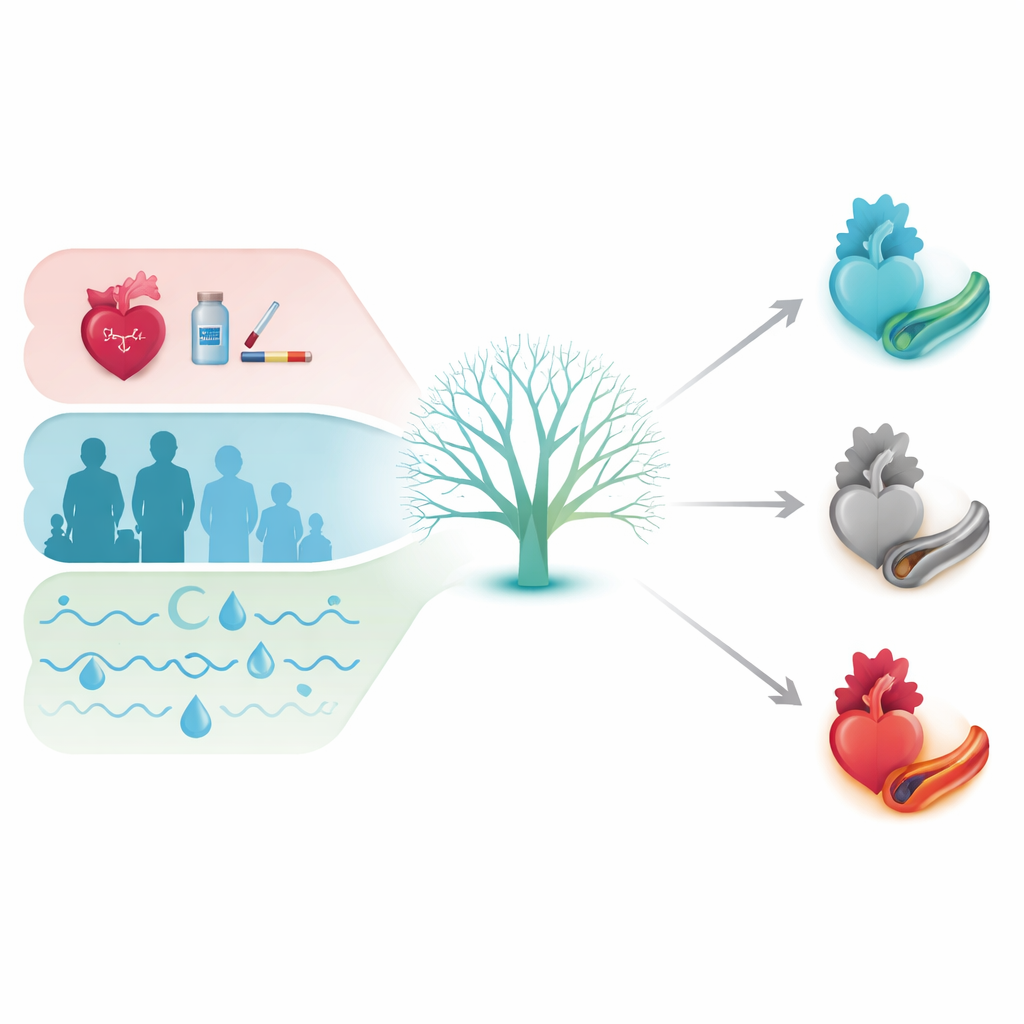
To dig deeper, the team applied a machine learning method called a causal survival forest. In simple terms, this technique uses many decision trees to estimate, for each individual, how their chance of a cardiovascular event would differ with or without CPAP. The model drew on 23 baseline features from nearly all 2,687 trial participants, including medical history (such as prior heart procedures and smoking), medications, sleep study measures of oxygen levels and heart rate patterns, and answers to health questionnaires. From these inputs, it produced an individualized treatment effect score—essentially a prediction of whether CPAP would help, have little effect, or possibly worsen cardiovascular outcomes for each person.
Striking differences in who benefits and who may be harmed
When participants were ranked by their personalized scores and divided into three equal-sized groups, the differences were dramatic. Those in the top third, predicted to benefit most, showed a huge improvement in remaining free of major cardiovascular events if assigned to CPAP, both in the original randomization and when focusing on people who actually used CPAP regularly. In contrast, those in the bottom third—predicted to be harmed—had a sharply higher risk of such events when given CPAP. People in the middle third saw little difference either way. Interestingly, the likely benefit group often had milder breathing disturbance on sleep tests but worse quality-of-life scores and higher heart rate variability, hinting that their bodies might be more responsive to sleep improvements. The likely harm group had more previous heart attacks and artery procedures, more severe apnea, and somewhat worse oxygen levels, but reported better baseline quality of life.
Rethinking how and when CPAP protects the heart
These findings suggest that CPAP’s impact on the heart is not uniformly good or neutral; it depends strongly on a person’s starting health and sleep profile. For some, especially those with certain patterns of milder oxygen drops and poorer well-being, CPAP may substantially reduce the risk of future heart problems. For others with longstanding or severe heart disease, removing repeated low-oxygen episodes might actually cancel out a form of natural adaptation and increase risk. The study does not prove exactly why this happens, and the model still needs to be tested in new patient groups before guiding everyday care. But it provides the first evidence that advanced data methods can sort patients into those who are likely to be helped, unaffected, or harmed by CPAP for heart protection. In the future, such precision tools could help doctors move beyond blanket treatment rules and tailor CPAP decisions to each person’s unique balance of risks and benefits.
Citation: Cohen, O., Al-Taie, Z., Kundel, V. et al. Individualized treatment effects of CPAP on secondary cardiovascular outcomes in non-sleepy obstructive sleep apnea patients. Commun Med 6, 257 (2026). https://doi.org/10.1038/s43856-026-01457-1
Keywords: obstructive sleep apnea, CPAP therapy, cardiovascular risk, precision medicine, machine learning