Clear Sky Science · en
Sotatercept for the treatment of portopulmonary hypertension: a case report
Why this story matters
For people with advanced liver disease, a rare complication called portopulmonary hypertension can turn shortness of breath into a life-threatening barrier to liver transplantation. Current drugs often fail, and clinical trials rarely include these patients. This article tells the story of one man whose lung and liver disease improved after receiving a new medication, sotatercept, and what his case reveals about both the promise and the risks of this emerging therapy.
A deadly crossroads of liver and lung disease
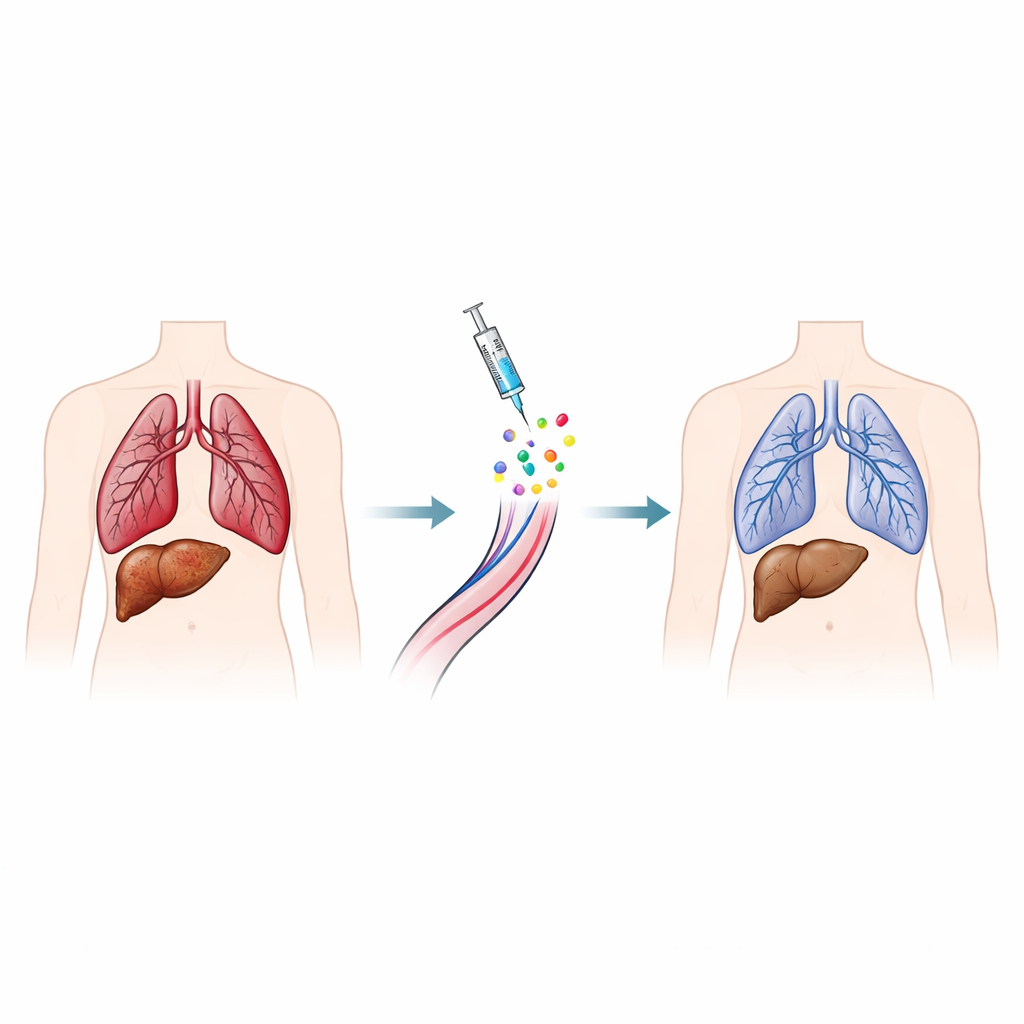
Portopulmonary hypertension occurs when high blood pressure in the liver’s circulation is accompanied by severe high pressure in the lung’s blood vessels. The condition is hard to treat and carries high mortality. Standard lung-artery drugs can lower pressure somewhat, but many patients still remain too sick to safely undergo liver transplantation, the only definitive treatment for their liver disease. Sotatercept, a recently approved drug for pulmonary arterial hypertension, works by blocking certain signaling molecules that drive blood vessel thickening. However, people with liver-related forms of the disease were excluded from the large clinical trials, leaving doctors unsure whether sotatercept would help or harm them.
A single patient’s journey
The researchers report on a 44‑year‑old man with long‑standing cirrhosis of unknown cause who developed severe high pressure in the lung arteries. Despite years of combination treatment with several standard medications, his lung pressures and resistance to blood flow stayed dangerously high, and his right heart remained enlarged. This kept him from qualifying for a liver transplant. In 2024, his care team decided to add sotatercept to his existing drug regimen, starting at a low dose and monitoring him closely.
What happened after the new treatment
Over nine months, sotatercept markedly improved the patient’s lung blood flow. His mean pressure in the lung artery fell from very high levels to closer to the upper limit of normal, and the resistance in those vessels dropped by more than half. Imaging showed that his right heart became less enlarged and pumped more efficiently, while his exercise capacity and overall risk score improved to a low‑risk category. His blood counts, particularly hemoglobin and platelets, also rose—an expected effect of sotatercept that was beneficial in his case. These gains allowed him to meet special listing criteria for patients with portopulmonary hypertension and eventually undergo a successful liver transplant, which he tolerated well from a heart–lung standpoint.
Hidden side effects and new questions
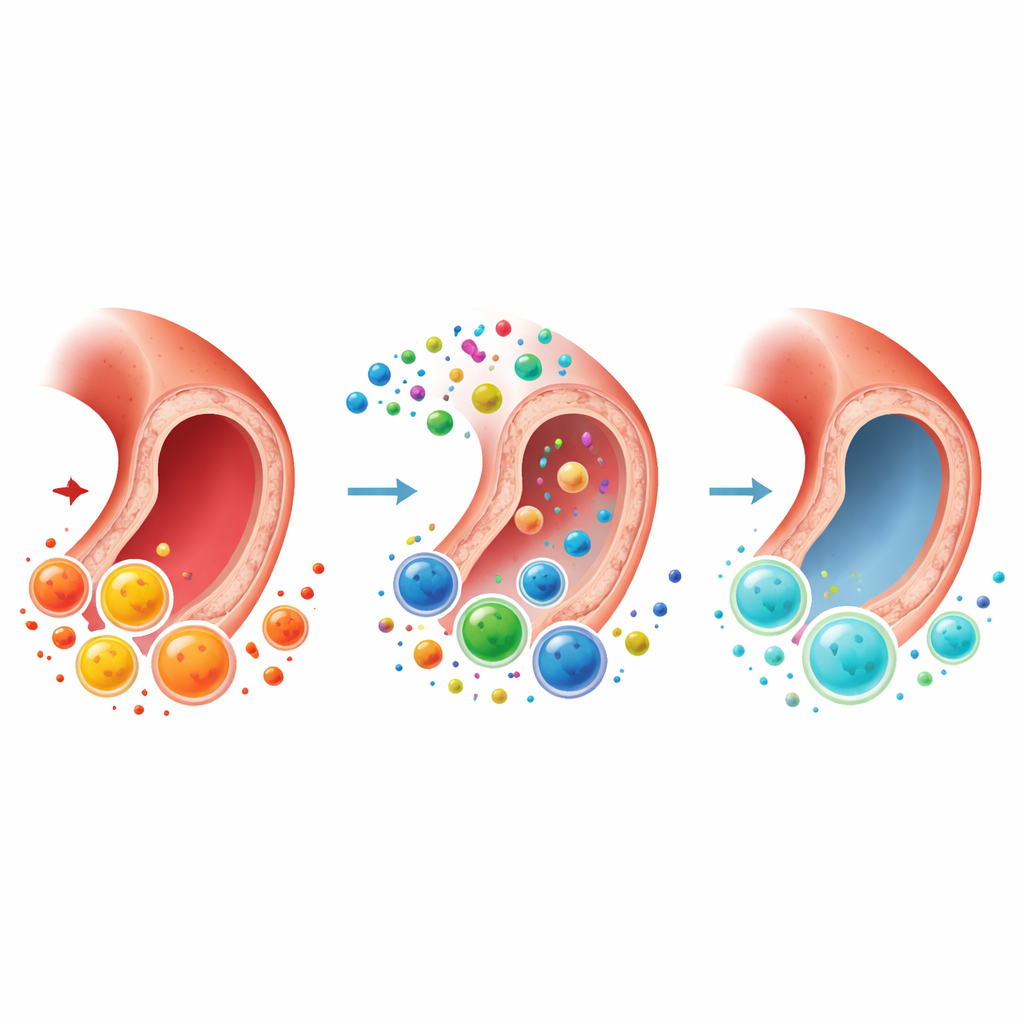
The story was not entirely straightforward. After several months on sotatercept, the patient developed episodes of low oxygen levels and evidence of abnormal blood flow through tiny vessels in the lungs. This pattern fit a condition called hepatopulmonary syndrome, another serious complication of liver disease that causes blood to bypass the normal air‑exchange areas of the lungs. Recent reports have suggested that sotatercept may sometimes promote abnormal lung vessel dilation in other forms of pulmonary hypertension. In this case, it is unclear whether the new lung shunting was triggered by sotatercept, by the patient’s underlying liver disease, or by the combination. The authors therefore stress that the drug’s benefits must be weighed against a real possibility of worsening oxygen problems in similar patients.
Peering inside blood cells and proteins
To go beyond clinical observations, the team also collected blood directly from the lung artery before and after treatment. They used single‑cell RNA sequencing to track which genes were active in thousands of individual white blood cells, and large‑scale protein analyses to measure hundreds of circulating molecules. After sotatercept, certain immune cells—especially CD8 T cells and monocytes—showed shifts in gene activity linked to reduced inflammation, slower blood vessel muscle growth, and changes in how cells break down proteins. In the bloodstream, levels of several proteins involved in inflammation and protein disposal pathways changed in parallel. When the researchers compared these patterns with large drug‑response databases, they found similarities to the effects of known anti‑inflammatory drugs that act on mTOR and NF‑κB pathways, suggesting that sotatercept may help by calming and re‑tuning immune activity in the lung’s blood vessels.
What this case means going forward
This carefully documented case suggests that sotatercept can substantially ease lung blood‑vessel strain in portopulmonary hypertension, even when standard drugs have reached their limits, and can help some patients become candidates for life‑saving liver transplantation. At the same time, the possible link to new or worsening low‑oxygen problems means the drug should be used only with great caution and close monitoring in this fragile group. The molecular fingerprints seen in the patient’s blood point to immune and protein‑handling pathways as possible targets for future therapies. Larger studies and additional case series will be needed to confirm whether the benefits of sotatercept in portopulmonary hypertension outweigh the risks, and to identify which patients are most likely to benefit safely.
Citation: Jose, A., Zacharias, W., Fernandes, S. et al. Sotatercept for the treatment of portopulmonary hypertension: a case report. Commun Med 6, 179 (2026). https://doi.org/10.1038/s43856-026-01452-6
Keywords: portopulmonary hypertension, sotatercept, pulmonary arterial hypertension, liver cirrhosis, hepatopulmonary syndrome