Clear Sky Science · en
A collaborative research agenda for restoring free-flowing rivers
Why rivers and people need each other
Across Europe, many rivers that once flowed freely from mountain springs to the sea are now chopped into pieces by dams, weirs and embankments. These structures have helped deliver electricity, food and protection from floods, but they have also damaged wildlife and reduced the benefits rivers provide to people. A new international study asks a simple but urgent question: if Europe has committed to restoring at least 25,000 kilometers of free-flowing rivers by 2030, what research is most needed to make that goal a reality on the ground?
Rivers under pressure
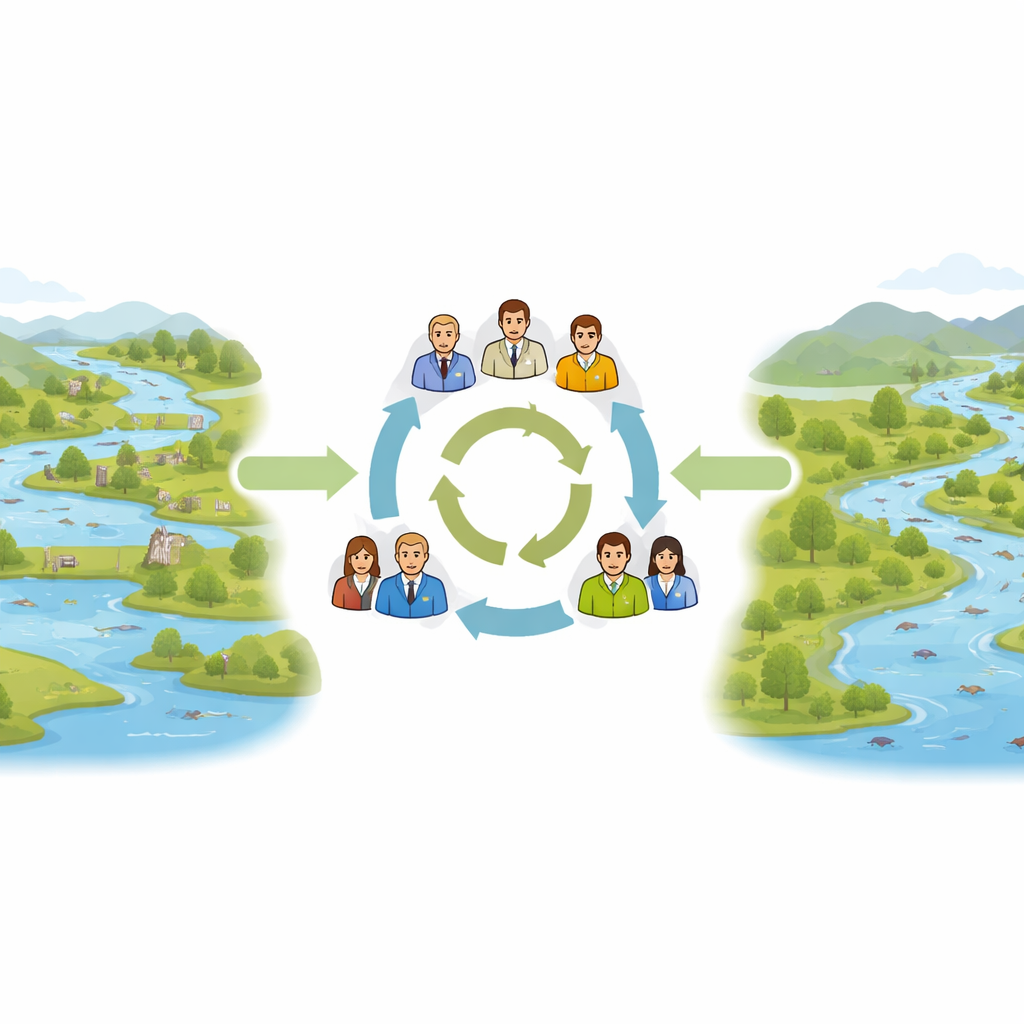
Rivers act like the blood vessels of landscapes, moving water, nutrients, and living creatures across great distances. Yet more than 63% of the world’s long rivers no longer flow freely, and migratory freshwater fish numbers have plummeted over recent decades. In Europe alone, more than a million barriers interrupt river channels, and most natural floodplains have been heavily altered. At the same time, European laws such as the Nature Restoration Regulation and the Water Framework Directive now require governments to repair this damage. The challenge is that river restoration is not just a matter of ecology: it also involves energy production, farming, local safety, cultural heritage, and community livelihoods.
Listening to many voices
To understand what kind of knowledge would best support large-scale river repair, the authors gathered ideas from 237 experts across 45 countries, including scientists, water managers, non-profit groups, and consultants. First, an online survey asked these participants to submit the key research questions they believed must be answered to restore free-flowing rivers. After sorting more than 400 suggestions into themes, the team held a workshop at a European river conference to refine and clarify them. Finally, a second survey asked 75 experts to rank their top ten priorities from a list of 27 topics, ranging from wildlife responses to restoration to new ways of financing long-term projects.
What matters most for fixing rivers
The ranking revealed three standout priorities. The highest was understanding how restoring more natural flows and reconnecting channels and floodplains improves river life and ecosystem functions. In other words, experts want clearer evidence on how fish, plants, insects and overall river health respond when barriers are removed and habitats are reconnected. Second came developing fair and effective ways to decide which barriers and river sections to tackle first, taking into account ecological value, costs, and social and political realities. Third was creating clear standards and definitions for what a “free-flowing river” actually is, so that countries can measure progress consistently. Interestingly, while more natural science topics were proposed at first, the final top ten priorities balanced ecological questions with social ones such as involving communities, improving cooperation among authorities, and securing stable funding.
People, power and place
The study also showed that who you are shapes what you see as most important. Experts from social science backgrounds tended to emphasize community engagement, public awareness, and governance. Those working for non-governmental organizations prioritized issues like long-term financing, cross-border cooperation, and climate adaptation. Water managers leaned more toward practical ecological issues such as invasive species and habitat availability. By using a statistical technique that maps how topics cluster together, the authors could see clear groupings of ecological versus social priorities, with a few bridging topics—such as prioritization strategies and technical innovations—linking the two worlds. This pattern underlines that successful river restoration cannot follow a single recipe; it must be tailored to local politics, institutions, and river conditions.
A roadmap from ideas to action
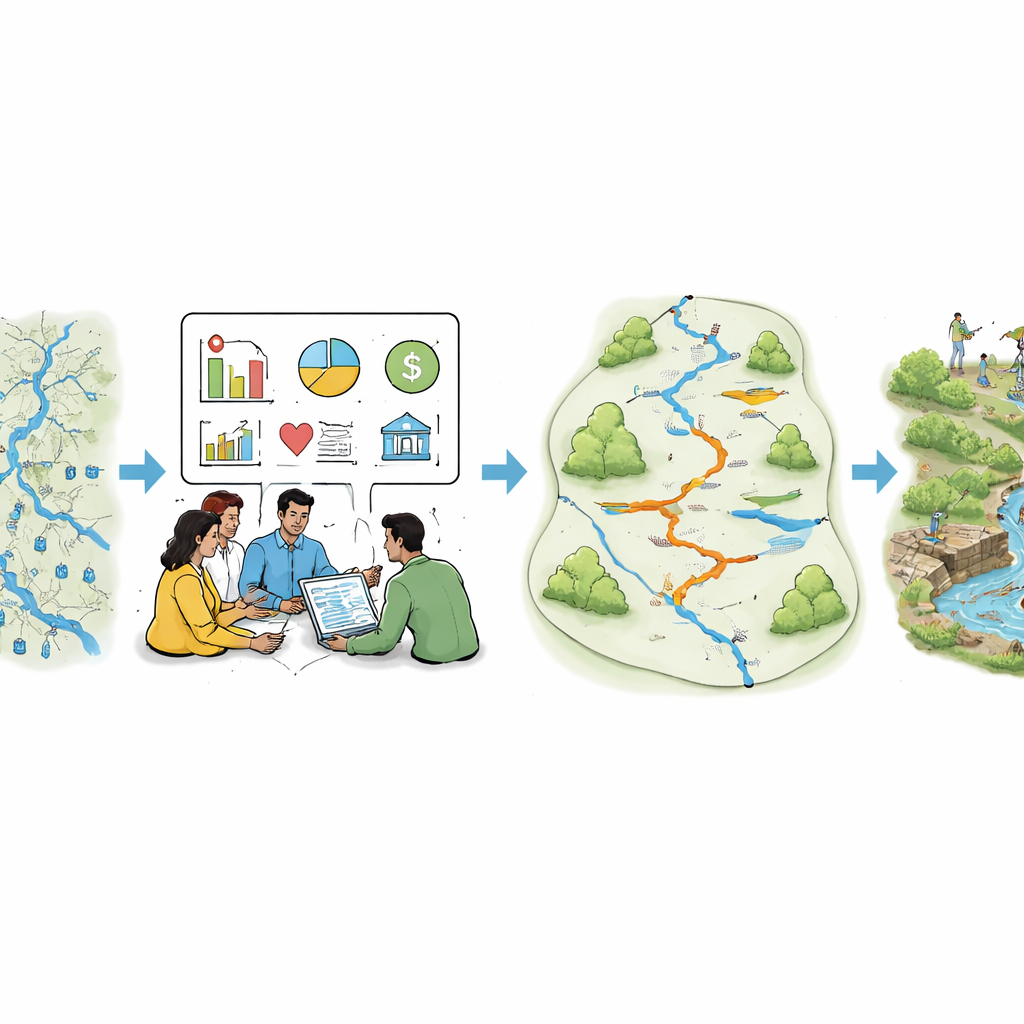
Drawing all of this together, the authors propose a stepwise roadmap that connects scientific questions to the everyday realities of policy and practice. It begins with diagnosing the current state of rivers and their barriers, then co-designing goals with stakeholders, arranging suitable funding, securing permits while engaging communities, implementing and adjusting restoration measures, and finally monitoring both ecological recovery and social benefits. Their core message for a non-specialist audience is straightforward: freeing rivers is not just about breaking concrete. It is about coordinating science, policy, money, and public support so that restored rivers can better withstand floods and droughts, support wildlife, and improve life for the people who depend on them.
Citation: Stoffers, T., Vuorinen, K.E.M., Schroer, S. et al. A collaborative research agenda for restoring free-flowing rivers. Commun Earth Environ 7, 303 (2026). https://doi.org/10.1038/s43247-026-03428-9
Keywords: free-flowing rivers, river restoration, ecosystem connectivity, environmental policy, freshwater biodiversity