Clear Sky Science · en
Oceanic forcing of patagonian ice sheet variability over the last eight glacial cycles
Why this distant ice matters to all of us
Far from major cities, the glaciers of Patagonia may seem remote, but they play an outsized role in shaping Earth’s climate. This study zooms in on the rise and fall of the ancient Patagonian Ice Sheet over the past 790,000 years and shows how changes in nearby ocean waters helped control its size. Because this ice sheet also supplied dust that fertilized the Southern Ocean and helped draw carbon dioxide out of the air, understanding its behavior reveals how oceans, winds, ice, and the global carbon cycle have long worked together to cool and warm our planet.
Reading the past from seafloor mud
On the stormy margin of southern Chile, scientists drilled a 250‑meter‑long sediment core from the seafloor at Site U1542, near the western edge of the former Patagonian Ice Sheet. Layer by layer, this mud records what was happening on land and in the ocean above for the last eight glacial cycles. The team counted coarse mineral grains dropped by passing icebergs and measured organic molecules derived from land plants and soil bacteria. Together, these fragments serve as a natural logbook of when the ice sheet advanced to the continental shelf, when it retreated, and how much land‑derived material rivers and glaciers flushed into the sea.
Tracing the grow‑and‑shrink rhythm of the ice
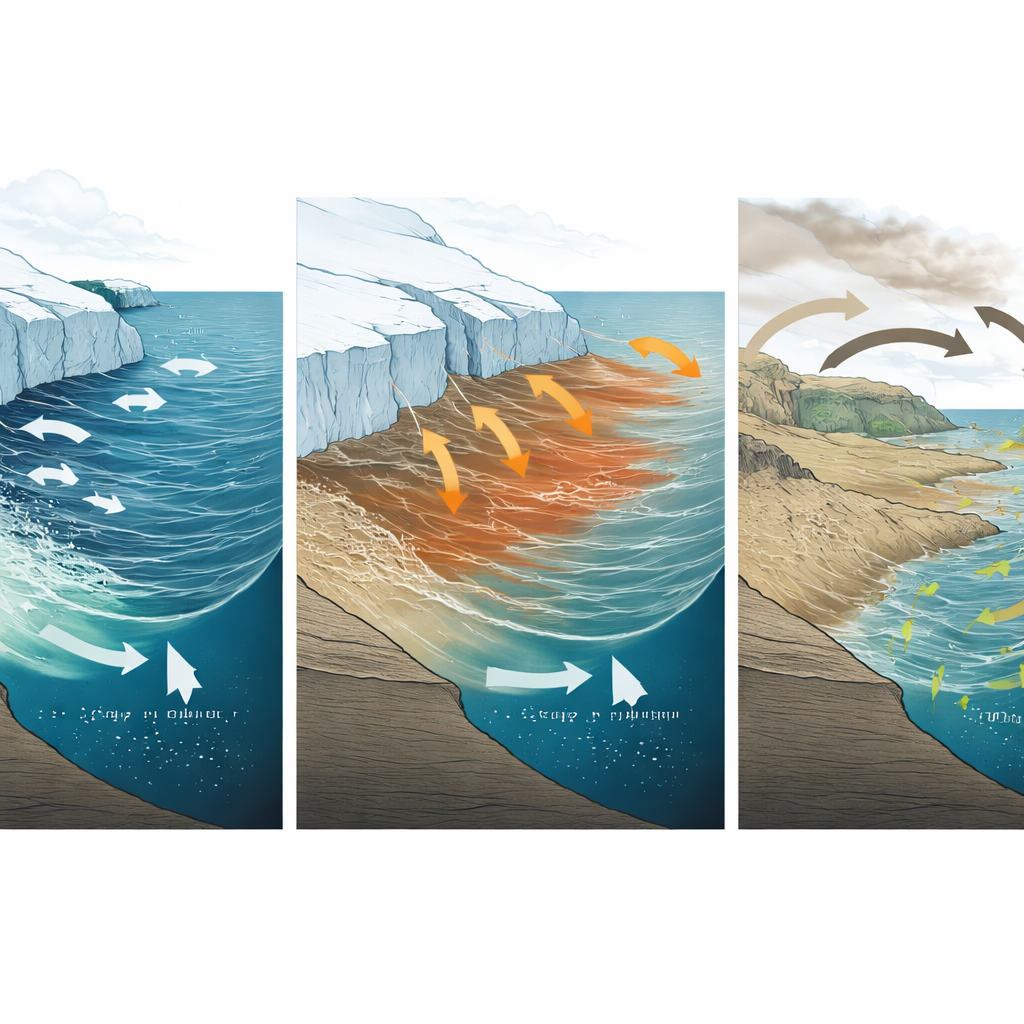
The records show that during every major ice age of the last 790,000 years, the Patagonian Ice Sheet expanded, sending ice into the Pacific and delivering pulses of rock fragments and organic matter to the continental slope. During warm intervals like today, those iceberg tracers virtually disappeared and land‑derived molecules fell to very low levels, as most sediment became trapped in deep fjords along the coast. When sea level dropped and the ice advanced across the shelf, these fjord “holding tanks” were breached and both fresh and previously stored material were flushed offshore. This made the southern Chilean margin an especially sensitive gauge of how far the ice spread toward the Pacific.
Oceans as the master thermostat
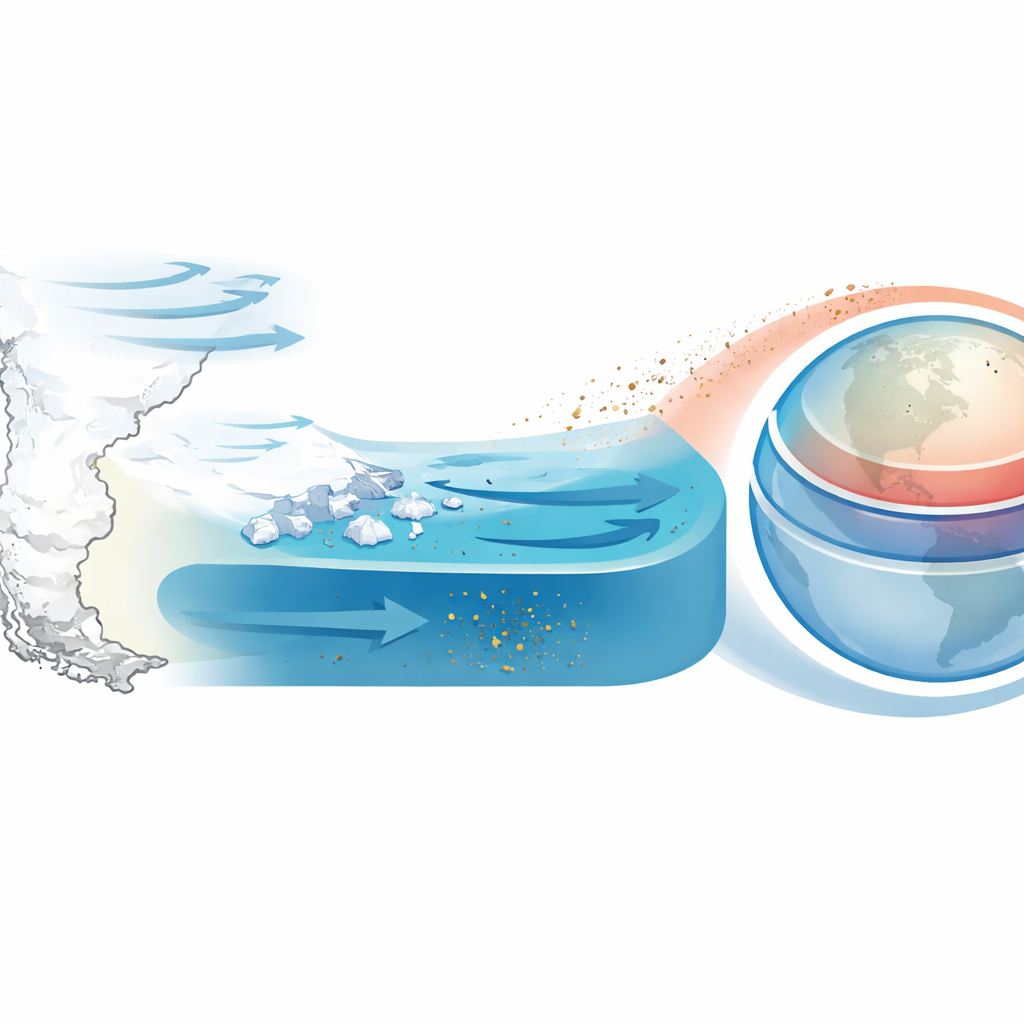
By comparing their sediment record with sea‑surface temperatures in the nearby Southeast Pacific and with global sea‑level and Antarctic ice‑core data, the authors found that ocean warmth closely tracked the waxing and waning of the Patagonian ice. Periods when local surface waters cooled by just a few degrees coincided with stronger glacial advances and more iceberg material in the core. Conversely, times of regional ocean warming often saw the ice sheet retreat even while the rest of the planet was still relatively cold. The timing suggests that changes in Pacific temperatures—guided by slow wobbles in Earth’s orbit that alter the seasonal cycle of sunlight—tended to lead shifts in Patagonian ice by several thousand years. Winds and snowfall clearly mattered, but in this maritime setting the ocean acted as the dominant control on the ice sheet’s size.
Dust, iron, and the global climate link
When the ice sheet ground across the Andes and surrounding plains, it produced huge quantities of fine, dusty sediment. At the height of many glacial periods, this material was exposed on dry outwash plains east of the mountains and blown by strong westerly winds over the Southern Ocean and onto Antarctica. Other studies show that this dust was rich in iron, a key nutrient that can boost marine productivity and the removal of carbon dioxide from the atmosphere. The new record from the Pacific side of Patagonia lines up with major dust pulses in South Pacific and South Atlantic sediments and in Antarctic ice cores, reinforcing the idea that Patagonian glaciers were a prime supplier of climate‑relevant dust during ice ages.
What the ancient ice sheet tells us about the future
In simple terms, this work shows that a relatively small shift in nearby ocean temperatures can tip a large, ocean‑fringing ice sheet like Patagonia’s into growth or retreat. Over hundreds of thousands of years, repeated advances of this ice sheet not only reshaped southern South America but also helped cool the planet by feeding iron‑rich dust to the Southern Ocean. As modern greenhouse warming heats the same waters that once controlled the ancient ice, Patagonia’s remaining glaciers are already shrinking rapidly. The study underscores that when oceans, winds, and ice interact, regional changes can ripple through the global climate system.
Citation: Rigalleau, V., Arz, H.W., Beech, N. et al. Oceanic forcing of patagonian ice sheet variability over the last eight glacial cycles. Commun Earth Environ 7, 302 (2026). https://doi.org/10.1038/s43247-026-03387-1
Keywords: Patagonian Ice Sheet, Southern Ocean dust, sea surface temperature, glacial cycles, iron fertilization