Clear Sky Science · en
Returning European Union carbon border adjustment revenues to specific products increases global welfare and reduces emissions
Why this border tax on steel matters to you
The European Union is rolling out a new kind of climate policy that could quietly reshape what we buy, how it is made, and who gains or loses from global trade. This policy, called the Carbon Border Adjustment Mechanism, adds a charge to imported goods based on how much climate pollution was released to make them. The study behind this article digs into how that charge will affect one of the world’s dirtiest and most important industries—steel—and asks a simple question with big consequences: can this border rule cut emissions without unfairly hurting other countries?
Putting a price on the hidden pollution in steel
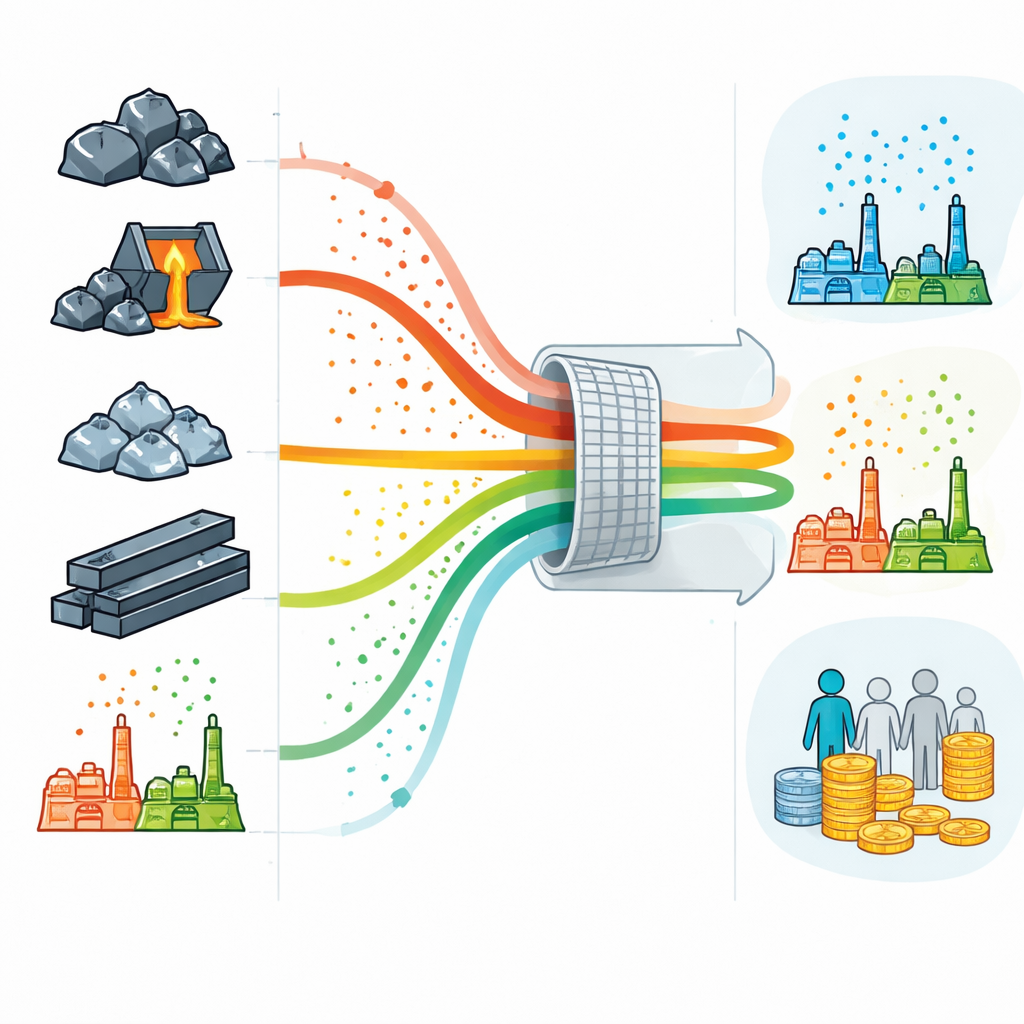
Steel underpins modern life, from cars and buildings to household appliances, but producing it releases large amounts of carbon dioxide. The EU’s new border measure aims to stop companies from dodging climate rules by shifting production to countries with looser standards, then selling those goods back into the EU. Instead of using broad national averages, this study zooms in to the level of specific steel products—222 in total, grouped into six types such as raw ore, pig iron, alloys and finished steel items. The authors calculate, for each product and exporting country, a “CBAM-equivalent tariff”: the extra cost that would be added at the border based on the product’s embedded emissions and existing carbon prices at home.
Who pays more and who gets squeezed
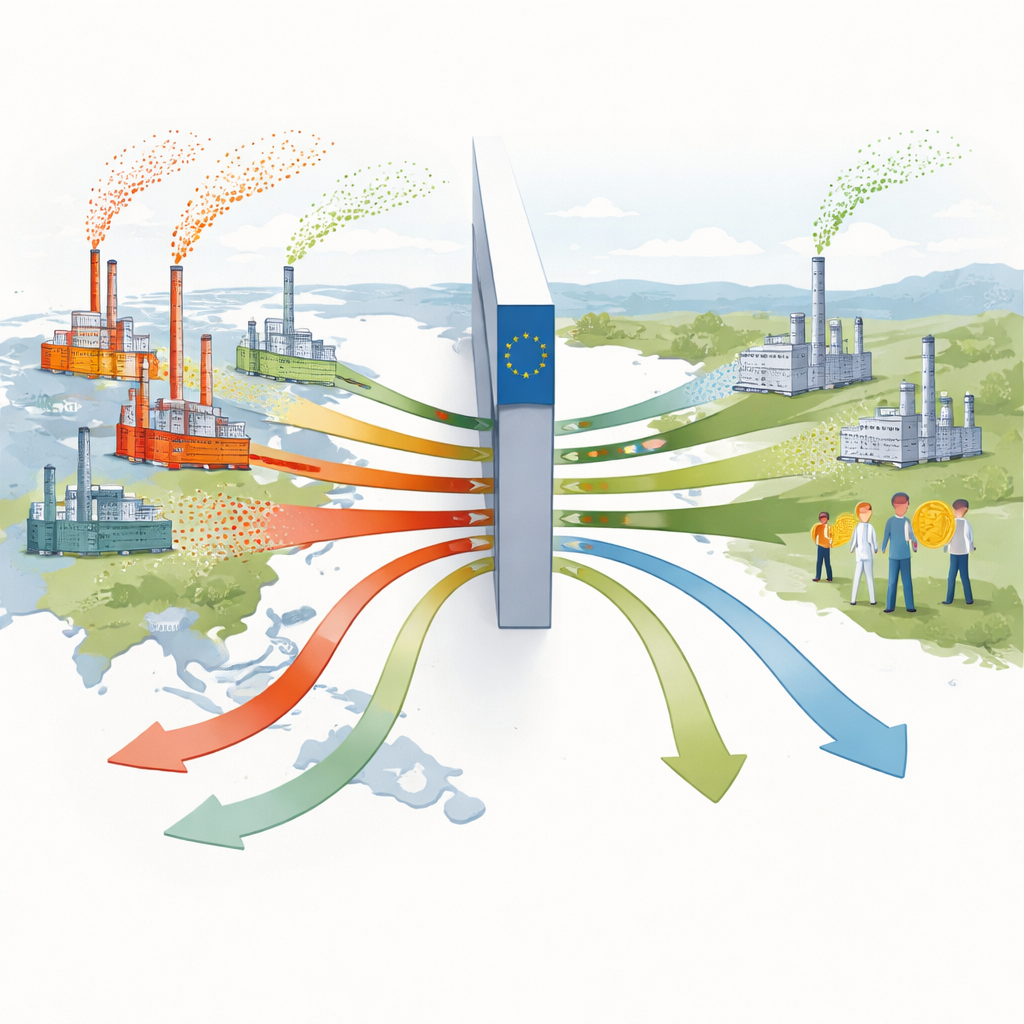
The analysis finds that these carbon-based charges vary widely by product and by country. Raw materials such as sintered ore and pig iron face the highest average markups, especially when they are made with particularly dirty processes, as in some plants in South Africa, Serbia, the United States and Ukraine. Finished steel products often carry lower percentage charges but account for a large share of total trade, so the money involved is substantial. When these border costs are fed into a detailed trade model, the EU emerges as a net winner: it slightly cuts its own steel output and demand, collects new revenue, and ends up with a modest gain in economic welfare. Many trading partners, however, suffer losses as exports to the EU shrink and they struggle to redirect sales elsewhere.
Small climate gains, large economic side effects
From a climate point of view, the border measure’s effect on steel emissions is surprisingly modest. Across the global iron and steel sector, the study estimates only about a two-thirds of one percent reduction relative to recent levels. Most of the cuts come from lower production in the EU and in a few major exporters, rather than from cleaner technology. At the same time, the world as a whole experiences a sizeable drop in economic welfare, because many exporters lose more in sales and income than the EU gains in revenue. For some products and countries, the effective “price” they pay per ton of carbon avoided is far higher than the cost of installing modern pollution‑cutting equipment, such as carbon capture systems in steel mills.
Turning border money into cleaner steel
To make the policy fairer and more effective, the authors explore what would happen if the EU returned part of the border revenues to exporting countries under different schemes. One option sends support to countries that lose the most overall; another sends it only to vulnerable products—those with high compliance costs and clear welfare losses. The funds can either help firms boost production or help them invest in cleaner technologies. The results are striking: when money is channeled specifically to high‑risk steel products and used for cutting emissions at the source, global welfare actually increases compared with the standard policy, and emissions fall far more—up to four times as much in the most ambitious scenario. By contrast, sending money only at the country level tends to deepen global welfare losses, even if it still reduces emissions.
What this means for future climate trade rules
The study concludes that the EU’s border carbon measure, as currently designed, is a blunt tool: it nudges emissions in the right direction but imposes heavy economic costs on many trading partners. However, by looking closely at individual steel products instead of national averages—and by recycling part of the border revenues into targeted clean‑up efforts—the policy could both strengthen climate action and ease the economic strain on vulnerable exporters. For a lay observer, the lesson is that climate‑conscious trade rules do not have to be zero‑sum: with careful design, the money collected at the border can help all sides move toward cleaner production rather than simply punishing those who sell into greener markets.
Citation: Zhang, L., Wen, Z., Wang, Y. et al. Returning European Union carbon border adjustment revenues to specific products increases global welfare and reduces emissions. Commun Earth Environ 7, 336 (2026). https://doi.org/10.1038/s43247-026-03357-7
Keywords: carbon border adjustment, steel trade, EU climate policy, carbon tariffs, industrial decarbonization