Clear Sky Science · en
Intensifying drought risk weakens vegetation resilience in global drylands
Why drying lands matter to everyone
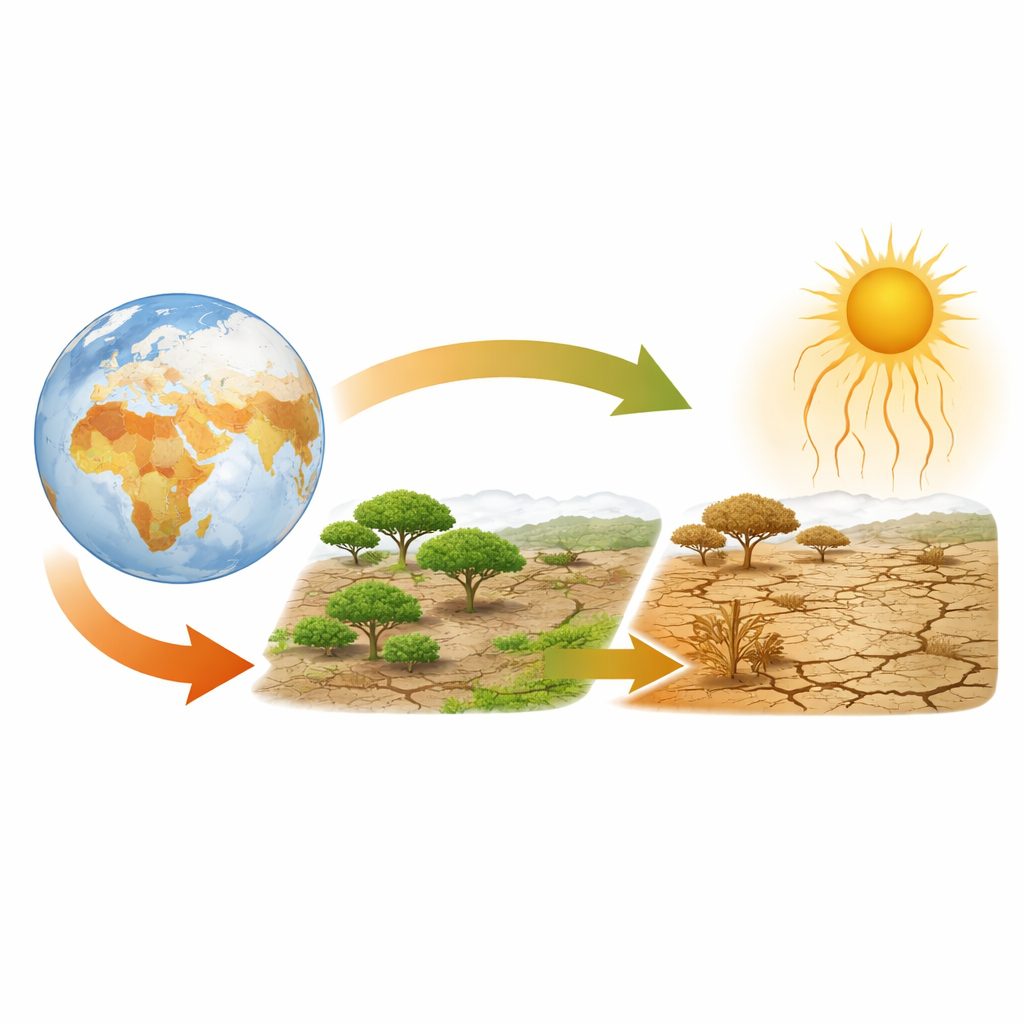
Drylands – from the American Southwest to the Sahel and central Australia – are home to billions of people, major food-producing regions, and unique plants and animals. This study asks a simple but crucial question: as droughts intensify in a warming world, are dryland ecosystems still able to bounce back, or are they losing their natural capacity to recover? The answer shapes future dust storms, food security, and even how much carbon these landscapes can keep locked away.
Growing threat in already thirsty regions
The researchers examined how likely vegetation in global drylands is to suffer loss during drought, and how well it recovers afterward. Using satellite records from 1982 onward and climate projections through 2100, they mapped drought-related risk for different types of vegetation. Historically, about half of dryland areas showed a moderate risk of drought-induced vegetation loss, with high-risk zones concentrated in parts of the western United States, southern South America, southern Africa, the fringes of the Sahara, and Australia. Forests tended to be safer, while shrublands were the most vulnerable, with a large share already in the high-risk category.
Looking ahead, model simulations suggest that moderate-to-high risk zones will expand by roughly 10–15 percent. Low-risk areas, where plants are currently relatively protected, are projected to shrink substantially under all future emissions pathways. Even under the most climate-friendly scenario, safe zones contract; under stronger warming, the retreat is steeper and widespread. Shrublands stand out as the big losers, with nearly half of their area expected to sit in high-risk conditions by the end of the century, while forests and savannas fare somewhat better.
Plants are bouncing back more slowly
Beyond immediate damage, the team focused on “resilience” – how quickly vegetation returns to normal after stress. They tracked subtle changes in satellite-based greenness over time to see whether plant communities are recovering faster or slower than they used to. Across 57 percent of vegetated drylands, the signal they measured points to weaker resilience between 1982 and 2019, with many places showing abrupt shifts rather than gradual decline. Hotspots of weakening resilience include western North America, southern and eastern South America, large parts of southern and eastern Africa, Central Asia, northeastern China, the Russian Far East, and much of Australia. Forests are the exception: they are the only major vegetation type where resilience has slightly improved overall, whereas shrublands, grasslands, and savannas mostly show weakening recovery.
Future projections show that this pattern depends strongly on greenhouse gas emissions. Under a low-emissions pathway, the share of drylands with declining resilience gradually falls by late century. Under medium and high emissions, however, about two-thirds of dryland vegetation is expected to slide into weaker resilience, meaning ecosystems will take longer to recover – or may not fully recover – after droughts and heatwaves. In these higher-emission futures, woody vegetation such as forests shows particularly strong loss of stability.
Hidden drivers: heat, air dryness, and fading benefits of carbon dioxide
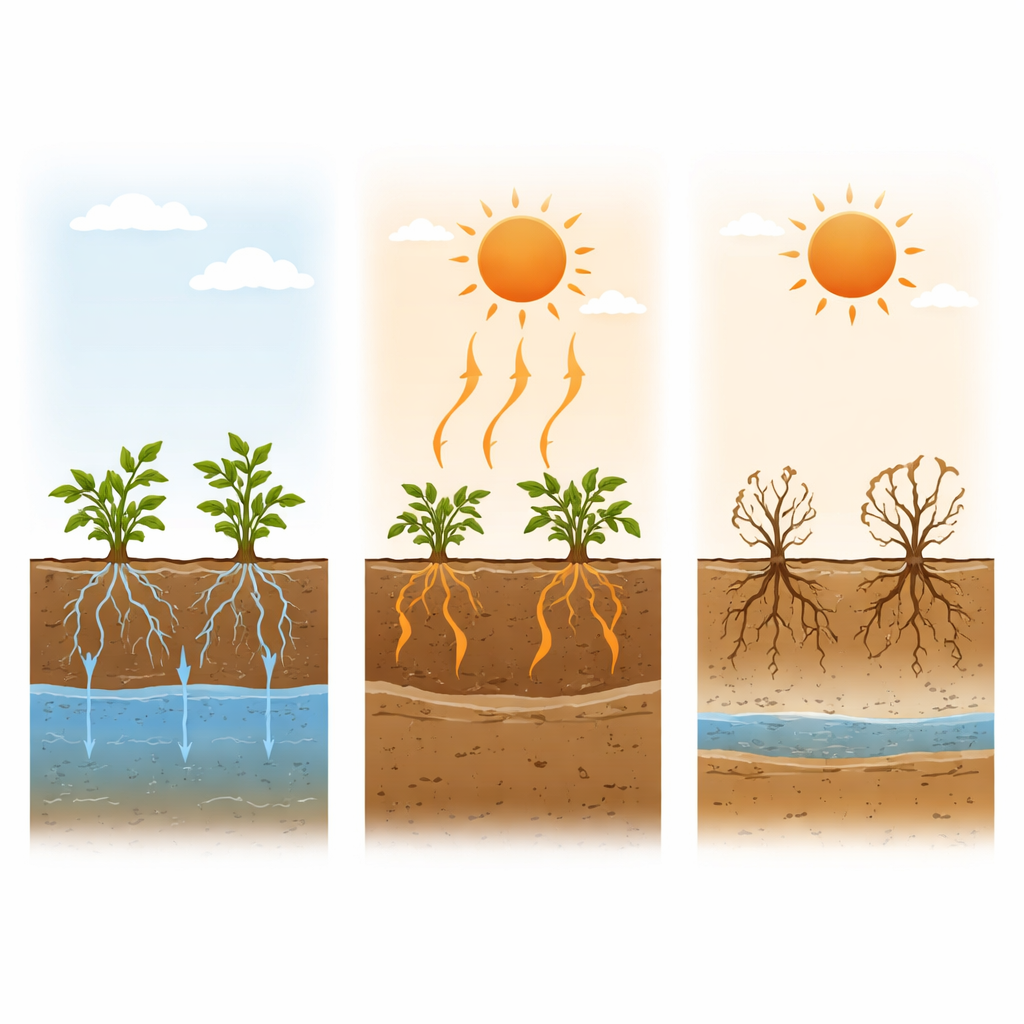
To find out why resilience is weakening, the authors combined climate, soil, water, and human impact data using machine-learning models. They found that two broad forces are especially important. First, long-term drying – captured by indices that reflect the balance between rainfall and evaporative demand – steadily eats away at ecosystem stability. Plants can tolerate only so much drying; beyond certain thresholds, resilience drops sharply. Second, the once-helpful effect of rising carbon dioxide, which can boost plant growth and water-use efficiency, appears to have a narrow “sweet spot.” Within a moderate range of CO₂ levels, resilience improves, but above or below that window the chance of resilience loss increases, likely because stomata close and water and carbon flows fall out of balance. Added to this are increasing atmospheric dryness, greater year-to-year swings in rainfall, and widespread groundwater depletion, all of which reduce the safety net that used to help vegetation bridge dry spells.
Mapping future hot spots and guiding action
By combining risk of vegetation loss with trends in resilience, the study carves drylands into practical management zones. Some areas show both rising risk and falling resilience – these “ecologically sensitive zones” cover roughly one-third to one-half of drylands and include parts of southwestern North America, South America, the northern and southern Sahel, southern Africa, inland Australia, and swaths of Eurasia. Other zones are seeing risk ease but resilience still decline, hinting that past damage and changes in community structure are holding ecosystems back even as climate stress temporarily relaxes. A smaller share of drylands form conservation bright spots, where risk is dropping and resilience is improving, notably in central Africa and high-latitude Eurasia.
What this means for the future of drylands
In plain terms, the study shows that drought risk is rising and the ability of dryland vegetation to bounce back is weakening, especially if greenhouse gas emissions remain high. Drylands are not just becoming drier; they are losing their shock absorbers. The results highlight a narrow window where balancing water availability and carbon gains can keep ecosystems resilient. Protecting groundwater, managing land use, and limiting global warming can help keep more regions within this window. Without such action, large portions of the world’s drylands may cross thresholds where vegetation loss accelerates and recovery becomes uncertain, with far-reaching consequences for people, climate, and biodiversity.
Citation: Kong, Z., Ling, H., Deng, M. et al. Intensifying drought risk weakens vegetation resilience in global drylands. Commun Earth Environ 7, 279 (2026). https://doi.org/10.1038/s43247-026-03303-7
Keywords: dryland ecosystems, drought resilience, climate change, vegetation vulnerability, arid regions