Clear Sky Science · en
Adoption of climate-smart agricultural technologies and practices in fragile and conflict-affected settings
Farming on the Frontlines
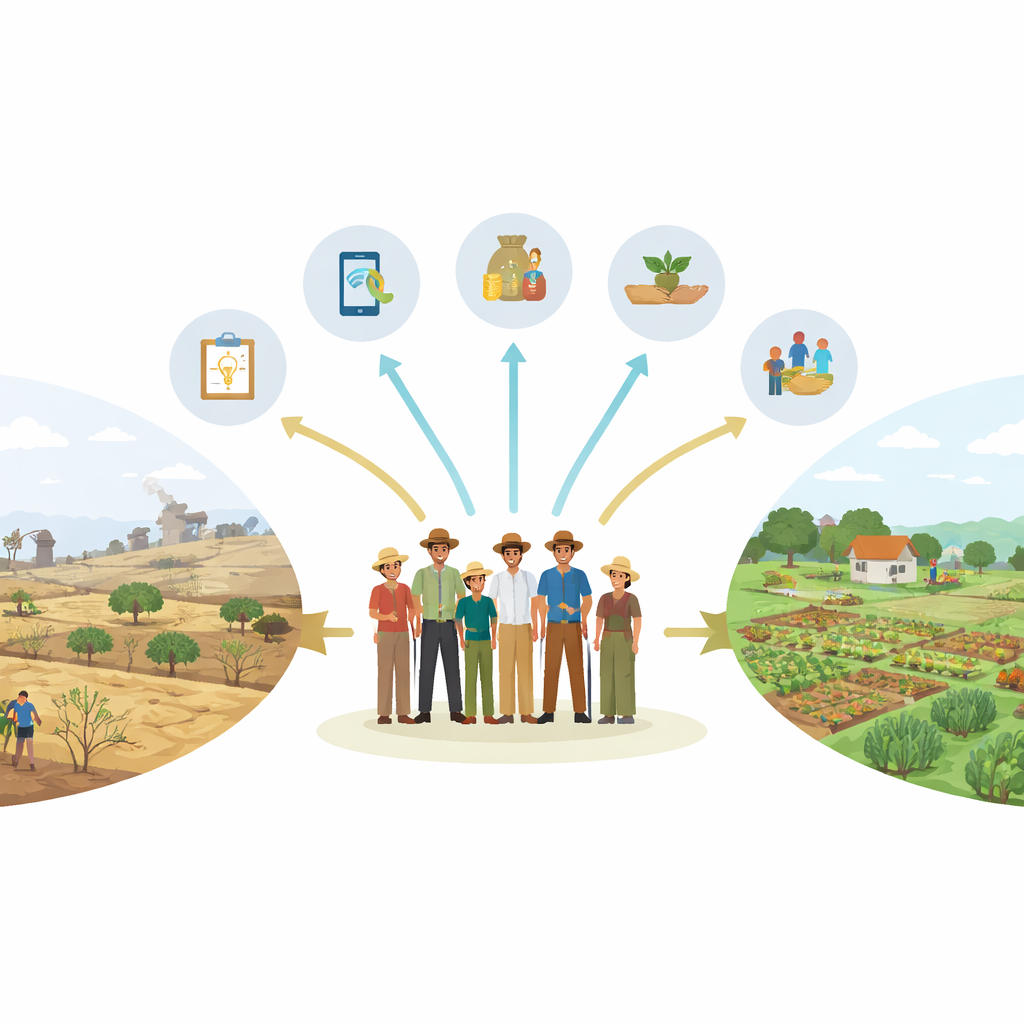
In many parts of the world, farmers are trying to grow food in the middle of drought, floods, or even armed conflict. New climate‑smart ways of farming—like better seeds, safer use of fertilizers, soil‑saving methods, and crop insurance—could help them harvest more while protecting the land. This study asks a straightforward question: in fragile and conflict‑affected countries, what actually convinces farmers to try these tools, and what holds them back?
Where the Research Comes From
The authors sifted through more than 42,000 scientific records using machine‑learning software to find solid studies on farmers’ decisions in fragile and conflict‑hit countries. In the end, they closely examined 112 studies and pulled out 1,374 separate measurements of how different factors—such as income, education, training, or access to credit—relate to the use of climate‑smart practices. Most of the available evidence comes from just two nations, Ethiopia and Nigeria, highlighting how little we know about farmers in many other vulnerable places, including small island states threatened by sea‑level rise.
What Counts as Smarter Farming
The study grouped climate‑smart farming into five broad sets of tools. Soil health practices include organic manure, compost, and fertilizers that build and maintain fertile ground. Erosion management covers things like contour farming and mulching that keep soil from washing away. Mechanization ranges from tractors to simple irrigation pumps. Inputs refer mainly to improved seeds and crop protection products. Finally, risk‑reduction tools include insurance and special credit that protect farmers from financial ruin when bad weather strikes. On average, only about four out of ten farmers in these studies had adopted any given technology, and some valuable options—such as cover crops or certain erosion‑control methods—were barely used at all.
Who Adopts and Why
To untangle the patterns, the authors used a type of statistical summary that compares results across many studies on a common scale. Several themes stand out. Households with more resources—such as larger landholdings, livestock, assets, or higher income—are generally more likely to adopt climate‑smart tools. Education, larger household size (which usually means more labor), and social connections within the community also nudge farmers toward new practices. But above all, institutional support matters: access to extension agents, practical training, clear information, secure land rights, credit and savings, and occasional subsidies all show strong links with higher adoption, especially for improved seeds and fertilizers.
Missing Safety Nets and Uneven Support
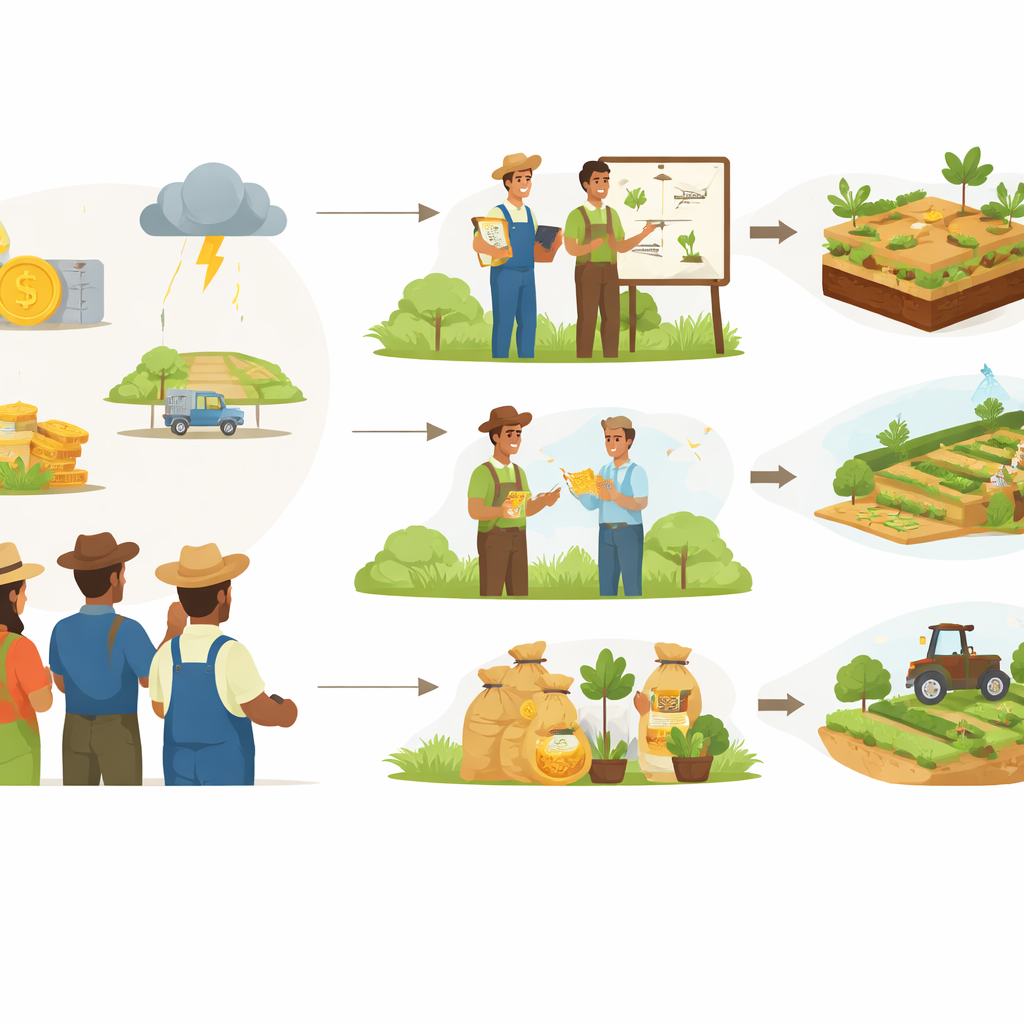
One of the most striking findings is how rare risk‑reduction tools are in the places that arguably need them most. Only nine of the 112 studies focused on agricultural insurance or related products, and they came from just three countries. Where data existed, better‑educated farmers with larger farms and more experience were more likely to sign up for insurance, while high costs and poor understanding of how the products work discouraged uptake. The study also finds that some helpful levers, like subsidies, appear in surprisingly few papers—likely reflecting the limited capacity of conflict‑affected governments to support their farmers at scale.
What This Means for Farmers’ Futures
For readers outside the research world, the message is simple: climate‑smart farming does not spread on its own, especially in places already shaken by violence or climate shocks. Farmers are more willing and able to adopt new practices when they can trust the information they receive, when training and advice are close at hand, when they can afford the initial costs, and when safety nets such as insurance help them cope with bad years. The authors conclude that if policymakers and aid groups want more resilient harvests in fragile regions, they should focus less on inventing yet another gadget or seed, and more on giving farmers the knowledge, financial backing, and risk protection they need to make existing climate‑smart tools part of everyday life.
Citation: Nshakira-Rukundo, E., Tabe-Ojong, M.P.J., Gebrekidan, B.H. et al. Adoption of climate-smart agricultural technologies and practices in fragile and conflict-affected settings. Commun Earth Environ 7, 304 (2026). https://doi.org/10.1038/s43247-025-03171-7
Keywords: climate-smart agriculture, technology adoption, fragile states, smallholder farmers, agricultural insurance