Clear Sky Science · en
Plasticity, signaling, and metabolic rewiring in melanoma persister cells
Hidden Survivors Behind Melanoma Relapse
Modern drugs have transformed melanoma from a rapidly fatal skin cancer into a disease many patients can keep at bay for months or years. Yet for too many people, the cancer eventually returns. This review explores a small, stubborn group of melanoma cells—called drug‑tolerant persister cells—that slip through even the most advanced treatments. Understanding how these cells survive, adapt, and eventually help tumors rebound could point the way to longer-lasting therapies and fewer relapses.
Why Some Melanoma Cells Refuse to Die
Standard treatments for advanced melanoma include targeted drugs that shut down overactive growth signals and, increasingly, immunotherapies that enlist the immune system. These approaches kill the majority of cancer cells, but they almost never wipe out every last one. A tiny fraction enters a protective state in which they stop dividing or divide very slowly, becoming unusually tolerant to drugs. These so‑called persister cells are not classic “resistant” mutants; instead, they use temporary coping strategies—changes in gene activity, metabolism, and cell identity—to ride out treatment. When therapy is paused or the cancer finds a way around it, persisters can reawaken, seed new tumor growth, and contribute to the high recurrence rates seen in metastatic melanoma. 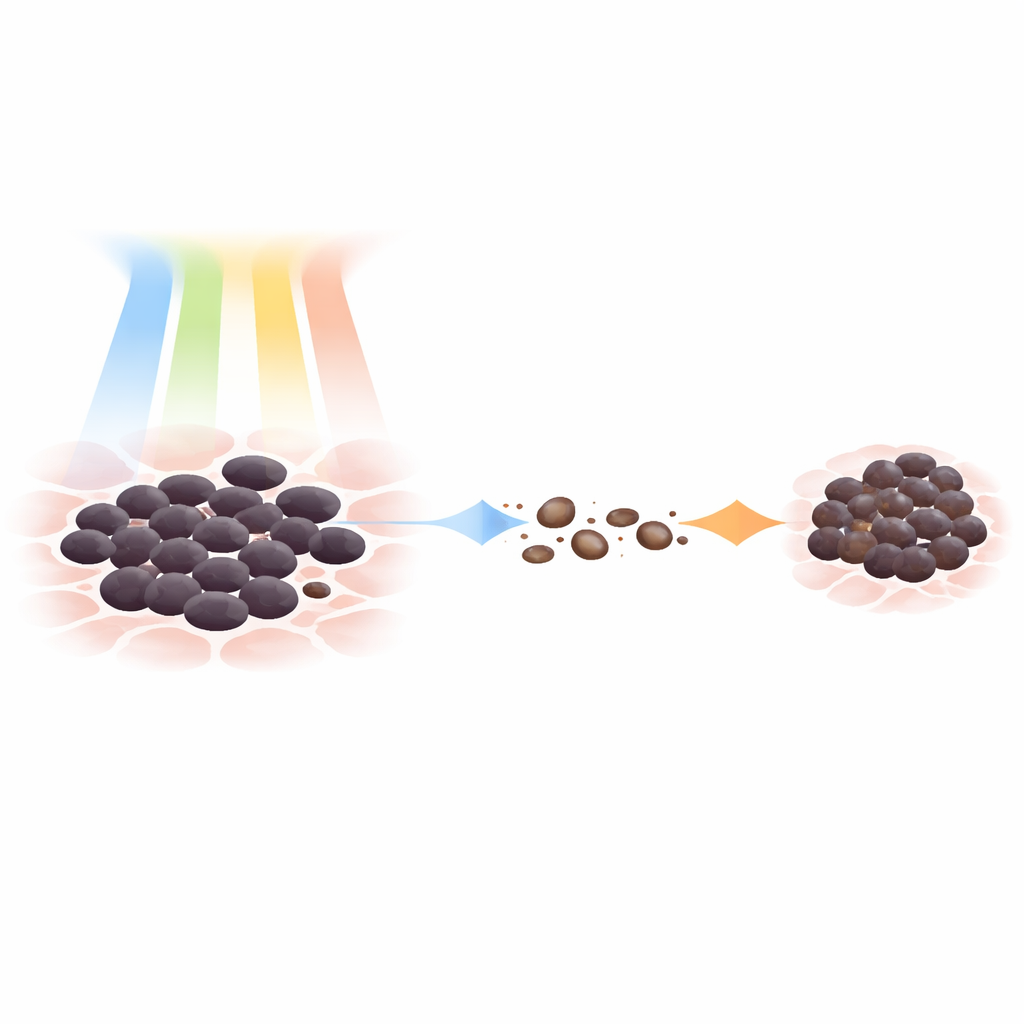
Shape‑Shifting Cells and Rewired Signals
One of the defining features of melanoma persister cells is their extreme flexibility, or plasticity. Melanoma cells can switch among different identities: some look more like mature pigment‑producing cells, others become more stem‑like or adopt traits associated with invasion and wound healing. Under drug pressure, persisters can shift into several reversible states. Some show signs of a more “mesenchymal‑like” personality linked to movement and survival, while others become stripped‑down, less specialized versions with altered surface receptors. These identity shifts are driven by broad changes in how DNA is packaged, which genes are turned on, and how messages inside the cell are translated into proteins. The same tumor can hold several flavors of persisters at once, each relying on different survival circuits yet all capable of rekindling disease.
Fuel Switching: How Cancer Reroutes Its Energy
While most fast‑growing cancer cells favor quick but inefficient sugar burning, melanoma persister cells appear to flip their energy strategy. Many studies show that they lean more heavily on their mitochondria, the cell’s power plants, to extract energy from fats and feed a more efficient process known as oxidative phosphorylation. This fuel switch helps persisters conserve resources and survive in a drug‑soaked, nutrient‑poor environment. But it comes at a cost: burning fats this way generates high levels of unstable oxygen by‑products, which can damage cells. To avoid self‑destruction, persisters depend strongly on antioxidant defenses that neutralize these reactive molecules. This metabolic balancing act—turning up mitochondrial power while walking a tightrope of oxidative stress—creates vulnerabilities that therapies might exploit. 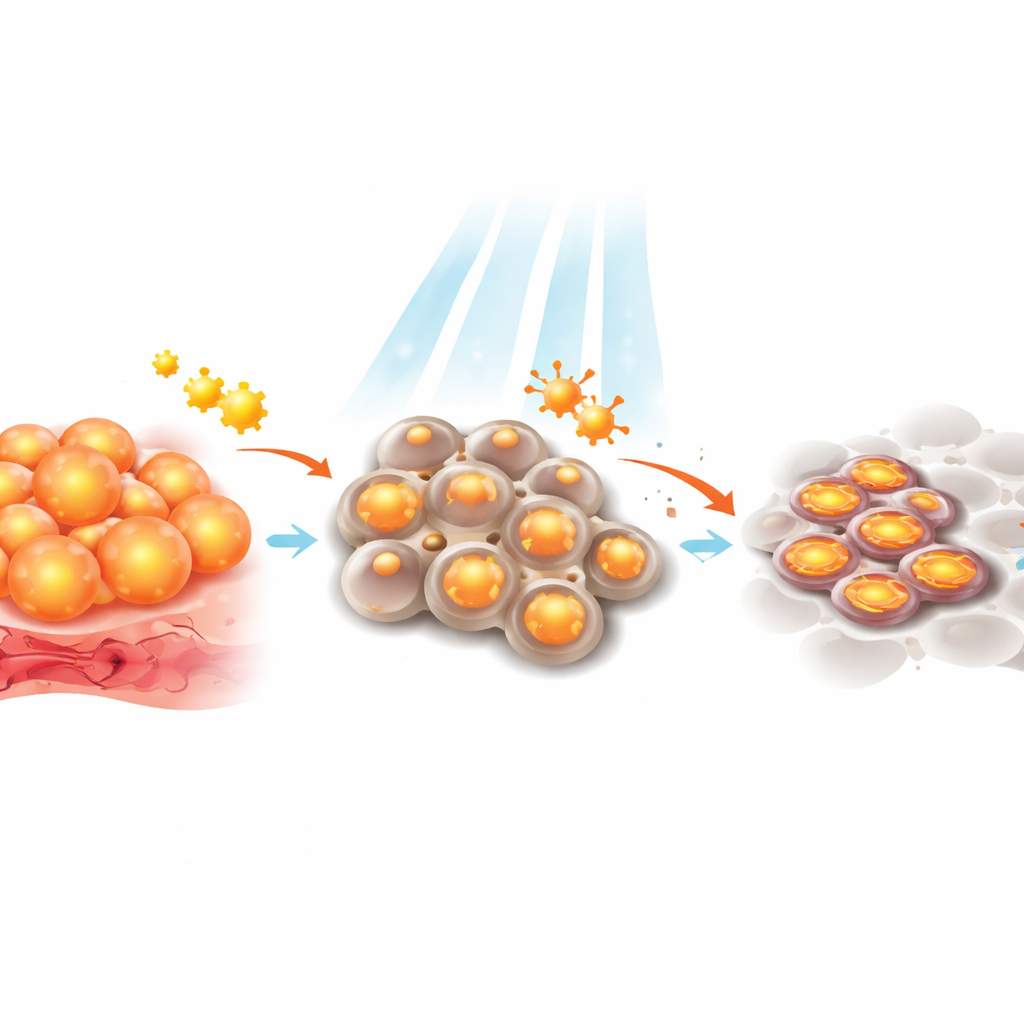
Weak Spots and New Treatment Ideas
Because persister cells are hard to kill directly with standard drugs, researchers are probing their weak points. One promising angle targets their fragile redox balance: small molecules that block key antioxidant enzymes or promote a type of iron‑driven cell death called ferroptosis can selectively eliminate persisters in laboratory models. Other strategies attack their reliance on mitochondrial energy production or on revamped signaling routes that bypass blocked growth pathways. Still others aim to interfere with the translation and epigenetic machinery that allow persisters to rapidly reprogram themselves, or to use “senolytic” drugs to clear senescence‑like survivors left by chemotherapy. A particularly inventive proposal is to deliberately drive all tumor cells into a uniform persister‑like state that is especially easy to target, then deploy a second drug that exploits this engineered vulnerability.
Looking Inside Tumors, Not Just Dishes
Most of what we know about melanoma persisters comes from cells grown in the lab, but real tumors live in a much more complex neighborhood. Surrounding connective‑tissue cells, immune cells, patchy blood flow, low oxygen, and acidic pockets all influence which cells become persisters and how long they endure. Early studies suggest that persisters cluster in particular niches within tumors and that signals from nearby support cells and immune cells help stabilize their drug‑tolerant states. Future work will need to track individual cells over time inside animals and patient samples, combining advanced imaging, single‑cell sequencing, and genetic barcoding. These approaches could reveal when persisters appear, how they interact with their surroundings, and when they tip from a reversible drug‑tolerant phase into permanently resistant, fast‑growing clones.
What This Means for Patients
Altogether, the picture that emerges is not of an indestructible super‑cell, but of a stressed, slow‑growing survivor that relies on temporary tricks to outlast therapy. The review argues that if doctors and scientists can learn to recognize, track, and exploit the weaknesses of melanoma persister cells—especially their fuel choices, oxidative stress, and flexible identities—they may be able to prevent tumors from bouncing back after an initial response. While no persister‑focused treatments have yet reached the clinic, the authors outline clear experimental priorities to move from petri dishes toward real‑world trials. Ultimately, turning these hidden stragglers from a source of relapse into a point of attack could significantly improve long‑term outcomes for people living with metastatic melanoma.
Citation: Sensenbach, S., Ngo, H.G. & Orman, M.A. Plasticity, signaling, and metabolic rewiring in melanoma persister cells. Commun Biol 9, 587 (2026). https://doi.org/10.1038/s42003-026-10143-w
Keywords: melanoma, drug tolerance, cancer persister cells, metabolic rewiring, therapy resistance