Clear Sky Science · en
Lisinopril activates BI1 to reprogram lipid metabolism and restore autophagy in ALS
Why this research matters to families and patients
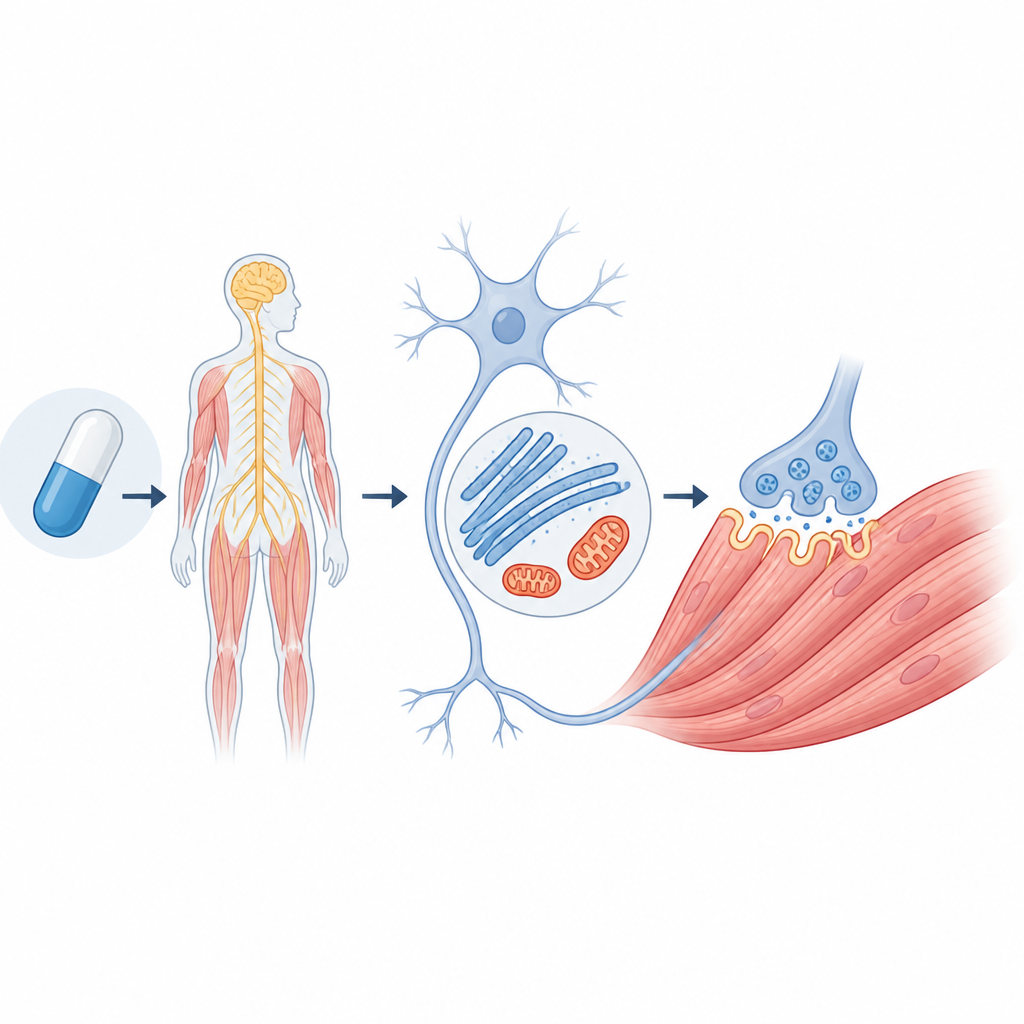
Amyotrophic lateral sclerosis (ALS) robs people of muscle strength and ultimately breathing, yet current treatments offer only modest benefits. This study explores whether a long-used blood pressure pill, lisinopril, can be repurposed to protect nerve and muscle cells in ALS by tuning how cells handle fats and recycle their own damaged parts. The work suggests that a familiar drug might help stabilize the body’s energy factories, reduce scarring in muscle, and slow disease-like changes in an established ALS mouse model.
A closer look at a cell’s peacekeeper
The researchers focused on a protein called Bax inhibitor 1, or BI1, which sits in a cell compartment that helps manage stress signals. BI1 has been linked to protection of brain cells, but its role in ALS and metabolism was not clear. By comparing gene activity in muscles from healthy mice, ALS mice, and ALS mice given extra BI1, the team found that BI1 influences many pathways tied to fat and sugar use, cell survival, and tissue scarring. BI1 dampened a powerful signaling system driven by the molecule TGF-beta, which is known to promote both inflammation and fibrosis, while also lifting blocks on the cell’s waste-clearing process called autophagy.
How a blood pressure pill entered the picture
To find a medicine that could boost BI1 without gene therapy, the team used computer tools to model the shape of the BI1 protein and scan a library of drugs already approved for human use. Lisinopril emerged as a strong binder at a specific pocket on BI1. In nerve-like cells carrying an ALS-linked SOD1 mutation, lisinopril increased BI1 levels, helped keep mitochondria electrically stable, and reduced signs of programmed cell death. It also preserved the internal skeleton and length of nerve extensions, hinting that treated cells could better maintain their connections with muscle.
Repairing cell cleanup and easing tissue scarring
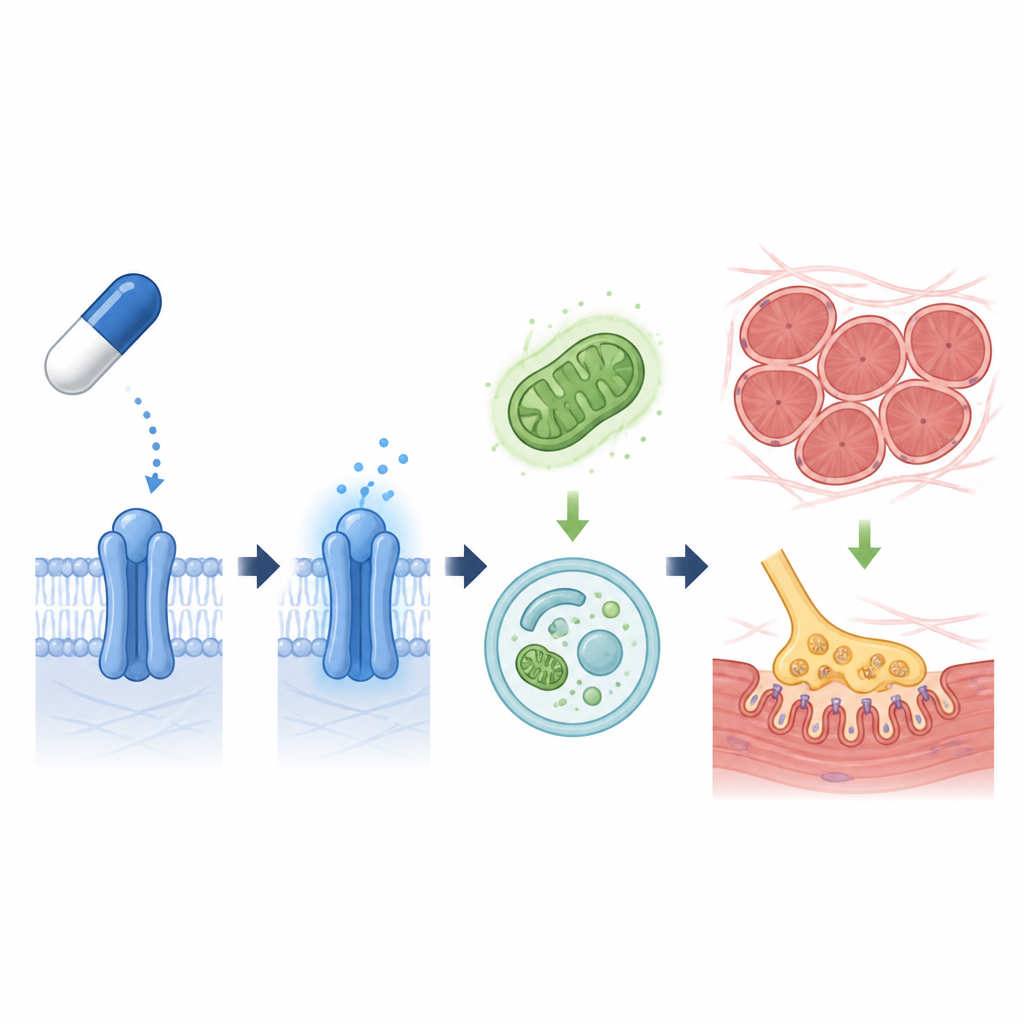
Inside cells, damaged proteins and worn-out structures must be broken down and recycled. In ALS, this cleanup system is often sluggish. The study showed that lisinopril, acting through BI1, lowered TGF-beta and related signals that normally shut down autophagy. As these brakes eased, markers of active autophagy rose and a key growth pathway, PI3K/AKT/mTOR, quieted. In mouse muscles, lisinopril also shifted gene activity away from building stiff scar tissue and reduced the buildup of type I collagen and fibrosis markers. At the same time, treated muscles contained more slow-twitch, endurance-oriented fibers, more mitochondria, and higher levels of cellular fuel, indicating a healthier energy balance.
Rebalancing fats and protecting nerves in ALS mice
Lipidomics, a large-scale survey of fat molecules, revealed that lisinopril reshaped the fat landscape in muscles from ALS mice. The drug tilted the balance away from membrane lipids such as certain sphingolipids and glycerophospholipids that can damage mitochondria and promote inflammation. It increased specific storage fats, including triglycerides that contain butyrate-like fragments linked to better mitochondrial function, while reducing lipids associated with oxidative stress and cell death. In live ALS mice, lisinopril delayed disease onset, extended lifespan, supported running endurance and grip strength, lessened muscle wasting, and preserved the structure of spinal cord neurons, their insulating myelin, and the neuromuscular junctions where nerves talk to muscle.
What this could mean for future ALS treatment
Taken together, the findings suggest that lisinopril can activate BI1 in muscles and nerve cells, cool down TGF-beta signaling, restore cellular cleanup, and steer lipid use toward a pattern that supports energy needs rather than cell damage. In an ALS mouse model, this multi-pronged action translated into slower degeneration of nerves and muscles and better physical performance. While more work in larger animals and people is needed, the study outlines a detailed map of how a well-known heart medicine might be repurposed to help manage ALS by targeting metabolism and cell resilience rather than single disease pathways.
Citation: Yin, H., Ren, Z., Zhang, Y. et al. Lisinopril activates BI1 to reprogram lipid metabolism and restore autophagy in ALS. Commun Biol 9, 705 (2026). https://doi.org/10.1038/s42003-026-09930-2
Keywords: amyotrophic lateral sclerosis, lisinopril, lipid metabolism, autophagy, neuroprotection