Clear Sky Science · en
Neuronal ARHGAP8 controls synapse structure and AMPA receptor-mediated synaptic transmission
Why tiny brain connections matter
Our thoughts, memories, and moods depend on billions of microscopic junctions called synapses, where nerve cells talk to one another. Subtle problems at these contact points are increasingly linked to conditions such as autism, intellectual disability, schizophrenia, and depression. This study uncovers how one little-known protein, ARHGAP8, helps shape the structure and strength of these synapses and why having too much of it may weaken brain communication.
Finding a quiet player in the brain
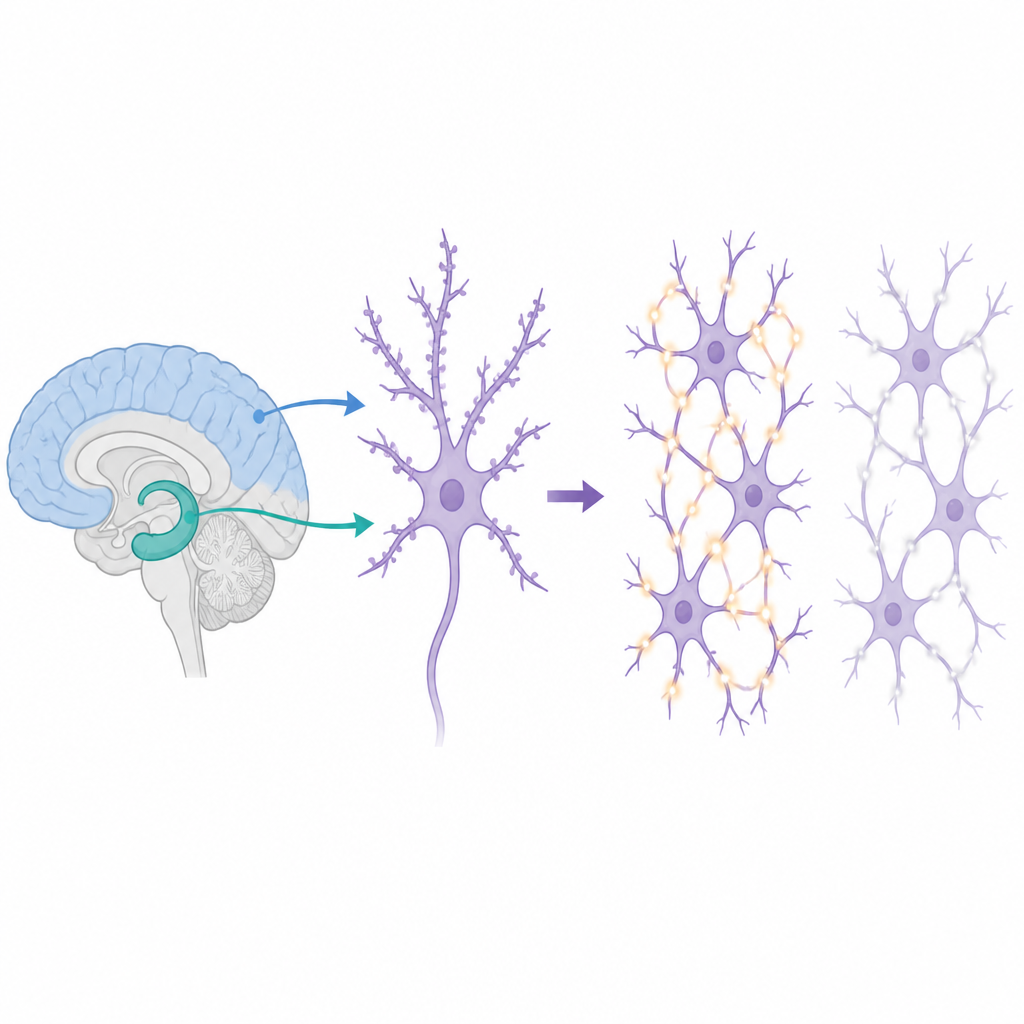
The researchers began by asking where ARHGAP8 lives in the brain and how its presence changes over time. In adult mice, they found the protein spread across many regions, with clear signals in the cortex, hippocampus, and cerebellum, all key for thinking, memory, and movement. Although ARHGAP8 levels were low before birth, they rose during the second week of life, a period when synapses form and are pruned intensely. Within nerve cells, the team saw ARHGAP8 clustering at excitatory synapses, especially in the postsynaptic density, the crowded protein layer on the receiving side of the synapse. Synapses that contained ARHGAP8 tended to be larger and richer in core synaptic markers, suggesting this protein normally sits at well-developed connection points.
A partnership with a key receptor
Next, the scientists explored what keeps ARHGAP8 anchored at synapses. They focused on GluN2B, a subunit of the NMDA receptor, an important glutamate receptor that shapes brain development and plasticity. When they examined synapses from mice lacking GluN2B, ARHGAP8 was largely missing from the postsynaptic fractions, even though total ARHGAP8 levels in the cells were unchanged. Microscopy showed fewer and dimmer ARHGAP8 clusters at dendrites and synapses in these neurons. In cell-based experiments, ARHGAP8 physically associated with GluN2B-containing receptors. Without GluN2B, activity of a molecular switch called RhoA was higher in spine structures, consistent with ARHGAP8’s known role in turning RhoA off and with the idea that GluN2B helps position ARHGAP8 where it can influence the spine’s internal skeleton.
Too much ARHGAP8 reshapes neurons
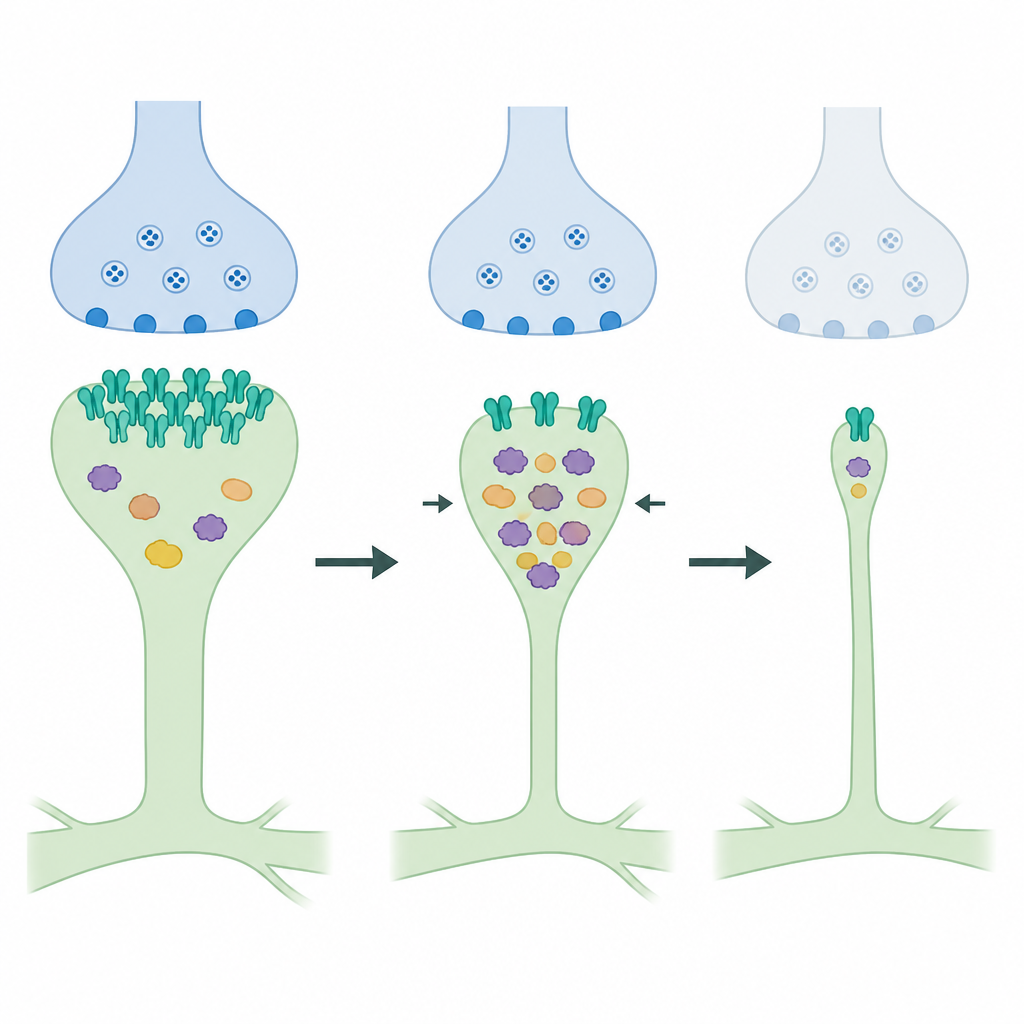
Because some patients with neurodevelopmental or psychiatric conditions have extra copies or higher expression of ARHGAP8, the team mimicked this situation by artificially boosting ARHGAP8 levels in rodent neurons. When they did so, dendritic trees became less elaborate, with fewer branches. At the level of individual spines, which host most excitatory synapses, they saw longer, thinner structures with smaller volume, a hallmark of more immature synapses. Although the basic turnover of actin, the main structural filament inside spines, remained dynamic, the overall actin content in spine heads dropped. The remaining synapses also contained less of the scaffold protein PSD95 and less of a presynaptic glutamate marker, hinting that both sides of the synapse were functionally downgraded.
Weakened signal flow through AMPA receptors
The study then turned to AMPA receptors, which carry most fast excitatory signals driven by glutamate and are central to learning and memory. In neurons overexpressing ARHGAP8, there were fewer AMPA receptor subunits (GluA1) on the cell surface at synapses, and the remaining clusters were smaller. Electrical recordings confirmed that the miniature excitatory currents mediated by AMPA receptors were weaker and occurred less often. This suggests that high ARHGAP8 not only makes spines structurally immature but also strips them of receptors, reducing the effectiveness of synaptic communication. These changes echo features observed in animal models of schizophrenia that show elevated ARHGAP8 and more immature spines, and can be reversed in those models by lowering ARHGAP8 via specific RNA regulators.
What this means for brain disorders
Taken together, the work positions ARHGAP8 as a new regulator at excitatory synapses, tightly linked to GluN2B-containing NMDA receptors. Under normal conditions, modest amounts of ARHGAP8 at the synapse help tune the internal signaling and structure of spines. When levels rise too high, however, dendrites lose branches, spines become small and immature, and AMPA receptor signaling is dampened. For people with genetic changes or altered expression of ARHGAP8, such synaptic weakening could contribute to cognitive and mood symptoms seen in neurodevelopmental and psychiatric disorders. This makes ARHGAP8, and the molecules that control its levels, promising targets for better understanding and eventually modulating faulty brain circuits.
Citation: Schmidt, J., Inácio, Â.S., Ferreira, J. et al. Neuronal ARHGAP8 controls synapse structure and AMPA receptor-mediated synaptic transmission. Commun Biol 9, 640 (2026). https://doi.org/10.1038/s42003-026-09884-5
Keywords: synapse structure, AMPA receptors, ARHGAP8, neurodevelopmental disorders, hippocampal neurons