Clear Sky Science · en
Immune responses of Bos indicus versus Bos taurus cattle towards Bluetongue virus or Schmallenberg virus differ significantly
Why some cows handle infections better
Rising temperatures are helping tiny biting insects spread animal diseases into new regions, threatening livestock, farmers’ incomes, and global food supplies. Yet not all cattle get equally sick when exposed to these viruses. This study asks a simple but important question: do different types of cattle mount different immune defenses against two major insect-borne viruses, and could that help explain why some animals stay healthier than others?
Two kinds of cows, two mosquito-borne threats
Cattle around the world mostly belong to two subspecies. Bos taurus, common in Europe and North America, typically thrive in cooler climates and are often used for high-yield milk production. Bos indicus, or zebu cattle, originated in the hot, stressful environment of South Asia and are known for their heat tolerance and hardiness. The researchers compared how blood immune cells from these two cattle types respond to two viruses spread by biting midges: bluetongue virus, which can cause severe illness, and Schmallenberg virus, which usually causes milder disease in adults but can damage unborn calves. Both viruses have recently caused outbreaks in Europe as warmer weather favors their insect vectors.
Testing immune reactions in the lab
Instead of infecting live animals, the team followed animal-welfare principles and worked with fresh blood cells taken from healthy cows of both subspecies kept in Switzerland. They exposed these cells to the two viruses under controlled conditions and carefully tracked three things: which immune cell types were present, how strongly those cells switched into an activated state, and which signaling proteins—called cytokines—were released. To mimic real disease, they tested both normal cattle body temperature and a higher, fever-like temperature. They also used modern gene-reading techniques to see which genes switched on or off in response to infection.
Stronger is not always better
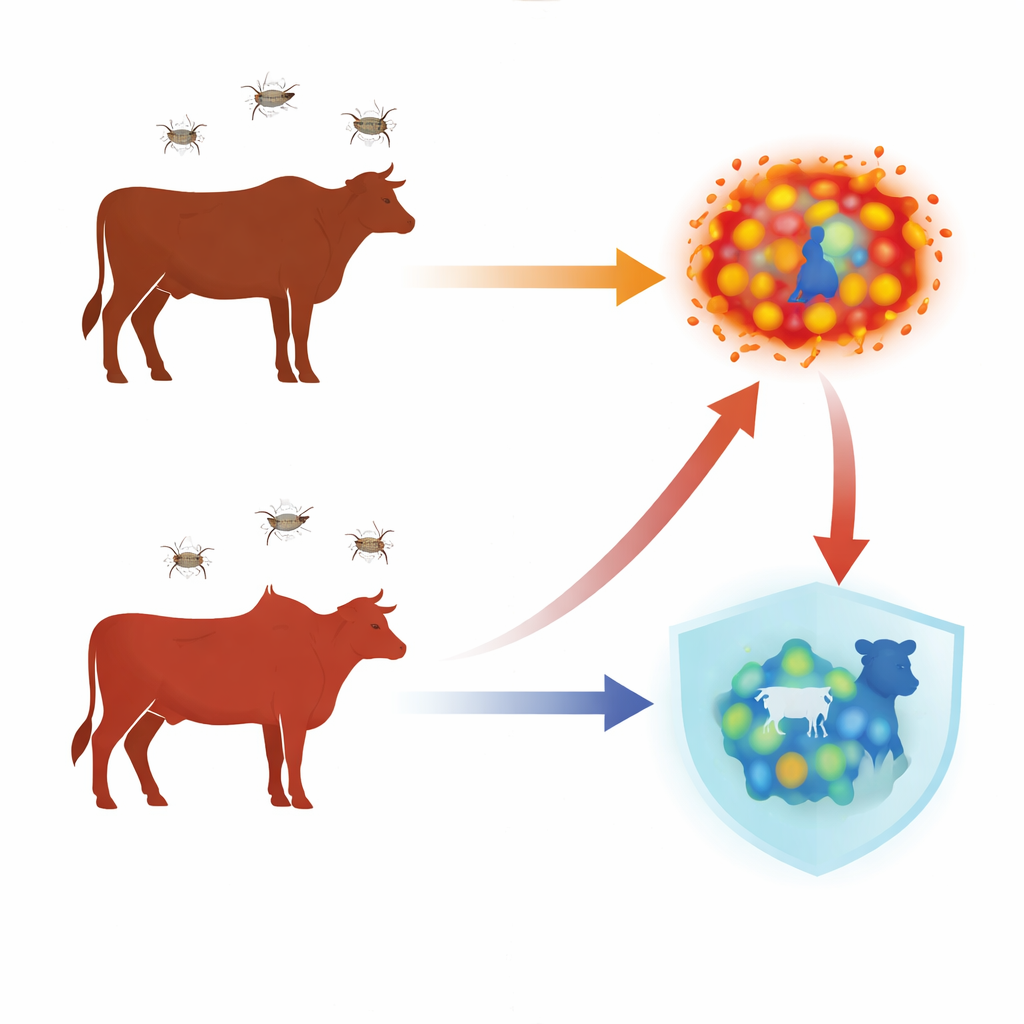
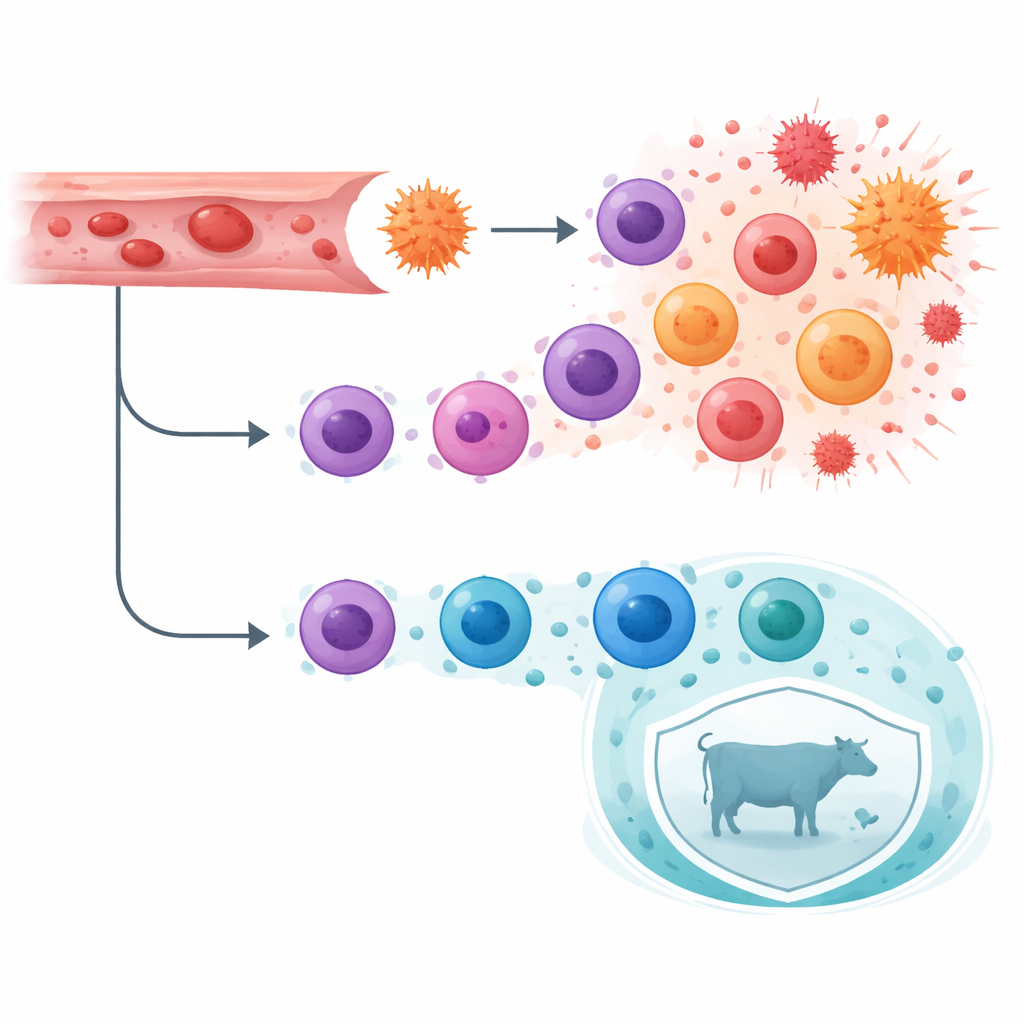
When bluetongue virus infected the cells, the difference between the cattle types was striking. Bos taurus blood cells launched a broad, intense reaction: many immune cell types became highly activated and poured out large amounts of inflammatory cytokines, forming what scientists call a “cytokine storm.” In contrast, Bos indicus cells focused mainly on antiviral defenses. Their response was more targeted and controlled, marked by strong activation of genes that directly block virus replication, but with less of the broad inflammatory surge seen in Bos taurus. For Schmallenberg virus, all reactions were generally milder, but again the two cattle types showed distinct patterns in which genes and signaling molecules were engaged.
Fever’s surprising downside
Fever is usually considered a helpful sign that the body is fighting infection, yet in this study raising the temperature to a fever-like level consistently weakened the blood cells’ responses to both viruses. Most immune cell subsets from both cattle types showed lower activation, and many cytokines dropped sharply, especially in Bos taurus. The cells were not dying; instead, it appeared that high temperature was disrupting their ability to respond effectively. At the gene level, fever shifted activity away from focused antiviral pathways toward more general cellular stress and metabolic processes, suggesting that very high temperatures may actually handicap the immune system at critical moments.
What this means for farms and food security
Put together, the results show that zebu (Bos indicus) cattle mount a calmer but more precisely antiviral response to bluetongue and Schmallenberg viruses, whereas European-style Bos taurus cattle respond more explosively and less selectively. In real animals, that overreaction may translate into more severe disease, while the more balanced response in zebu cattle may help them tolerate infection with fewer symptoms. As climate change pushes insect-borne livestock diseases into new regions, these insights could help guide breeding and management strategies—such as favoring hardier cattle types or tailoring vaccines—to build herds that stay productive and healthy in a warming world.
Citation: Démoulins, T., Yimthin, T., Zhang, J. et al. Immune responses of Bos indicus versus Bos taurus cattle towards Bluetongue virus or Schmallenberg virus differ significantly. Commun Biol 9, 582 (2026). https://doi.org/10.1038/s42003-026-09804-7
Keywords: vector-borne diseases, cattle immunity, bluetongue virus, Schmallenberg virus, Bos indicus