Clear Sky Science · en
Microglial serine racemase knockout alleviates Alzheimer-like neuropathology and behavioral deficit via lactylation-mediated anti-inflammation
Brain Cleanup Crew Gets a Boost
Alzheimer’s disease slowly robs people of memory and independence, and today’s treatments do little to stop it. This study explores a surprising new angle: instead of targeting the sticky protein clumps in the brain directly, the researchers tune the brain’s own immune cells—microglia—so they become better at cleaning up debris and less likely to fuel harmful inflammation. By switching off a single enzyme in these cells, they show Alzheimer-like brain damage and memory problems can be eased in mice, hinting at a fresh path for therapy.
Immune Cells That Help and Harm
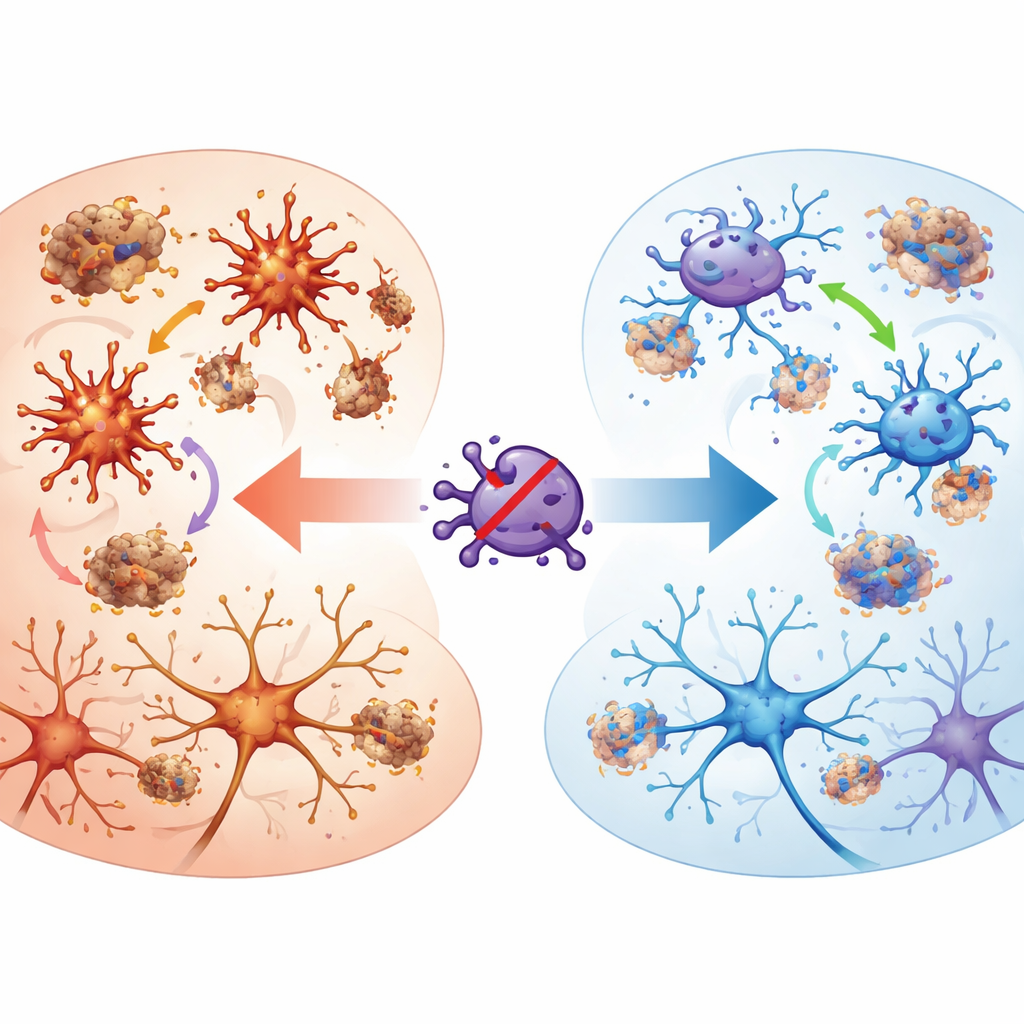
Microglia act as the brain’s resident cleanup crew and first responders. In early Alzheimer’s, they can swallow and clear amyloid beta, the protein that forms plaques. As disease progresses, however, these cells often change personality: they become chronically activated, pump out inflammatory molecules, and gradually lose their appetite for plaques. The authors focused on an enzyme called serine racemase, which helps make D-serine, a chemical messenger that works together with glutamate at nerve cell receptors. Too much D-serine can overstimulate these receptors and damage neurons, while too little can weaken normal communication. In aging brains, neurons make less of the enzyme, but glial cells, including microglia, tend to make more—raising the question of whether dialing down this enzyme specifically in microglia might tilt them back toward a protective role.
Turning Down a Single Enzyme
To test this idea, the team first used cultured microglial cells in the lab. When they reduced or deleted the gene for serine racemase in these cells, the microglia gobbled up more amyloid beta particles and fluorescent beads, showing a stronger cleaning能力. In contrast, forcing microglia to produce extra enzyme made them worse at engulfing these targets. The researchers then examined how these altered cells responded to an inflammatory challenge. Without the enzyme, microglia increased production of molecules linked to a calming, tissue-repairing state, such as arginase 1 and the anti-inflammatory signal IL-10, while classic pro-inflammatory markers did not rise further. This suggested that removing the enzyme nudged microglia away from a damaging, chronic fire-fighting mode and toward a more nurturing, restorative one.
Chemical Tags That Rewrite Cell Behavior
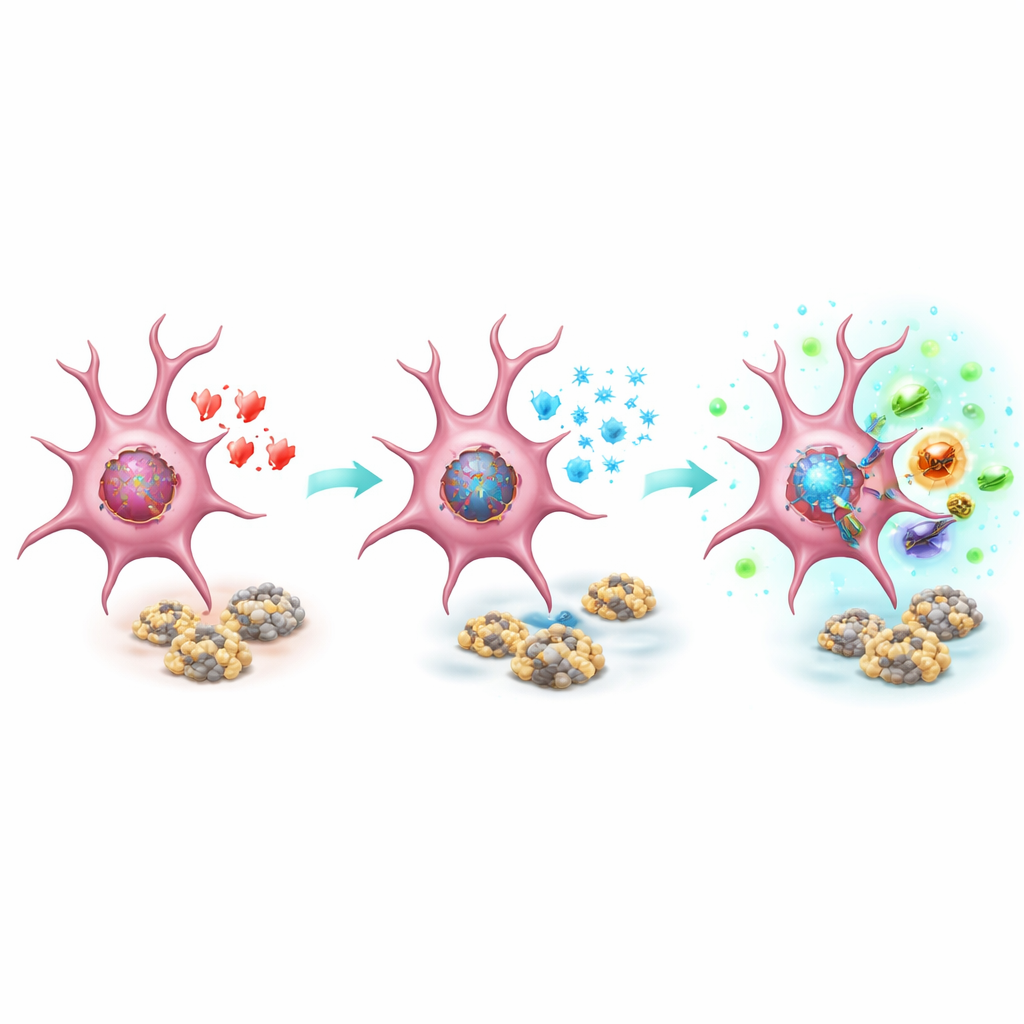
Diving deeper, the scientists asked how this shift in behavior is controlled. They focused on “lactylation,” a relatively new kind of chemical tag that can be added to histones, the proteins that package DNA and help regulate which genes are turned on. In microglia lacking serine racemase, inflammatory stimulation led to higher levels of a specific tag, lactylation on histone H3 at one position, which is known to boost genes like arginase 1. When the team blocked the enzymes or metabolic steps that support these lactyl tags, the rise in calming genes in the enzyme-free microglia disappeared. This pointed to a chain of events in which changing cellular metabolism and histone tagging reprograms the immune cells toward a less inflammatory, more plaque-clearing identity.
Helping Memory in an Alzheimer-Like Brain
The crucial test was whether this microglial reprogramming could actually improve disease features in a living brain. The researchers bred Alzheimer-prone 5×FAD mice—an established model that rapidly develops amyloid plaques and memory deficits—with mice engineered to lose serine racemase only in microglia. In these animals, microglia around plaques showed more of the beneficial histone lactylation mark, higher levels of arginase 1, and increased amounts of a metabolic enzyme linked with more efficient energy use. Male mice with the microglial enzyme deletion had fewer amyloid plaques in key memory regions, while both males and females showed certain gains in spatial learning and memory tasks, although the exact improvements differed by sex. These sex differences may reflect how males and females handle D-serine and related enzymes differently in the brain.
What This Could Mean for Future Treatment
Put simply, the study shows that turning off a single enzyme in the brain’s immune cells can make them better at eating harmful protein clumps and less likely to stoke damaging inflammation, which in turn eases Alzheimer-like changes and improves memory in mice. By linking these benefits to shifts in cell metabolism and chemical tags on DNA-packaging proteins, the work highlights a precise lever for reprogramming microglia without shutting them down. While much work remains before this can be translated into human therapy, microglial serine racemase now stands out as a promising target for drugs designed to help the brain clean itself and stay healthier for longer.
Citation: Zhou, J., Yang, Y., Liu, S. et al. Microglial serine racemase knockout alleviates Alzheimer-like neuropathology and behavioral deficit via lactylation-mediated anti-inflammation. Commun Biol 9, 493 (2026). https://doi.org/10.1038/s42003-026-09772-y
Keywords: microglia, Alzheimer’s disease, D-serine, neuroinflammation, epigenetic regulation