Clear Sky Science · en
CDK4/6i reverse PARPi resistance by targeting the E2F1- MCM2/5 pathway
Why this cancer research matters
Ovarian cancer is one of the deadliest cancers affecting people with ovaries, in part because it often comes back after treatment. A class of drugs called PARP inhibitors has given new hope by specifically attacking tumor cells with faulty DNA repair. Yet many tumors eventually figure out how to escape these drugs and start growing again. This study uncovers how some ovarian cancers develop resistance to a widely used PARP inhibitor, and shows that adding another type of drug can switch that resistance off and shrink tumors once more.
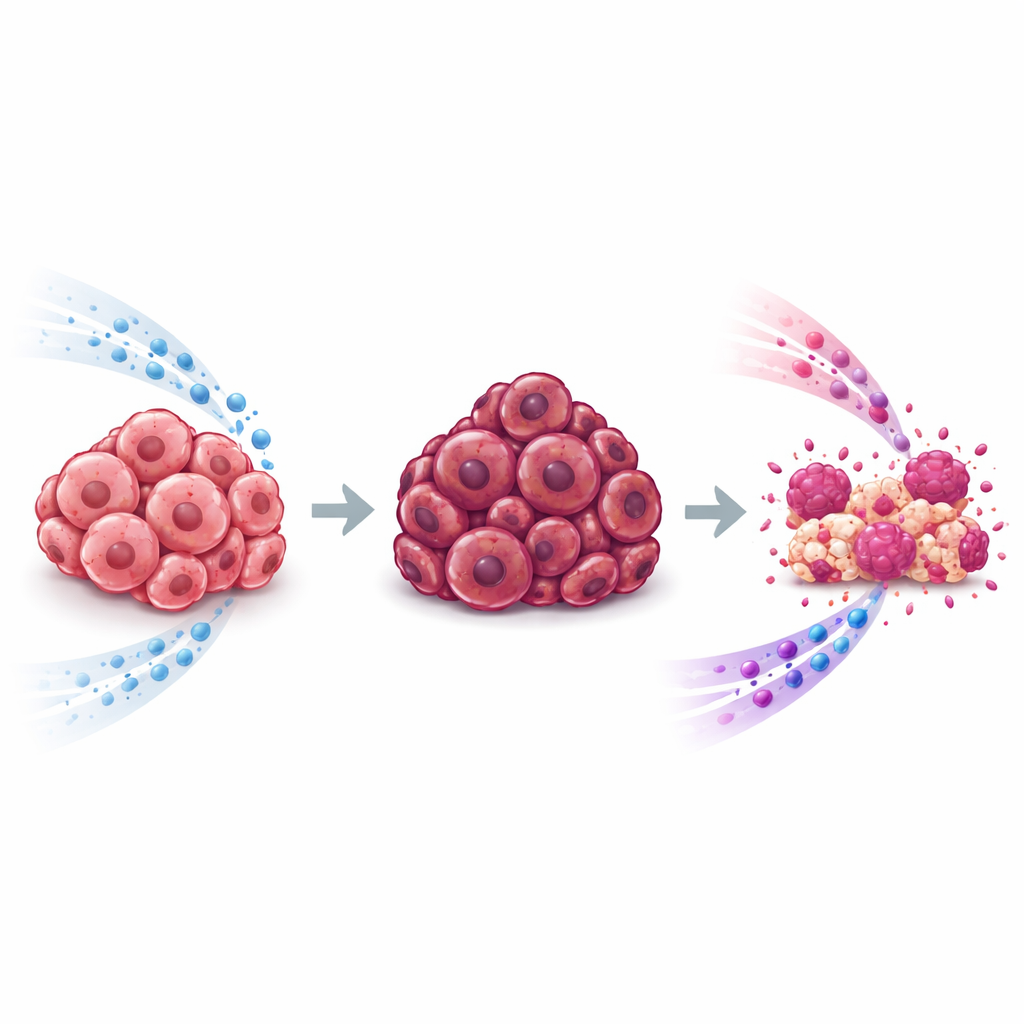
When a breakthrough drug stops working
PARP inhibitors, including the drug niraparib, work by overwhelming cancer cells that are already bad at fixing broken DNA. At first, many ovarian tumors respond well, but most patients eventually face relapse as the cancer adapts. The researchers created niraparib-resistant ovarian cancer cell lines in the lab by exposing cells to the drug over many months. Compared with the original, drug‑sensitive cells, the resistant cells kept dividing, formed more colonies, and no longer stalled their cell cycle when exposed to niraparib. These models allowed the team to ask a central question: what changes inside the cells let them shrug off a treatment that once stopped them cold?
DNA copying engines turn up the volume
By reading out which genes were switched on or off in both sensitive and resistant cells, the team found a striking pattern. Two members of a family of proteins that help copy DNA—called MCM2 and MCM5—were turned down by niraparib in normal cells, but strongly turned up in resistant cells. The proteins formed a tighter partnership in resistant cells, and clinical data showed that ovarian tumors with higher levels of these two proteins were linked to worse patient outcomes. When the scientists deliberately lowered MCM2 or MCM5 in resistant cells, those cells once again became vulnerable to niraparib, showed more DNA damage, and divided more slowly. Conversely, forcing cells to make extra MCM2 or MCM5 made them harder to kill with PARP inhibitors, supporting the idea that this DNA‑copying duo is a key driver of resistance.
A control switch that feeds resistance
The researchers then asked what controls the surge of MCM2 and MCM5 in resistant cells. They focused on a protein called E2F1, a master switch that turns on many genes needed for cells to copy their DNA. Using public cancer data, DNA‑binding predictions, and biochemical tests, they showed that E2F1 directly attaches to the on‑switch regions of the MCM2 and MCM5 genes and boosts their activity. Increasing E2F1 in sensitive cells raised MCM2/5 levels and made the cells more drug‑resistant, while dampening E2F1 in resistant cells lowered MCM2/5 and restored niraparib sensitivity. In these resistant cells, another pair of proteins called CDK4 and CDK6—well‑known drivers of cell division—were also elevated, suggesting a chain of events from CDK4/6 to E2F1 to MCM2/5 that protects tumor cells from PARP inhibitors.
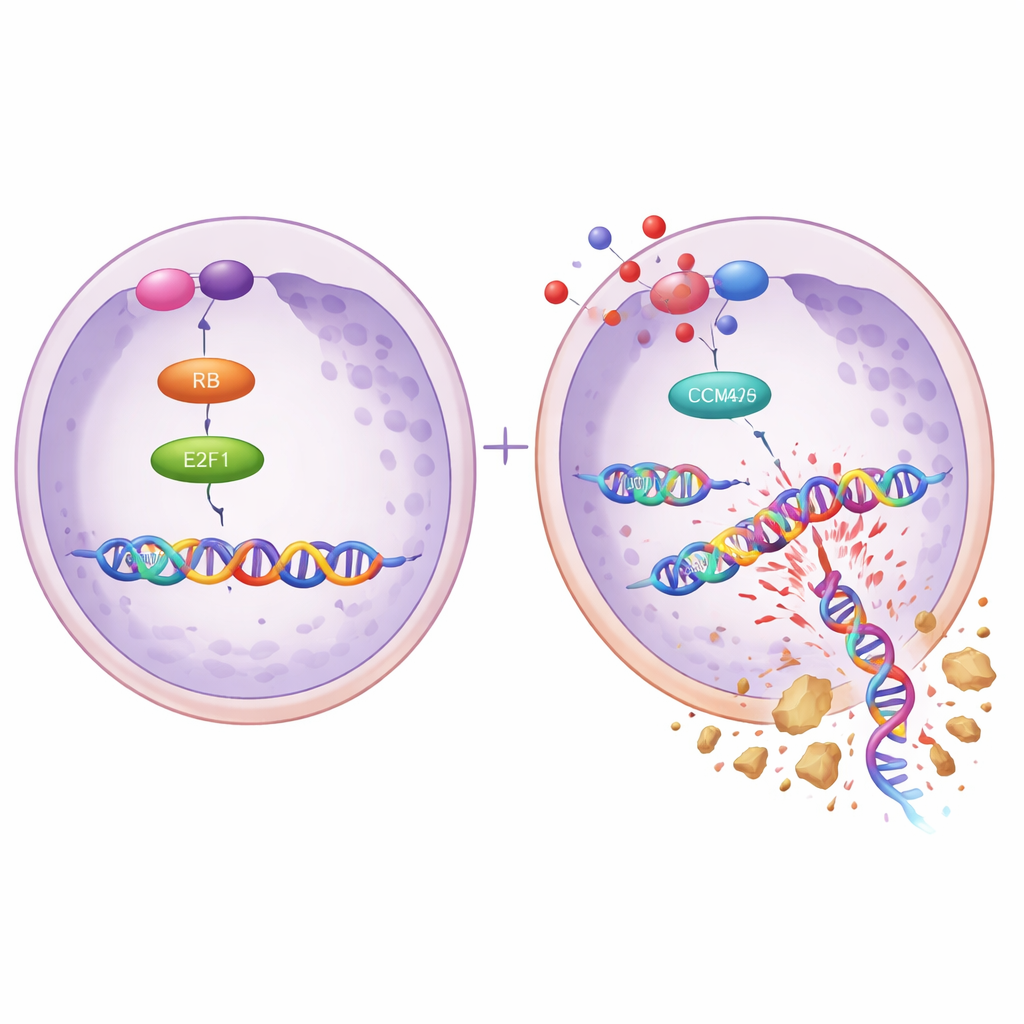
Using one drug to make another work again
Because CDK4/6 proteins sit upstream of E2F1, the team tested whether blocking CDK4/6 could flip the whole resistance program back off. They combined niraparib with dalpiciclib, a CDK4/6 inhibitor already in clinical use for other cancers, and found that the two drugs worked better together than either alone in resistant ovarian cancer cells. The combination reduced cell growth, colony formation, and DNA‑copying activity, and it weakened the partnership between MCM2 and MCM5. Markers of DNA damage shot up, while repair‑related proteins dropped. Similar effects were seen with another CDK4/6 inhibitor, abemaciclib. In mice carrying niraparib‑resistant ovarian tumors, the combination of dalpiciclib and niraparib shrank tumors much more than either drug on its own, and tumor samples showed lower levels of MCM2, MCM5, and E2F1.
What this means for future ovarian cancer treatment
In simple terms, the study shows that some ovarian cancers beat PARP inhibitors by turning up their DNA‑copying machinery, led by MCM2 and MCM5 under the control of the E2F1 switch and its CDK4/6 regulators. By adding a CDK4/6 inhibitor, doctors may be able to turn this machinery back down, re‑expose the tumor’s weak spot in DNA repair, and make PARP inhibitors effective again. While clinical trials are needed, the work lays out a clear biological roadmap for combining these drugs and highlights MCM2/5 as promising markers—and potential targets—for overcoming treatment resistance in ovarian cancer.
Citation: Feng, Y., Fu, M., Zheng, B. et al. CDK4/6i reverse PARPi resistance by targeting the E2F1- MCM2/5 pathway. npj Precis. Onc. 10, 162 (2026). https://doi.org/10.1038/s41698-026-01353-w
Keywords: ovarian cancer, PARP inhibitor resistance, CDK4/6 inhibitors, DNA replication, targeted therapy combinations