Clear Sky Science · en
Pulmonary surfactant protein D reduces lung cancer progression associated with decreased IL-4/STAT6 signaling
Why a Lung’s Own Shield Matters for Cancer
Lung cancer remains one of the deadliest cancers, in part because it is often discovered only after it has already spread. This study looks at a little-known natural defender in our lungs, a protein called surfactant protein D (SP-D), and asks a simple but powerful question: does this homegrown shield help keep lung cancer in check, and can boosting it slow the disease? The answer, the researchers find, is yes—at least in experimental models and in patient data—by dialing down a growth-promoting signal inside cancer cells.
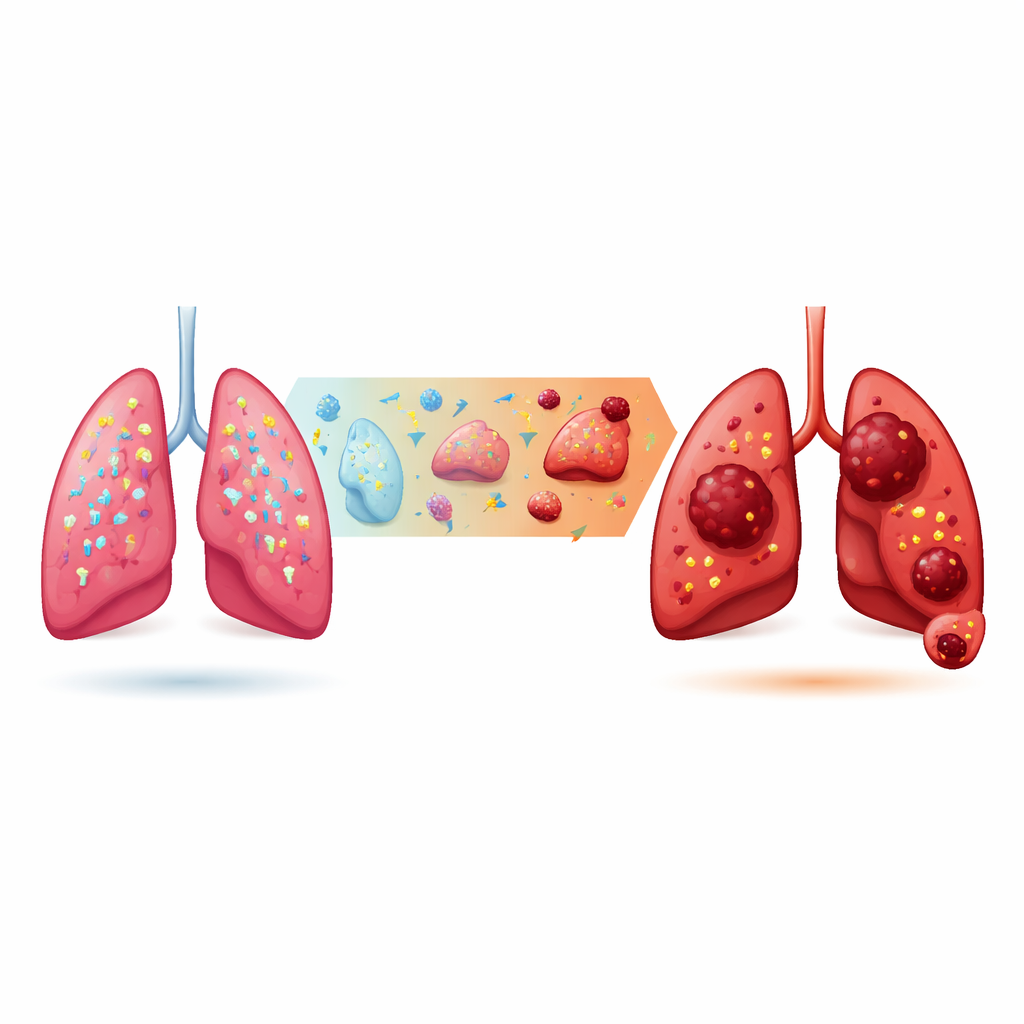
A Built-In Guardian in the Airways
SP-D normally lives in the thin fluid layer that coats the air sacs of the lung, where it helps the immune system spot and handle invading germs. When the authors examined gene activity across 21 different cancer types, they found that SP-D stood out in lung tissue: its gene, SFTPD, is much more active in healthy lung than in lung tumors, and drops to nearly zero in metastatic (spreading) lung cancer deposits. Microscopy of human tumor samples showed that cancer cells themselves lacked SP-D, while nearby normal cells at the tumor’s edge still produced some. This pattern suggests that as lung cells turn cancerous and then more aggressive, they largely switch off this protective protein.
Slowing Tumor Growth and Spread in Mice
To see whether this loss actually matters for disease behavior, the team forced human lung adenocarcinoma cells (the A549 line) to make extra SP-D and implanted them into mice. Compared with control tumors, the SP-D–boosted tumors grew more slowly and contained fewer dividing cells. After surgeons removed the primary growths, the researchers waited to see whether new tumor nodules would pop up in distant organs. In mice whose tumors overproduced SP-D, the number and total area of secondary tumors in the lungs were sharply reduced. In a separate experiment that more closely mimics how doctors might deliver a therapy, the investigators established lung tumors and then gave SP-D protein by intranasal inhalation. This raised SP-D levels directly in the lung lining fluid and, while it did not change how many tumor spots formed, it significantly cut down the number and size of larger tumor foci, pointing to a specific effect on tumor progression rather than on initial seeding.
Turning Down a Key Growth Signal
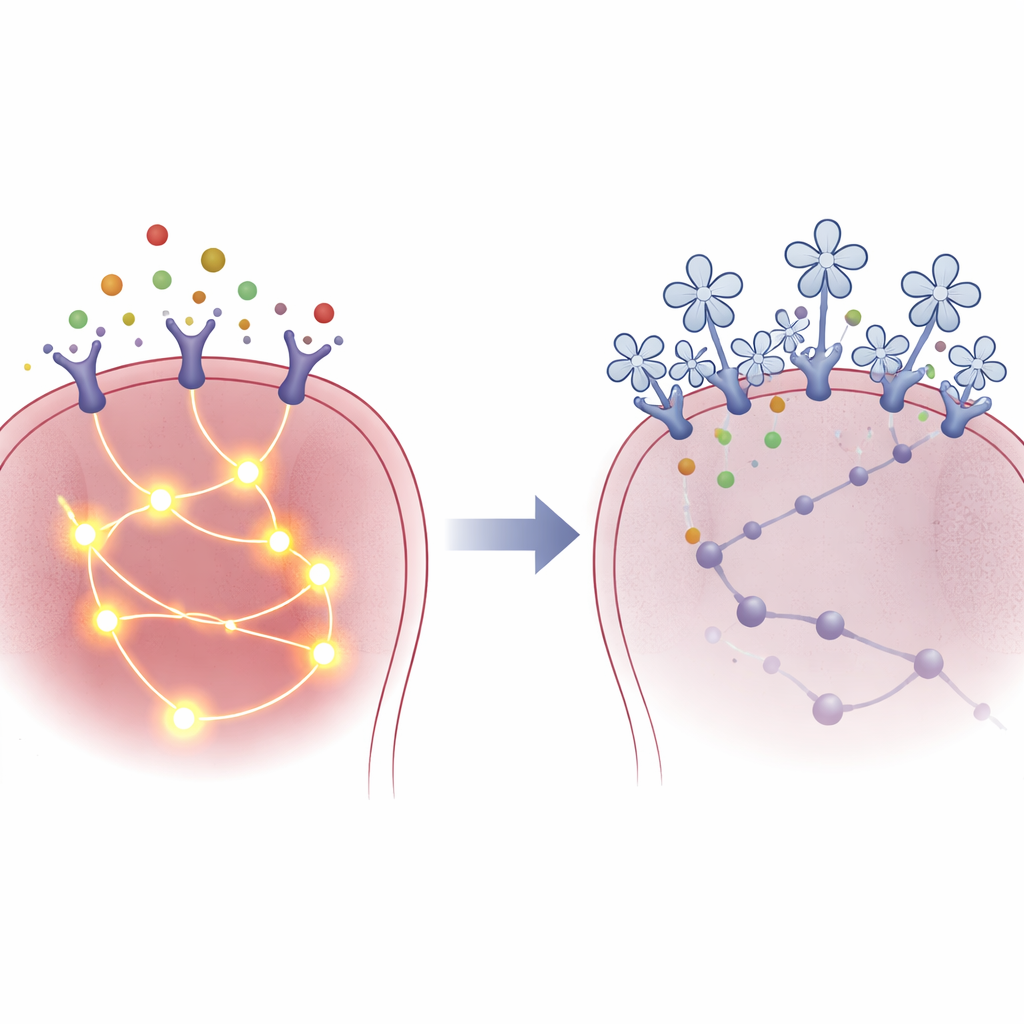
The authors then asked how SP-D exerts this brake inside cancer cells. Using RNA sequencing, they compared gene activity in lung cancer cells exposed to SP-D with untreated cells. Multiple growth-related pathways were toned down, but one signal stood out: a communication route driven by the immune messenger interleukin-4 (IL-4) and its partner protein STAT6, known to promote cell survival, growth, and movement. When the researchers bathed lung cancer cells in IL-4 or a related messenger and then added SP-D, they saw that activation of several key signaling proteins, including STAT6, dropped. Detailed binding experiments showed that SP-D can latch directly onto the IL-4 receptor on the cell surface in a calcium-dependent manner. This binding interfered with downstream activation inside the cell, even though IL-4 could still make partial contact with its receptor, suggesting that SP-D acts like a physical dampener on this pro-cancer channel.
Clues from Patient Tumors
To test whether this laboratory mechanism plays out in real people, the team analyzed RNA data from more than 1,100 lung adenocarcinoma samples drawn from two independent patient cohorts. Tumors with high SFTPD expression consistently showed lower activity of IL-4 and STAT6 target genes, along with reduced inflammatory and cell cycle–checkpoint signaling, compared with tumors with low SFTPD. When patients were grouped by both SP-D and IL-4–related activity, those whose tumors had high SFTPD and low IL-4 signaling enjoyed the longest period without disease coming back. In contrast, patients with low SFTPD but strong IL-4–type signaling had the highest risk of recurrence, underscoring that the balance between this protective protein and this growth pathway may help shape clinical outcomes.
What This Means for Future Care
For non-specialists, the take-home message is that the lung is not a passive victim in cancer: it comes equipped with its own molecular shield, SP-D, that can directly talk to lung cancer cells and temper a growth- and spread-promoting signal. As tumors evolve, they tend to lose this shield, especially when they become metastatic. By restoring SP-D—either by making cancer cells produce it again or by delivering the protein into the airways—researchers were able to slow tumor growth and limit larger metastatic nodules in mice, in part by turning down IL-4/STAT6 signaling. While much work remains before this could become a therapy, SP-D and the pathways it controls now emerge as promising targets for preventing lung tumors from progressing and returning.
Citation: Mohammadi, A., Inayatullah, M., Schlosser, A. et al. Pulmonary surfactant protein D reduces lung cancer progression associated with decreased IL-4/STAT6 signaling. npj Precis. Onc. 10, 164 (2026). https://doi.org/10.1038/s41698-025-01163-6
Keywords: lung cancer, surfactant protein D, IL-4 STAT6 signaling, tumor microenvironment, metastasis