Clear Sky Science · en
Shotgun metagenomic mapping of saliva reveals insights into diversity and function of the oral microbiome in pregnancy
Why the mouth matters in pregnancy
Most people think of brushing and flossing as a way to protect their own teeth and gums. This study suggests that the mix of tiny organisms living in saliva may also shift during pregnancy in ways that could matter for both mother and baby. By closely examining these microbes in pregnant and non-pregnant women, the researchers explored how pregnancy might nudge the mouth toward a more inflammation-prone state.
The hidden world in saliva
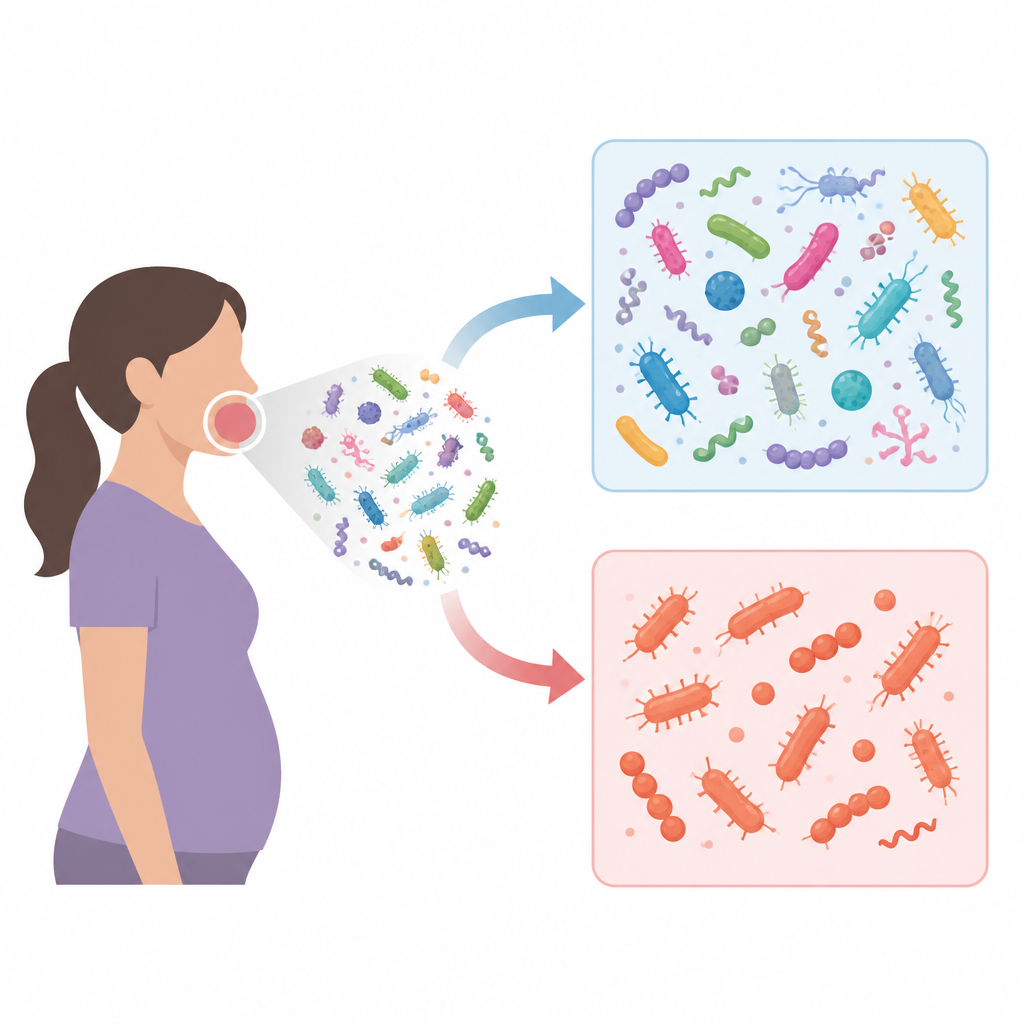
Our mouths are home to hundreds of types of bacteria that usually live in balance and help keep the oral environment stable. In this study, scientists collected saliva from 71 women in late pregnancy and from 143 non-pregnant women with regular menstrual cycles. Each non-pregnant participant gave samples during three different phases of her cycle so that normal hormonal swings could be taken into account. Using a powerful DNA-based method called shotgun metagenomics, the team mapped which microbes were present and what kinds of activities they were equipped to perform.
Comparing pregnant and non-pregnant mouths
The researchers found a rich cast of microbial characters: 10 broad lineages, more than 100 genera, and over 400 species in total. Yet the overall picture differed between groups. Pregnant women had fewer distinct species in their saliva, even though the remaining species were present in similar proportions to one another. In other words, diversity and richness were lower in pregnancy, while the evenness of the community stayed about the same. These differences persisted even after the team carefully adjusted for age, body mass index, fasting time before sampling, recent travel, and dental visits.
Shifts toward more risky bacteria
Beyond simple counts, the makeup of the community shifted in important ways. A classic grouping scheme for oral microbes highlights clusters linked to either gum health or gum disease. In pregnant women, bacteria from the so-called red complex, which are strongly tied to inflamed gums, were more abundant. At the same time, some groups usually associated with a healthier mouth were less common. The team also used a separate method to directly measure several well-known oral bacteria. They confirmed higher levels of Porphyromonas gingivalis, a key gum disease species, in pregnant women, while other species such as Fusobacterium nucleatum were actually lower, showing that pregnancy does not simply raise all harmful microbes at once.
Changes in what microbes can do
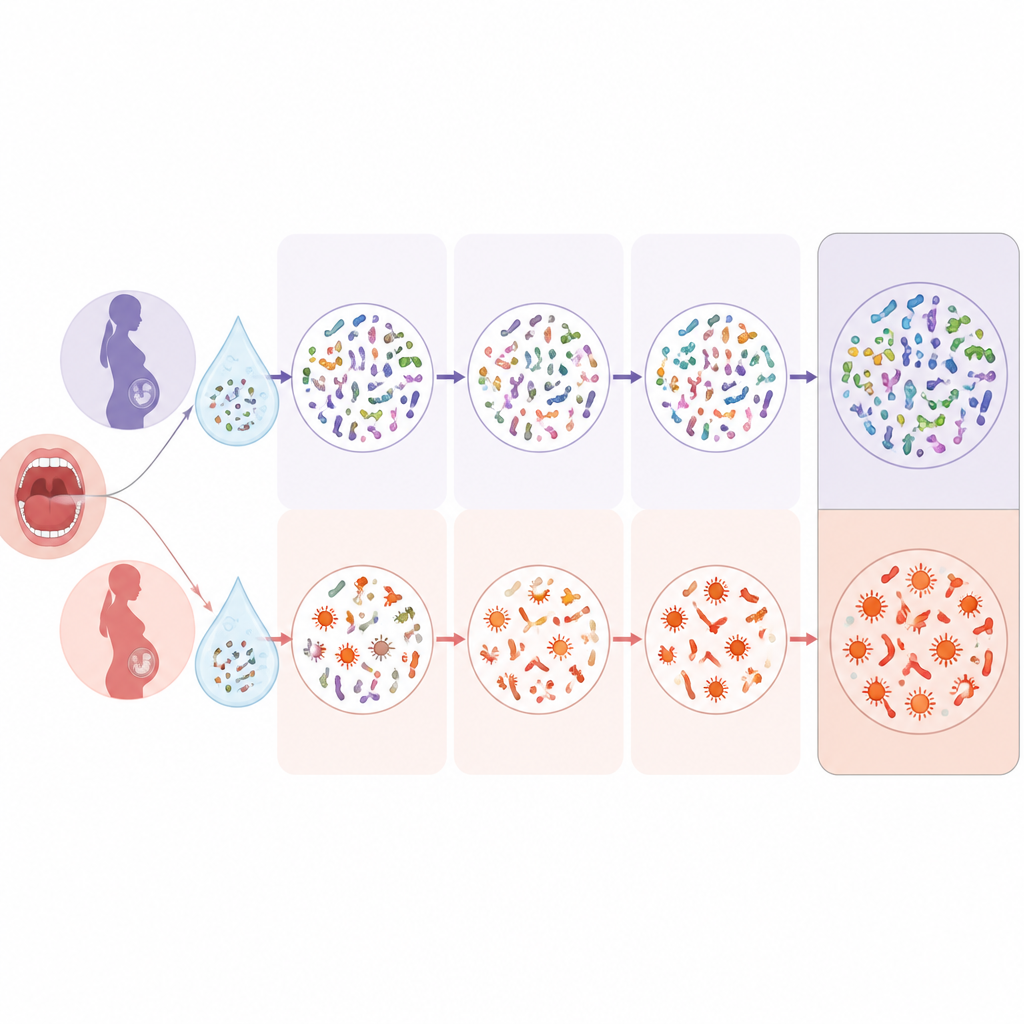
The study did not stop at who was there; it also asked what these microbes might be capable of doing. By looking at gene pathways, the researchers identified 40 functional modules that differed between pregnant and non-pregnant women. Many of these involved the breakdown of foreign chemicals, including substances related to common pollutants and lifestyle exposures. Some pathways were more common in pregnancy, while others were reduced, hinting that the mouth’s microbial machinery is rewired during this life stage. These patterns remained even after excluding women who smoked, used snus or cannabis, drank heavily, took recent antibiotics, or had certain chronic illnesses.
What this could mean for mothers and babies
Although this research cannot prove cause and effect, it clearly shows that full-term pregnancy is linked to a less diverse and more inflammation-leaning oral microbiome. Because specific oral bacteria have been tied in earlier work to preterm birth, pregnancy loss, and placental inflammation, such shifts may have broader health implications. The findings support the idea that paying attention to oral care before and during pregnancy could help keep this microbial community in a more balanced state, and they point to the need for future studies to test how these mouth changes may influence outcomes for both pregnant women and their newborns.
Citation: Bostanci, N., Antony, A.T., Silbereisen, A. et al. Shotgun metagenomic mapping of saliva reveals insights into diversity and function of the oral microbiome in pregnancy. Sci Rep 16, 16450 (2026). https://doi.org/10.1038/s41598-026-54100-3
Keywords: oral microbiome, pregnancy, saliva bacteria, gum health, microbial diversity