Clear Sky Science · en
Non-invasive transcutaneous vagus nerve stimulation during memory retrieval enhances recollection of emotionally salient memories
Why this study matters to everyday memory
We all have certain moments that feel burned into memory, especially intense or disturbing ones. This study asks whether a gentle electrical pulse delivered to a nerve in the ear can make such emotional memories easier to bring back to mind days later. The work explores how a simple, non-invasive stimulation technique might subtly shape what we remember, with possible implications for conditions where memory of emotional events is either too weak or too strong.
How the body talks to the brain
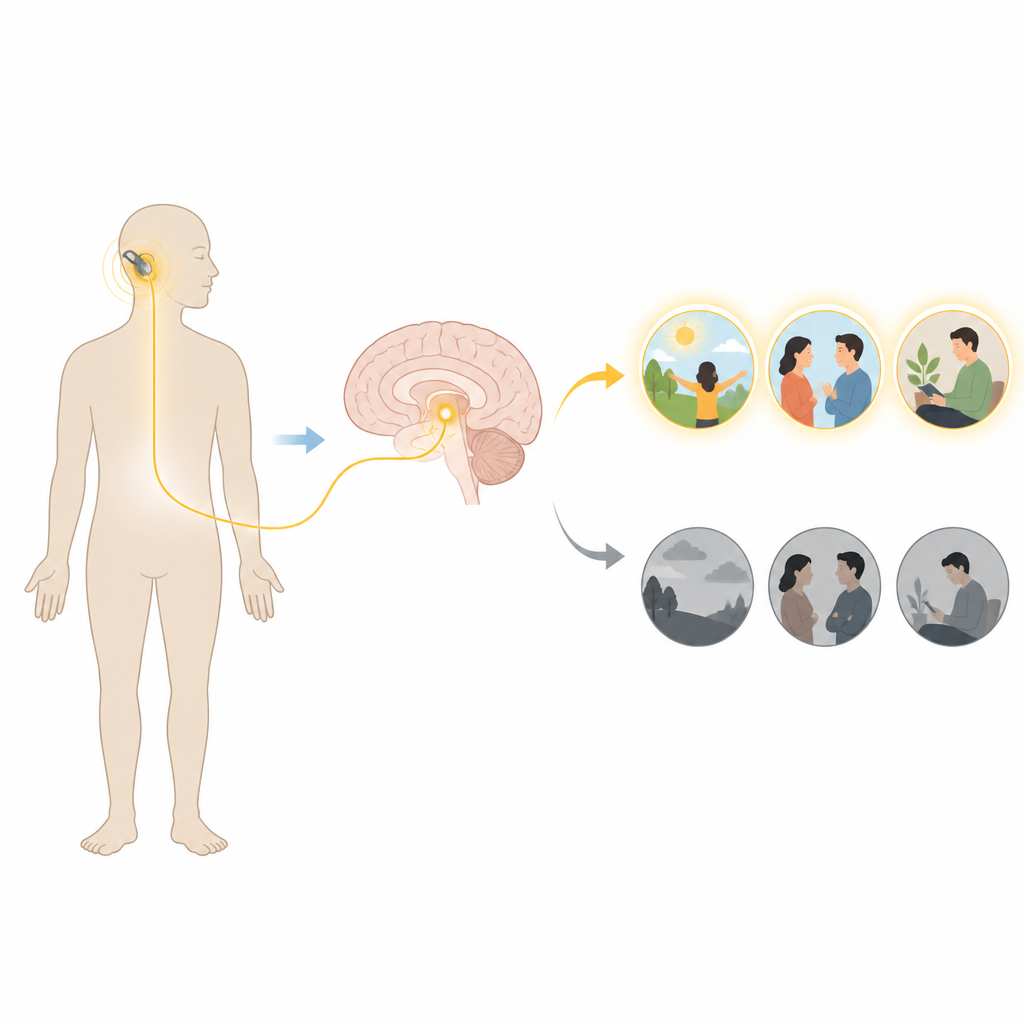
The research centers on the vagus nerve, a major communication highway between body and brain that helps regulate arousal and attention. When this nerve is active, it can influence deep brain regions involved in processing emotion and forming memories. Earlier experiments in humans showed that stimulating the vagus nerve during learning can strengthen later memory, especially for emotional material. But it was still unclear whether activating this nerve during the act of remembering, rather than during learning, would also change how vividly people recall emotional events.
A week-old memory test with subtle ear stimulation
To answer this question, the scientists recruited healthy young adults for a two-day experiment. On the first day, participants quietly viewed a series of pictures without knowing their memory would later be tested. Half of these images were emotionally unpleasant, such as scenes of accidents, while the other half were neutral, like buildings or everyday objects. One week later, the same volunteers returned for a recognition test that mixed old and new pictures. During this second session, one group received real electrical stimulation to a vagus-innervated spot in the left ear, while a control group received sham stimulation on the earlobe, which does not strongly engage the vagus nerve.
Measuring vivid remembering versus vague familiarity
As people judged whether each picture was old or new, they also rated how sure they were, using a six-point confidence scale. This allowed the researchers to distinguish between two kinds of memory signals. High-confidence “definitely old” responses were taken to reflect recollection, in which specific details of the prior encounter come back. Mid-level “probably old” or “perhaps old” responses were treated as familiarity, a weaker sense of having seen something before without clear detail. By comparing hits and false alarms for unpleasant and neutral images under the two stimulation conditions, the team could see whether ear-based vagus stimulation shifted the balance between these kinds of remembering.
Stronger detailed recall for unpleasant images
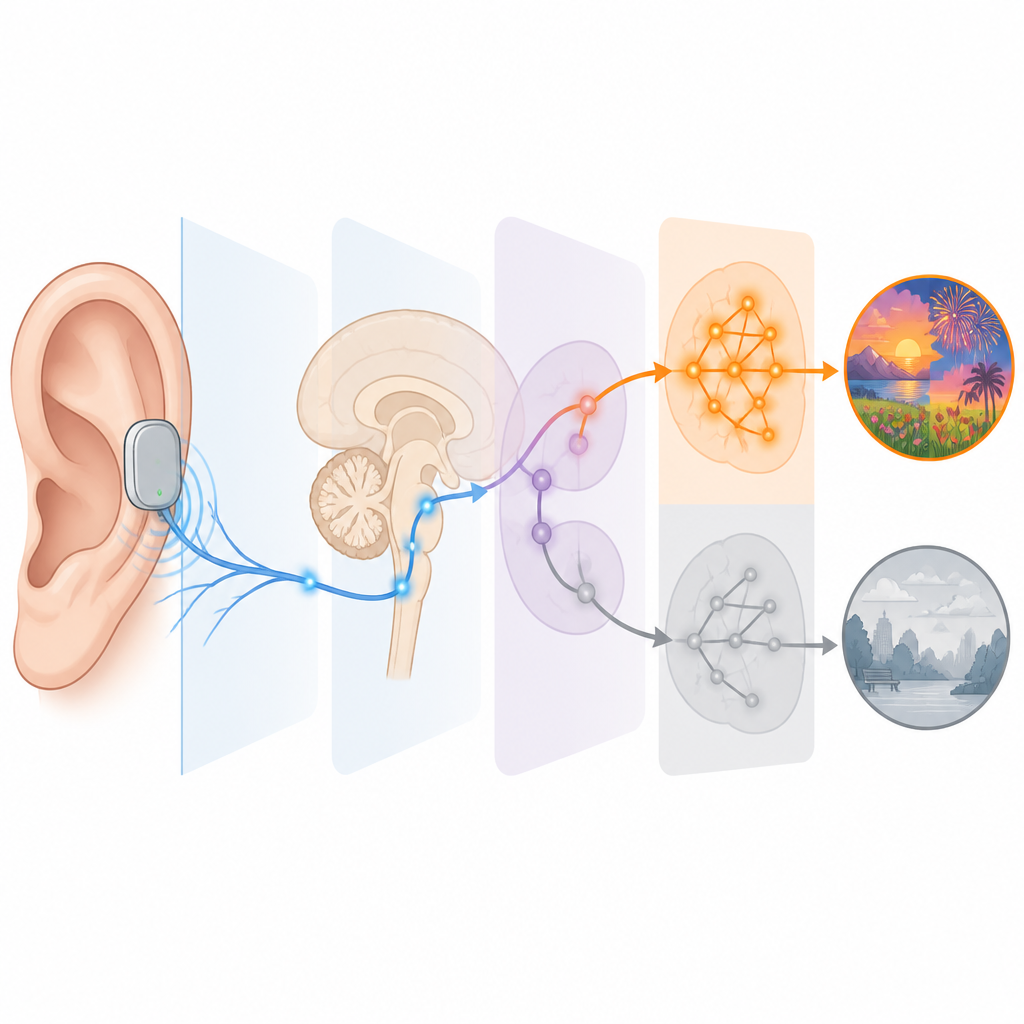
Across all participants, unpleasant pictures were generally better recognized than neutral ones, echoing previous work showing an advantage for emotional events. The key finding, however, was that stimulation during retrieval selectively boosted the recollection advantage for unpleasant images. Under active stimulation, people showed a larger gap between detailed recollection and mere familiarity for these emotional scenes than under sham stimulation, even though overall recognition accuracy changed little. This pattern suggests that the stimulation did not simply make participants more likely to say “old,” but instead tilted memory toward richer, more detailed recall of emotionally charged content. Reported side effects were low and similar between the real and sham groups.
What this could mean for memory and health
For a layperson, the take-home message is that gentle, non-invasive stimulation of a nerve in the ear can nudge the brain toward more vivid recall of unpleasant experiences, at least by a modest amount. The study supports the idea that body–brain communication pathways help set the brain’s “arousal state” during remembering, and that matching this state to what was present during learning can sharpen emotional memories. While the effect size was small, the approach may open avenues for carefully tuning memory in everyday life and in clinical settings, for example to support memory in aging or to better understand how emotional memories are retrieved in disorders such as post-traumatic stress disorder.
Citation: Giraudier, M., Ventura-Bort, C. & Weymar, M. Non-invasive transcutaneous vagus nerve stimulation during memory retrieval enhances recollection of emotionally salient memories. Sci Rep 16, 16015 (2026). https://doi.org/10.1038/s41598-026-53772-1
Keywords: vagus nerve stimulation, emotional memory, memory retrieval, noninvasive brain stimulation, recollection