Clear Sky Science · en
Expired fexofenadine hydrochloride acts as a high-performance sustainable corrosion inhibitor for copper in MSF desalination applications
Turning Old Pills into New Protection
Many coastal cities rely on desalination plants to turn seawater into drinking water, but the powerful acids used to clean these plants can slowly eat away at copper pipes. This study explores an unexpected helper: expired allergy medicine. Researchers found that an out-of-date form of the common antihistamine fexofenadine can coat copper surfaces and shield them from harsh cleaning acids, offering both a way to reduce corrosion and a way to reuse pharmaceutical waste that would otherwise be thrown away. 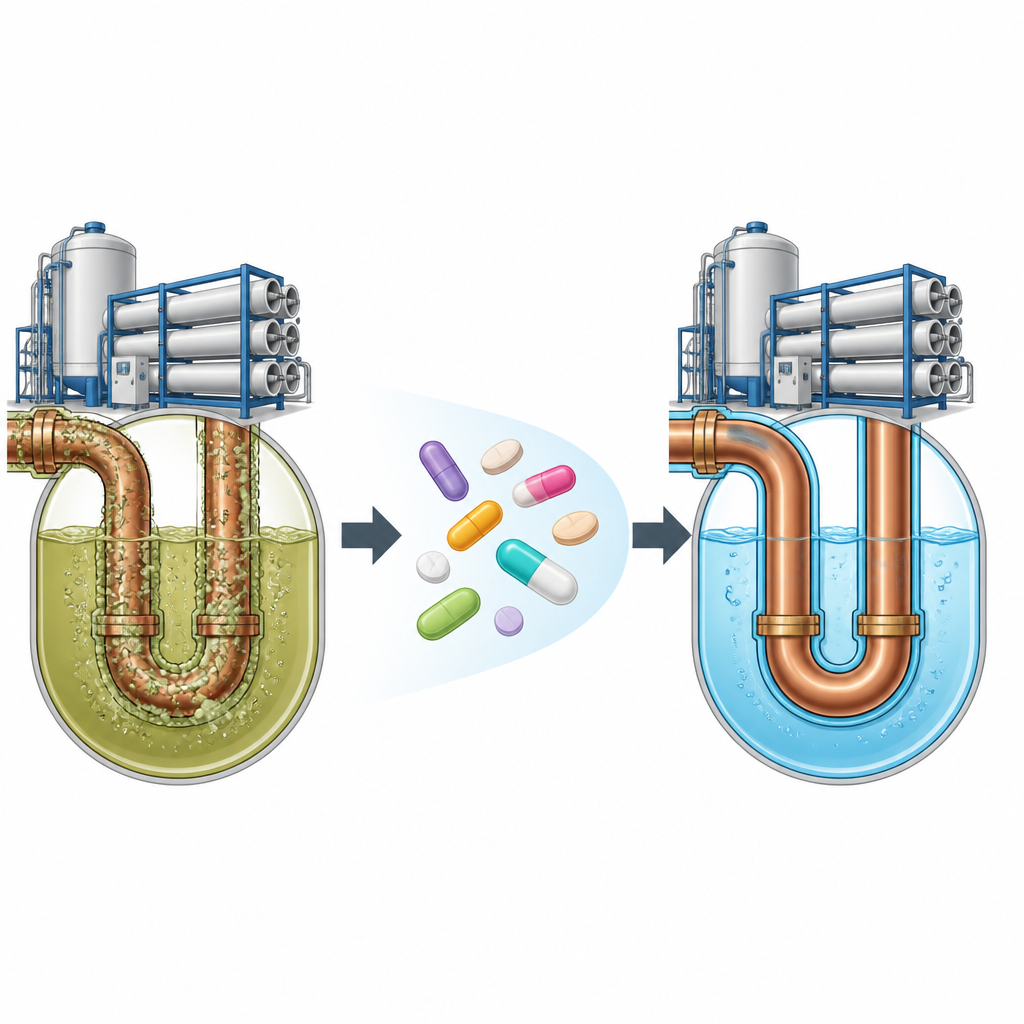
Why Copper Needs a Bodyguard
Desalination systems use copper pipes and heat exchangers because copper conducts heat well and resists biological growth. Over time, mineral deposits from seawater form hard scale inside these pipes, clogging them and reducing efficiency. To clear the buildup, operators flush the system with strong hydrochloric acid, which dissolves the scale but also attacks the copper itself. This "cleaning-induced corrosion" weakens equipment, shortens plant life, and increases costs, creating a strong incentive to find safer, more sustainable ways to protect the metal during routine maintenance.
Giving Expired Medicine a Second Life
The team focused on expired fexofenadine hydrochloride, a non-drowsy allergy drug rich in chemical features that like to stick to metal surfaces. They carefully extracted the active ingredient from old tablets and tested a range of very low doses in acid solutions that mimic the real cleaning conditions inside desalination plants. Copper samples were weighed before and after acid exposure, and their electrical behavior was monitored to see how quickly corrosion reactions were taking place. These methods allowed the researchers to track how well the drug slowed metal loss over hours and across different temperatures.
How the Invisible Shield Forms
Results showed that tiny amounts of the expired drug dramatically reduced copper damage. At an optimal dose, the acid removed only a small fraction of the metal, with protection above 96 percent at room temperature and still above 91 percent at the highest test temperature. The data suggest that drug molecules spread out to form a nearly complete, single-molecule-thick film over the copper surface. Tiny regions in the molecule rich in nitrogen and oxygen atoms act like hooks that grip the metal while also interacting with the surrounding solution. More advanced measurements and computer simulations revealed that this film raises the energy barrier for corrosion, slows the movement of charged particles at the surface, and remains stable over several days. 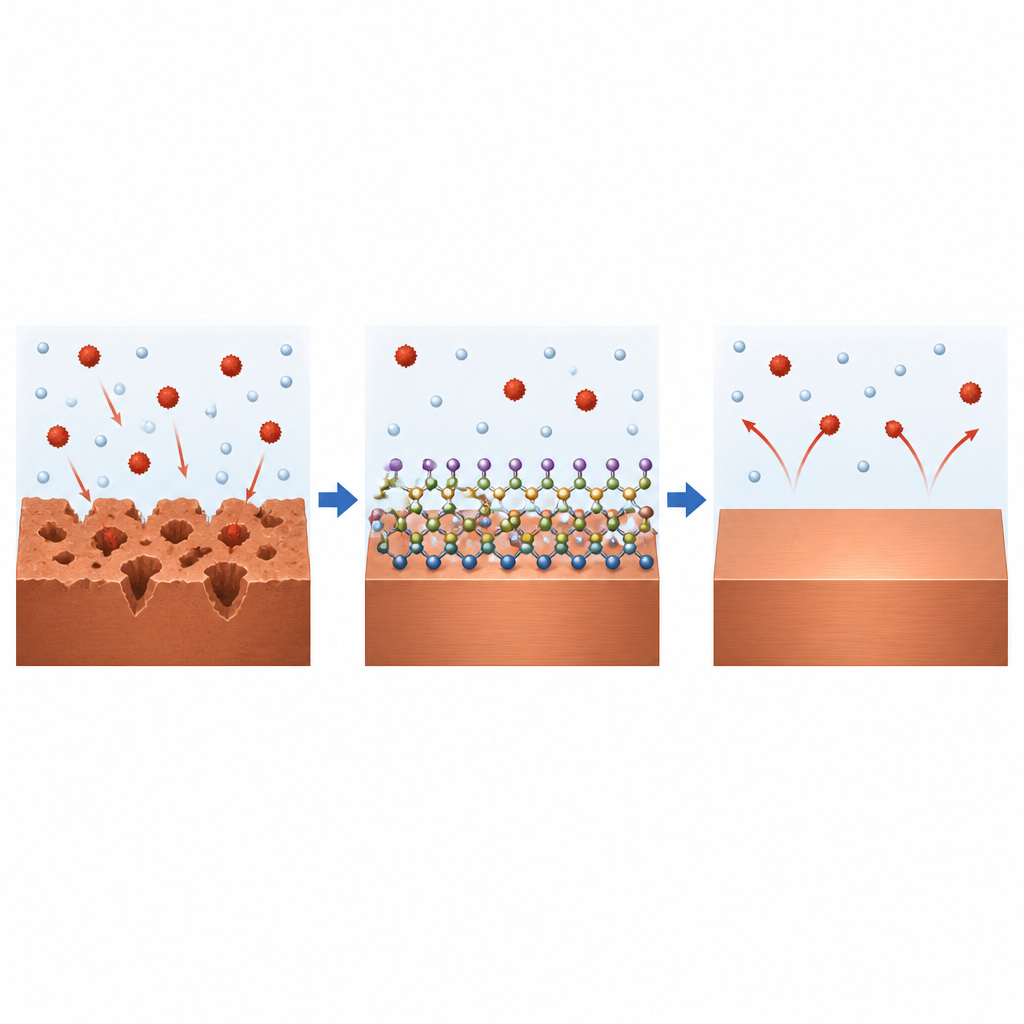
Seeing the Protective Film in Action
Under an electron microscope, copper soaked only in acid appeared rough and pitted, with clear signs of attack. When the expired drug was present, the same metal looked smooth, and chemical analysis of the surface showed traces of carbon and nitrogen matching the drug, but far less oxygen and chlorine from corrosion products. The drug molecules appear to lie flat on the copper, covering a large area and blocking aggressive acid and salt ions from reaching the metal. Thermogravimetric tests showed that the drug remains stable at temperatures well above those used during cleaning, supporting its use in hot industrial environments.
What This Means for Water and Waste
The study concludes that expired fexofenadine can act as a highly efficient, low-cost protector for copper components in desalination plants. By turning pharmaceutical waste into a useful coating, the approach could help extend the life of critical infrastructure, cut chemical costs, and reduce the environmental burden of discarded medications. In practical terms, adding a small amount of this repurposed drug to the cleaning acid before it circulates through copper pipes could keep them safer during scale removal, helping keep fresh water flowing with less damage to the equipment that produces it.
Citation: Khafagy, ES., Ashmawy, A.M., Abu Lila, A.S. et al. Expired fexofenadine hydrochloride acts as a high-performance sustainable corrosion inhibitor for copper in MSF desalination applications. Sci Rep 16, 15464 (2026). https://doi.org/10.1038/s41598-026-53696-w
Keywords: copper corrosion, desalination, green inhibitor, expired drugs, fexofenadine