Clear Sky Science · en
Chitosan-coated nano-green-tea (Nano-GTE) in a tris-soybean lecithin extender improves post-thaw motility, antioxidant status, DNA integrity, and fertility of Ossimi Ram Semen
Helping Sheep Genetics Travel the World
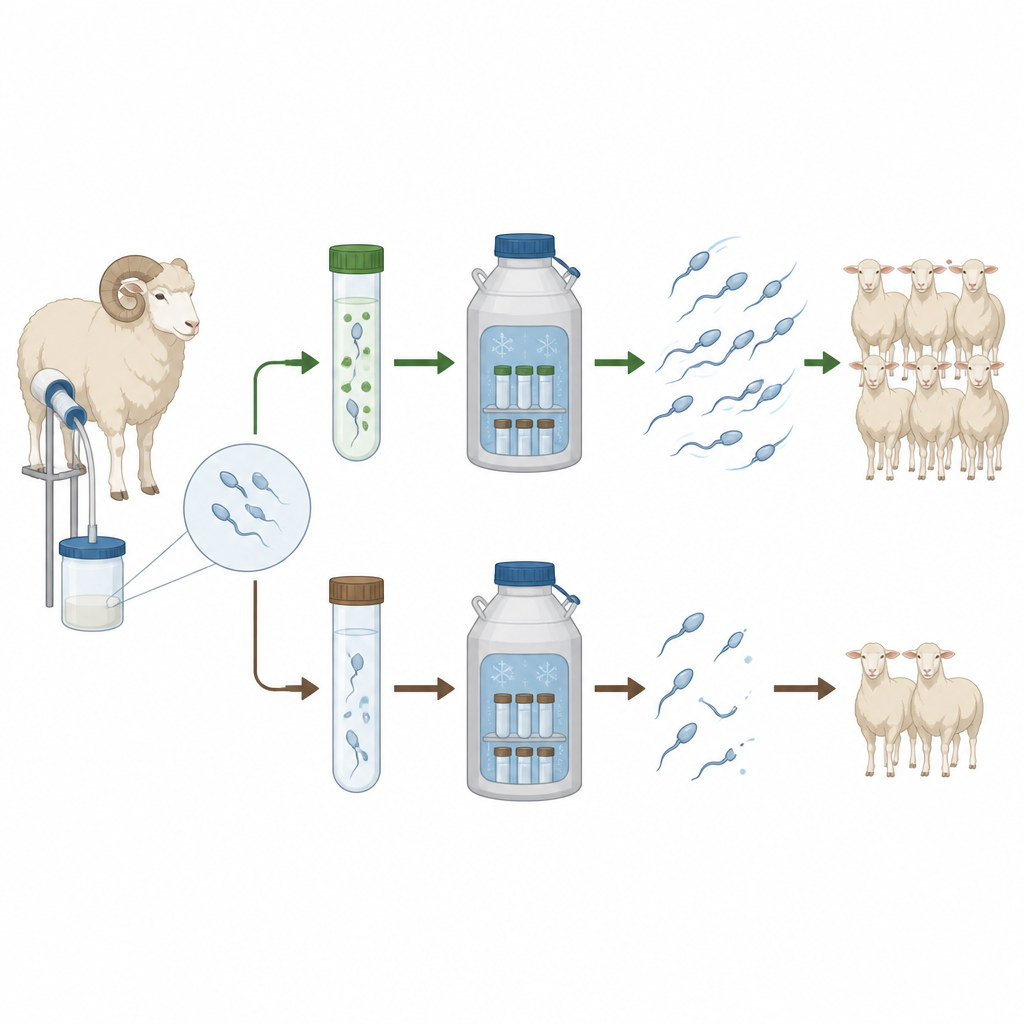
Storing frozen semen from prized rams lets farmers and conservationists share strong genetics across long distances and many years. But the freezing and thawing process can seriously weaken these delicate cells. This study tested whether a tiny, green tea based additive could act like a protective winter coat for ram sperm, keeping them healthier in the deep freeze and improving their chances of siring lambs after thawing.
Why Freezing Sperm Is So Tough
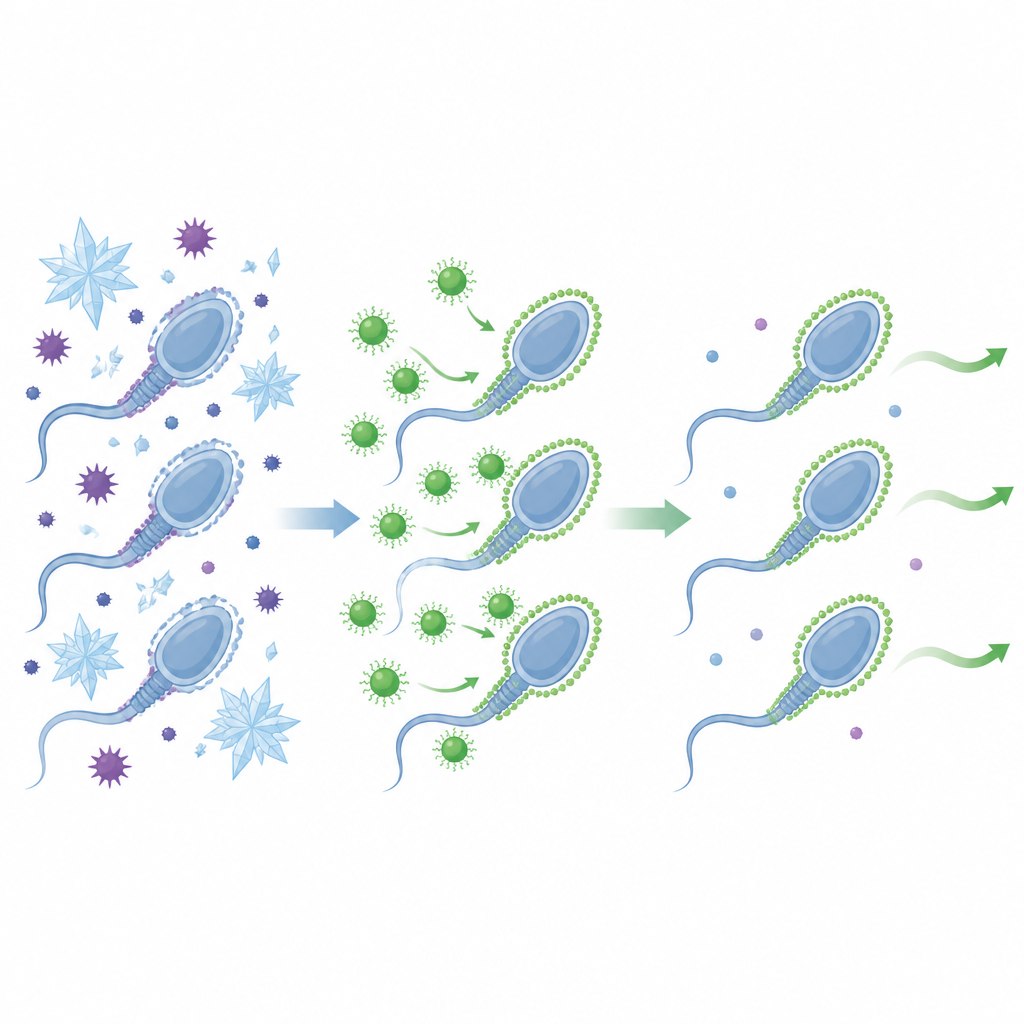
Freezing semen is standard practice in animal breeding programs because it makes it possible to ship genetic material worldwide and preserve rare breeds. Yet ram sperm are especially sensitive to cold. When they are cooled and reheated, ice crystals, sudden shifts in salt levels, and a burst of harmful oxygen based molecules can punch holes in their outer coating, damage their motors, and nick their DNA. As a result, fewer sperm swim well enough or live long enough to fertilize eggs once they are thawed.
Turning Green Tea Into Tiny Shields
Green tea is rich in plant compounds that can soak up damaging oxygen based molecules and help protect cells. On its own, though, green tea extract does not mix well with water and breaks down quickly. To solve this, the researchers wrapped the extract in very small particles made from chitosan, a safe, biodegradable material. These particles, only a few dozen billionths of a meter across, stay stable in liquid and can sit close to the sperm surface, where protection is most needed during freezing.
Putting Nano Green Tea To The Test
Semen from Ossimi rams, an important Egyptian sheep breed, was mixed with a standard protective liquid used for freezing, either alone or with different amounts of nano green tea particles. The samples were cooled, stored in liquid nitrogen, then thawed and examined. The scientists measured how many sperm moved forward, how many were alive with intact outer coats, and how much of their DNA showed signs of breakage. They also checked chemical markers that reveal how much oxidative damage and membrane leakage had occurred, and they used the thawed semen to inseminate ewes to see how many became pregnant.
Finding the Sweet Spot for Protection
The results showed a clear best dose. When the freezing liquid contained a moderate amount of nano green tea, more sperm swam strongly, more kept their membranes intact, and fewer showed broken DNA compared with the standard liquid alone. The surrounding fluid had higher overall antioxidant power and lower levels of substances linked with fat breakdown and cell damage. Ewes inseminated with semen from this group had the highest pregnancy rates. Lower doses gave smaller benefits, while very high doses actually harmed the cells, increasing dead sperm and reducing fertility, suggesting that too much antioxidant can upset the delicate balance sperm need to function.
What This Means For Breeding Programs
For breeders and conservation projects, this study suggests that adding the right amount of nano sized green tea particles to freezing liquids can keep ram sperm healthier through deep cold storage, leading to better fertility after thawing. In simple terms, a carefully measured dose of this plant based, nano scale shield helps more sperm survive the freeze and successfully fertilize eggs, while excessive amounts can have the opposite effect.
Citation: Gabr, S.A., Abdellatif, M.A., Yousif, A.I. et al. Chitosan-coated nano-green-tea (Nano-GTE) in a tris-soybean lecithin extender improves post-thaw motility, antioxidant status, DNA integrity, and fertility of Ossimi Ram Semen. Sci Rep 16, 16449 (2026). https://doi.org/10.1038/s41598-026-53045-x
Keywords: green tea, nanoparticles, ram semen, semen freezing, antioxidants