Clear Sky Science · en
Aerobic capacity at age 34 predicts arterial stiffness in age 63, independent of classical and advanced lipid-related cardiovascular risk factors: a longitudinal cohort study
Why fitness in your thirties still matters decades later
Most of us know that exercise is good for the heart, but it is less obvious how long the benefits last or how they compare with blood tests your doctor orders. This study followed Swedish men and women for nearly 30 years to ask a simple question with big implications: does how fit you are in your thirties and fifties predict how stiff your arteries become in your early sixties, even after accounting for cholesterol, blood pressure and other familiar risk factors?
Following the same people across adult life
Researchers drew on a unique Swedish cohort that has been tracked since the late 1950s. The team focused on 199 participants who were examined at ages 34, 52 and 63. At each visit they measured aerobic capacity, an indicator of how much oxygen the body can use during exercise, using a standard cycle test. At age 63 they added a measure of arterial stiffness called pulse wave velocity, which reflects how fast pressure waves travel through the main artery and is strongly linked to future heart disease and death. They also recorded weight, blood pressure, smoking, use of blood pressure or cholesterol drugs and self-reported leisure-time physical activity. 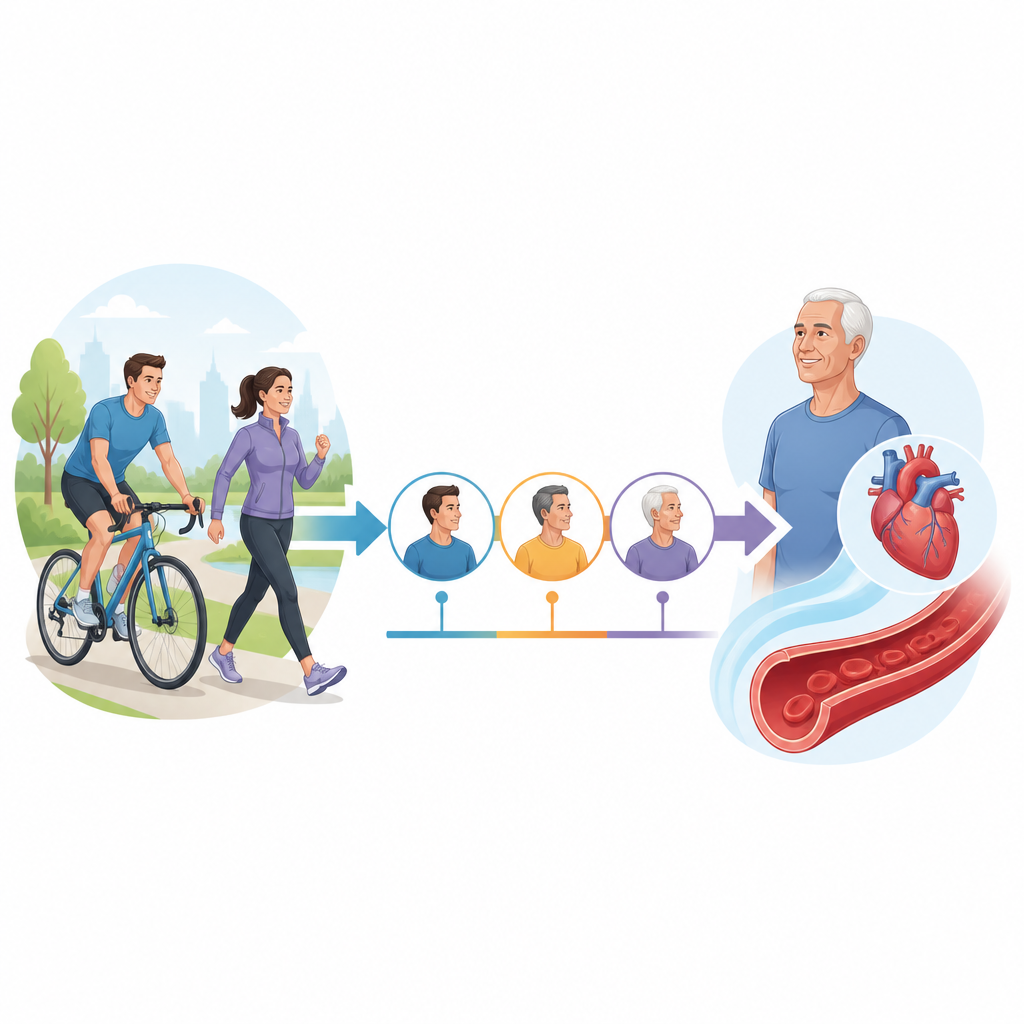
Looking beyond standard cholesterol tests
To see whether modern, more detailed blood tests might better explain later artery health, the researchers analyzed stored blood samples taken at age 52. They separated different classes of blood fats and lipoproteins, including LDL, HDL and VLDL, and quantified several types of lipids within each. They also tested how effectively each person’s HDL particles could pull cholesterol out of cells in the artery wall in laboratory experiments, a process known as cholesterol efflux. Earlier work has shown that higher cholesterol efflux tends to be linked with fewer heart attacks, so the team asked whether it would also predict stiffer or more flexible arteries a decade later.
Fitter adults had more flexible arteries at 63
Across multiple statistical models, higher aerobic capacity at ages 34, 52 and 63 was consistently linked with lower arterial stiffness at 63. This relationship held even after adjusting for sex, body mass index, smoking, blood pressure, use of blood pressure or lipid-lowering drugs, and the advanced HDL measures. In other words, people who were fitter in early and mid-adulthood tended to have more elastic arteries in their early sixties, independent of classical and cutting-edge blood-based risk factors. A separate analysis suggested that people around age 63 with relatively low fitness were more likely to cross a clinical threshold for worrisome arterial stiffness. 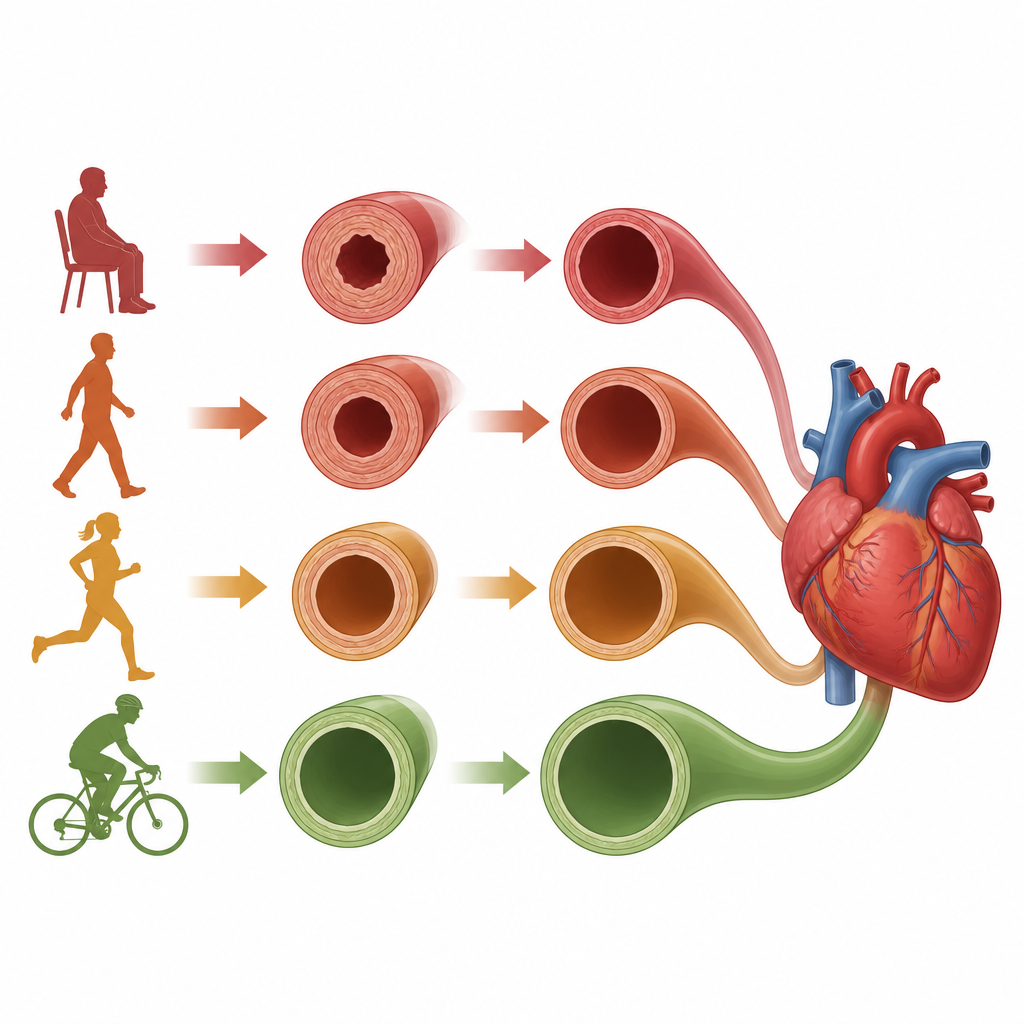
Blood fats and HDL function told a different story
In contrast, the detailed lipoprotein profiles and cholesterol efflux tests taken at 52 did not predict who would later have stiff arteries. Women showed higher levels of protective HDL lipids and better cholesterol efflux, along with lower levels of certain VLDL lipids, than men, which fits their generally lower risk of heart disease in midlife. Yet women in this cohort actually had somewhat higher arterial stiffness than men at age 63, likely reflecting changes after menopause. These patterns suggest that, at least in this relatively healthy group, subtle differences in blood fats and HDL function at midlife were less informative about later artery stiffness than simple aerobic fitness.
What this means for everyday life
For a layperson, the key message is that how fit you are in your thirties and fifties appears to leave a lasting imprint on the flexibility of your arteries by your early sixties. In this long-running study, aerobic capacity predicted arterial stiffness even when the researchers took into account weight, smoking, blood pressure, medications and sophisticated cholesterol measurements. The work cannot prove cause and effect, but it strongly supports the idea that maintaining or improving aerobic fitness through regular physical activity across adulthood is a practical, long-term way to support healthier blood vessels and lower cardiovascular risk later in life.
Citation: Tryfonos, A., Pedrelli, M., Parini, P. et al. Aerobic capacity at age 34 predicts arterial stiffness in age 63, independent of classical and advanced lipid-related cardiovascular risk factors: a longitudinal cohort study. Sci Rep 16, 15467 (2026). https://doi.org/10.1038/s41598-026-52389-8
Keywords: aerobic fitness, arterial stiffness, cardiovascular aging, cholesterol efflux, longitudinal cohort