Clear Sky Science · en
Tree-ring width and δ18O-derived hydroclimatic reconstructions allow a distinction between soil and atmospheric drought in the Mountain Forests of Northeastern Iran
Why old trees in dry mountains matter
Across much of Iran, water is scarce and droughts are becoming longer and more intense. In the high mountains of the northeast, hardy juniper trees cling to rocky slopes and quietly record these changing conditions in their wood. By reading the fine lines and subtle chemical traces inside their rings, scientists can uncover a 200 year history of how different kinds of drought have stressed these forests and what that might mean for their future.
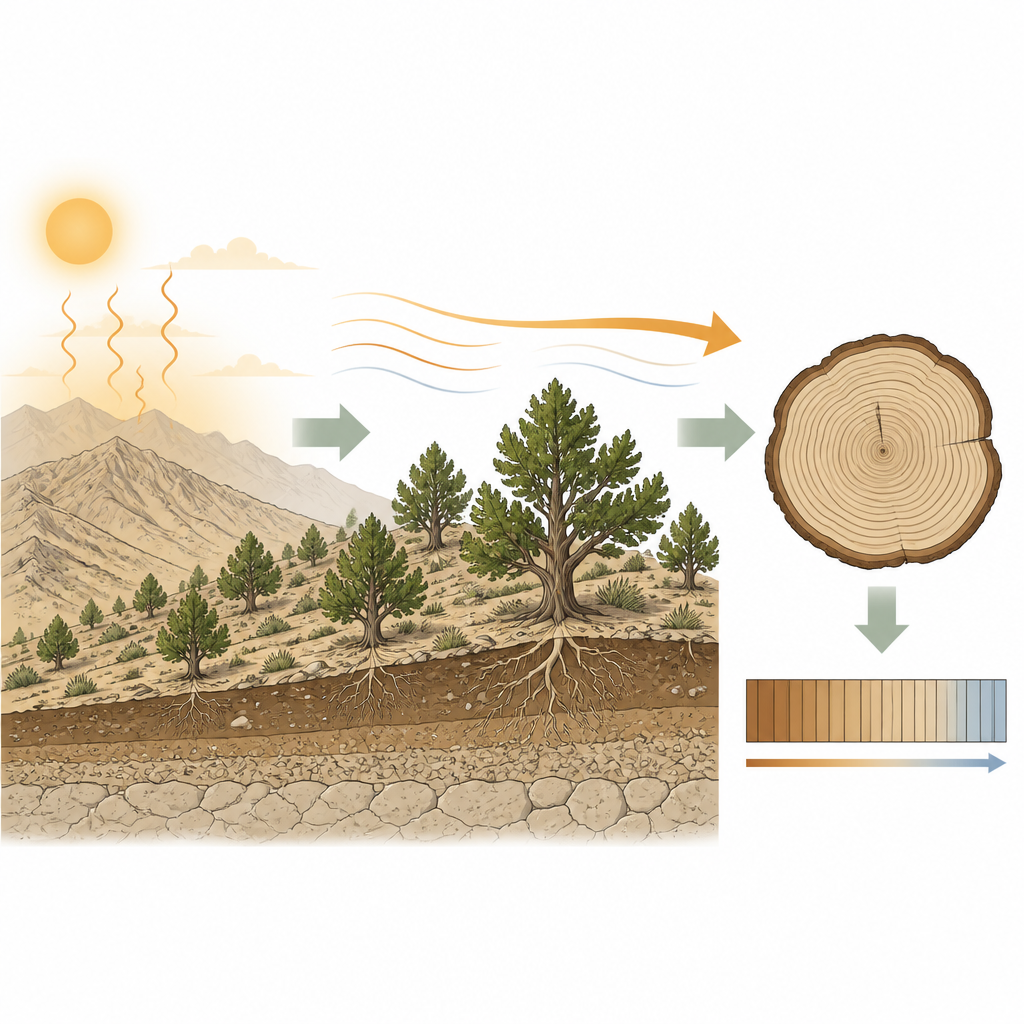
Two types of drying skies
Not all droughts are the same for a tree. One kind happens when soils dry out and roots struggle to pull up enough water. Another happens when the air grows unusually thirsty, pulling moisture from leaves even if the ground still holds some water. The study focuses on both forms of stress in the semi arid Hezar Masjed Mountains of northeastern Iran, where open juniper woodlands grow on thin, stony soils. Using limited weather station records and global drought data, the researchers tracked soil related dryness, described by a climate index that blends rain and evaporation, and air related dryness, measured as how strongly the air tugs at water from leaves.
What tree rings can tell us
The team sampled nearly fifty long lived juniper trees along a steep slope, taking narrow cores from the trunks without killing the trees. From each core they measured the width of every annual ring, a classic way to gauge how well a tree grew in a given year. They also extracted and analyzed oxygen atoms in the wood from selected trees. The relative weight of these oxygen atoms shifts depending on how dry the air is when the tree forms new tissue. Wider rings mainly reflect how much water is available in the soil during the early growing season, while the oxygen signal captures how dry the air is during the full warm season. By building two 200 year long records one of ring width and one of oxygen changes they created a detailed picture of past growing conditions.
Replaying two centuries of drought
With modern climate records from 1984 to 2020 as a guide, the scientists built statistical links between the tree data and the two drought measures. Oxygen values alone were strong enough to recreate past changes in dry air conditions during the warm months. When they combined ring width with the oxygen record, they could also recreate a growing season soil drought index that reflects how much water trees could draw from the ground. These reconstructions show frequent dry years throughout the past two centuries, but also reveal stretches of especially harsh conditions in the late 1800s, parts of the 1900s, and most notably over the past several decades as the region has warmed.
Which drought hurts trees the most
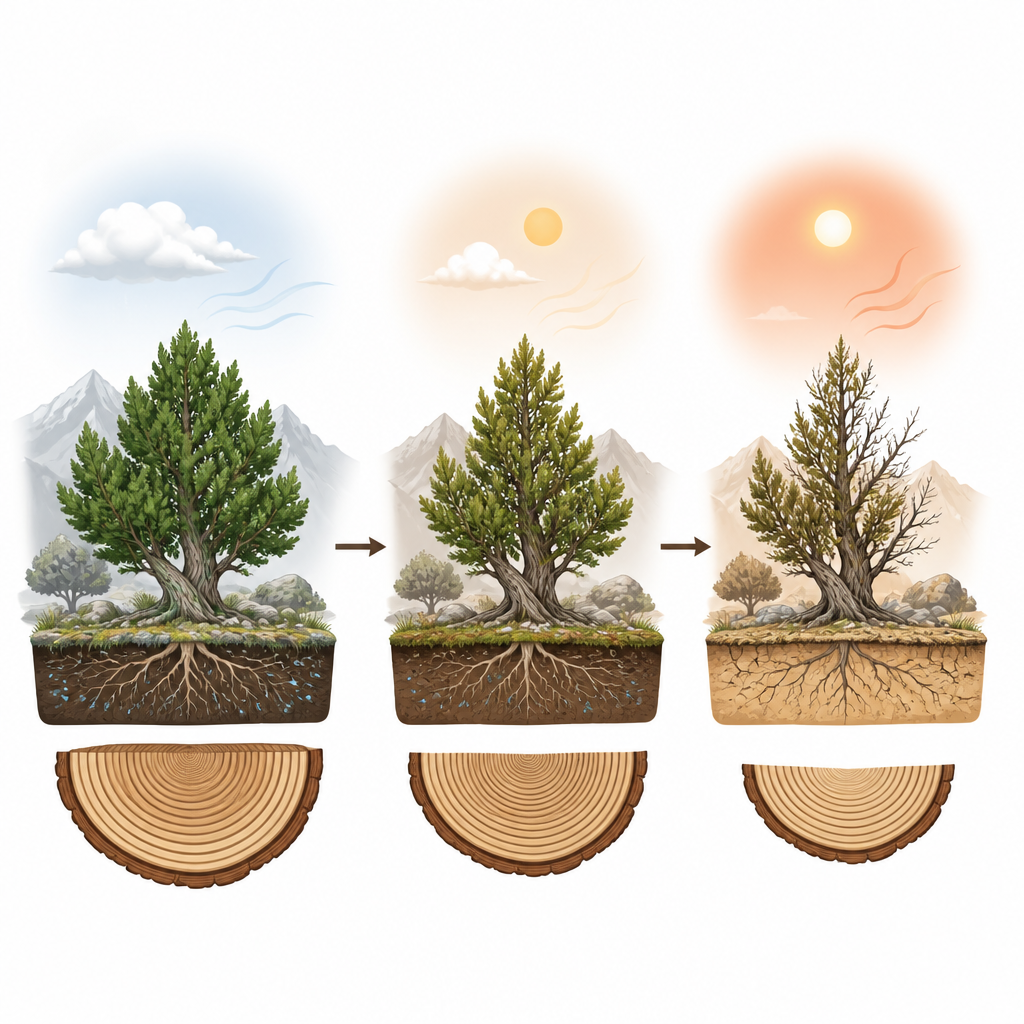
To see how trees responded, the researchers grouped years into three sets severe drought, moderate drought, and no drought based on air dryness, soil dryness, or both together. They then compared ring widths before, during, and after these years. Growth dropped the most when soil moisture was low, whether or not the air was also unusually dry. Years with both dry soils and dry air had nearly as much impact, while years with dry air alone caused only modest and short lived growth declines. Even after severe soil driven droughts, most trees recovered to near normal growth within about two years, suggesting a degree of resilience but also revealing how often these forests operate under stress.
What this means for mountain forests
The study shows that for juniper forests in northeastern Iran, the key threat is not just hotter, drier air but the slow draining of moisture from already shallow mountain soils. Air dryness acts as an added burden when it coincides with poor soil water, pushing trees closer to their limits. Over the last fifty years, the share of the most intense drought years, especially those with very dry air, has increased. For land managers and communities that rely on these forests, this work suggests that efforts to protect soil moisture such as limiting erosion, improving ground cover, and choosing drought tolerant species will be central to keeping these high elevation woodlands alive in a warming climate.
Citation: Foroozan, Z.P., Mazaherifar, M.H., Aryal, S. et al. Tree-ring width and δ18O-derived hydroclimatic reconstructions allow a distinction between soil and atmospheric drought in the Mountain Forests of Northeastern Iran. Sci Rep 16, 15601 (2026). https://doi.org/10.1038/s41598-026-52364-3
Keywords: tree rings, drought, juniper forests, Iran climate, soil moisture